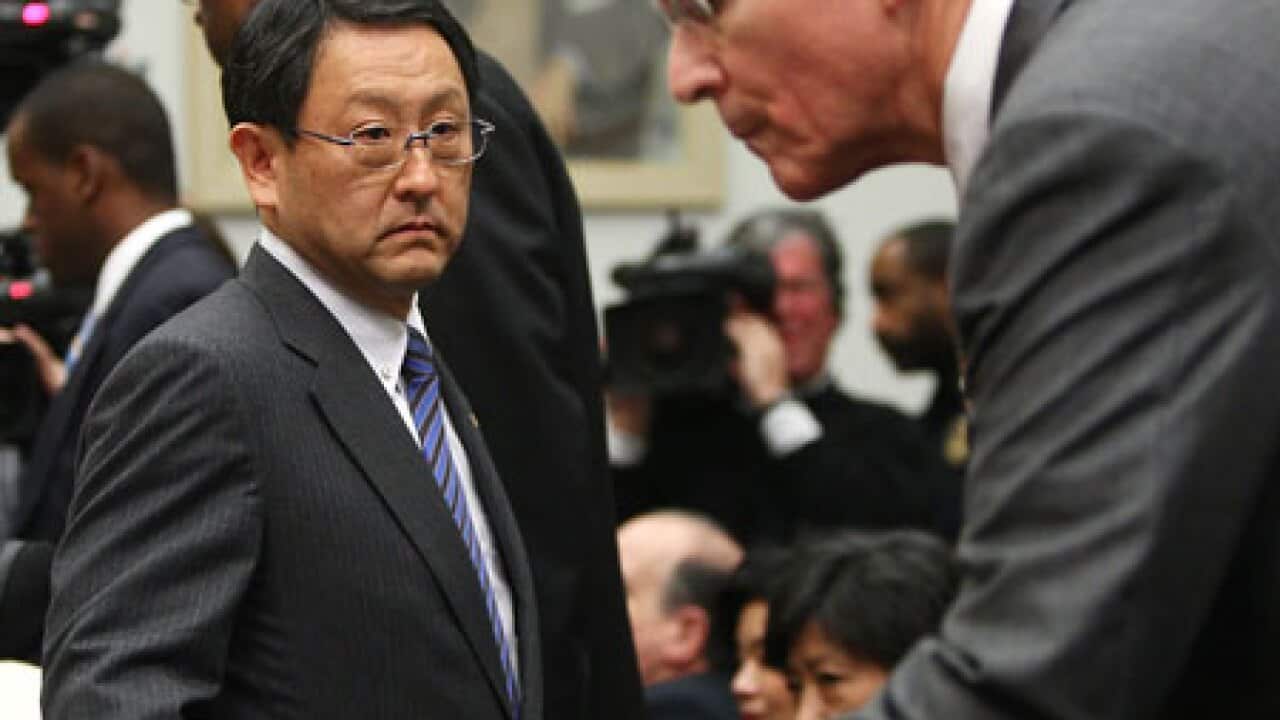
The topic was the safety woes of Toyota, but Wednesday's hearing at the US Congress could also have been a study in cross-cultural communication as Japanese formality met American bluntness.
Waving papers, pointing fingers and occasionally raising their voices, US House members spent hours grilling executives of the iconic Japanese company over auto defects blamed for more than 30 deaths in the United States.
In scenes barely imaginable in Japan, Republican Representative John Mica thundered that Toyota had been "absolutely appalling" while Democrat Dennis Kucinich accused the executives of not giving him the "courtesy of a response."
News that makes sense
Your trusted source for staying up-to-date with the world around you. Get free daily news updates and analysis, straight to your inbox.
Toyota Motor Corp. president Akio Toyoda and North American chief Yoshimi Inaba calmly pledged to take their concerns to heart. They read statements in English accepting responsibility -- but always kept their cool.
"There is a huge perception gap," said Weston Konishi, an expert on Japan at the Mansfield Foundation think-tank.
"The direct questions may strike the Japanese as accusatory or even aggressive," he said. "And the formality of the Japanese approach may trigger some undue concern on the part of some members of Congress."
He said that the two nations' media covered the Toyota hearings from sharply different angles, with the US press seeing it as a story about public safety.
"For the Japanese side, it's seen in much more of a conspiratorial light," Konishi said. "Some see it as Toyota-bashing or Japan-bashing."
Americans are rarely considered a shy people and Washington's 24-hour news culture is often seen as encouraging sharper responses by lawmakers.
The Japanese, meanwhile, generally apologize by taking personal responsibility and showing humility -- the most visible symbol of which is the deep bow.
"The danger is they may think they're showing respect to Congress and showing contrition but come across as not feeling enough," said Ian Condry, a cultural anthropologist at the Massachusetts Institute of Technology.
But Condry suspected that some Japanese may quietly approve of the Toyota hearings -- a phenomenon known as "gaiatsu," or Japan taking tough decisions because of foreign pressure.
"I suspect some might see the harsh questioning not as a cultural thing but as needed pressure for consumer advocacy, which has always had trouble in Japan," Condry said.
The Toyota executives' style was a striking departure from the American who testified before them -- Transportation Secretary Ray LaHood.
With constant gesticulation and a sometimes booming voice, LaHood repeatedly stressed his personal role -- at one point declaring himself "on a rampage" on a separate issue of stopping Americans from texting behind the wheel.
Toyoda, whose grandfather founded what became the world's biggest automaker, is certain to have studied how to avoid the disastrous performance of the last Japanese executive to appear before Congress.
In 2000, the then chief executive of tire giant Bridgestone/Firestone, Masatoshi Ono, testified over the recall of millions of tires.
Ono had a carefully rehearsed speech in English but became visibly flustered as members of Congress pressed him. He turned first to a translator and then to his deputies as he watched sullenly. He resigned shortly afterward.
Conversely, Westerners have often struggled to adapt to Japan's culture of crisis management.
Swiss elevator and escalator maker Schindler felt Japan's wrath in 2006 when one of its elevators malfunctioned in a Tokyo condominium, killing a 16-year-old boy.
The company initially said little publicly other than that an investigation was under way and that poor maintenance may have been to blame.
By the time an executive flew into Tokyo to bow before the cameras, Japan had ordered a nationwide investigation of Schindler elevators and police had raided its Tokyo offices.







