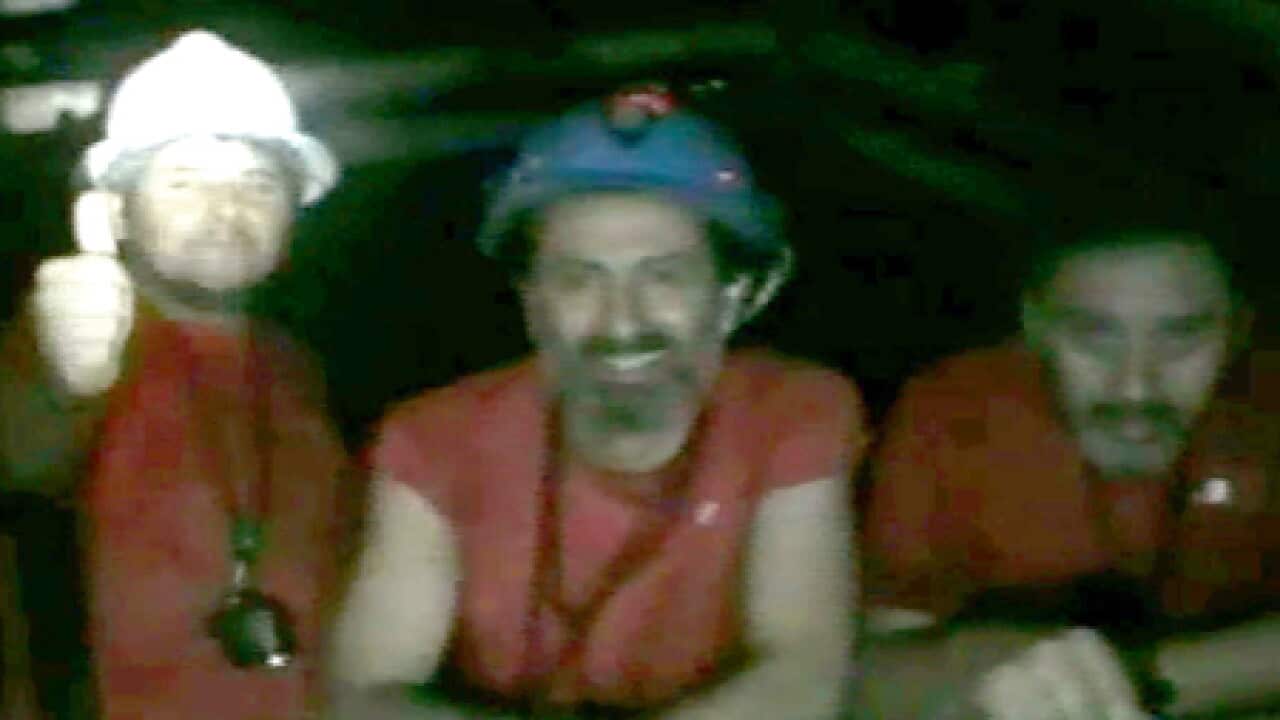
A truck convoy bearing a huge oil drilling machine is expected to offer a third rescue option, or 'Plan C,' for the 33 men trapped for a month at the bottom of a Chilean mine.
"The 42 trucks will come in one or two at a time, they'll unload and go back down.... They can't all come here at once because they wouldn't fit" outside the San Jose gold and copper mine, rescue team member Rene Aguilar told AFP.
The drilling machine requires a football-pitch size base to set up and is expected to begin drilling down toward the trapped miners by September 18, Chile's Independence Day, President Sebastian Pinera announced at the weekend.
News that makes sense
Your trusted source for staying up-to-date with the world around you. Get free daily news updates and analysis, straight to your inbox.
Rescue "Plan B" made swift progress in its first days of drilling but engineers Tuesday downplayed chances of a quicker rescue than the two to three months authorities expect.
That operation which began Sunday reached a depth of 123 meters (400 feet) by midday Tuesday according to engineer Miguel Fort. Engineers say the "Plan B" must tunnel 620 meters (2,034 feet) below ground in order to reach the men trapped in a dramatic limbo.
The first drilling operation started work on August 30. That process could take up to four months and requires drilling down the full 700 meters (2,300 feet) into the mine by enlarging an existing shaft being used to supply the miners with food, water and other goods.
"Plan A," which aims to first bore a 33-centimeter (13-inch) wide pilot hole that will then be doubled using a special drill bit to 66 centimeters, has so far tunneled only 113 meters (370 feet).
But despite the rapid second effort, Fort cautioned against hopes of accelerating the timetable, which still calls for reaching the miners -- trapped since the August 5 mine collapse -- by November at the earliest.
"This was already expected," he said of the progress.
Aguilar said the "Plan B" drill, known as the Schramm T-130 and nicknamed "the miracle" by relatives of the miners, was expected to advance between one and three meters (three to nine feet) per hour depending on the type of rock.
"The timetable is unchanged," Aguilar added.
"Plan C," he said, will drill down just 597 meters (1,958 feet), shortening the rescue time to perhaps two months. But it will not be ready to start work for at least another 10 days.
The men got a glimpse of hope Tuesday as they heard echoes deep in the mine of the two machines drilling to reach them.
"They are happy because they feel like there is progress," said Aguilar.
"Based on the noise, they estimated themselves that the machines were about 100 meters (328 feet) below the surface... A miner's ear is best of all."
In the meantime, experts have been working to manage the miners' psychological help and keep them sane. Officials have also offered them multiple entertainment options.
A recent delivery to the men's underground refuge included 80 letters, and with the dispatch of an audio-visual system linked up via fiber-optic cables, the miners have been able to hold video-conferences with their relatives.
That equipment was put to the test when the miners, who count former footballer Franklin Lobos in their midst, watched Chile's national team lose 2-1 to Ukraine in a friendly football match streamed live to their shelter.
"Be brave, miners!" the men could hear during the televised program.
Meanwhile doctors revealed they were remotely treating one of the trapped miners for a toothache and another for a pre-existing condition of high blood pressure.
Both the ailing men are receiving medication for their conditions, officials said.
A crew of medical experts, including psychiatrists and nutritionists, has been assembled to attend to the health of the men, who range in age from 19 to 63.
After a collapse one month ago blocked the exit of the mine in the remote Atacama desert, the miners against all odds managed to survive, without contact with the outside world, for 17 days on carefully rationed cans of tuna.
They were discovered alive after they sent a note up a bore hole, proclaiming their survival from an emergency shelter deep below ground.
Medical crews nursed them back to health, feeding them rehydration packs until they were strong enough to eat solid food sent down from above.
Now they get a normal diet of some 2,400 calories a day, but have been asked to keep trim in order to fit through the narrow rescue shaft engineers are drilling to reach them.







