In brief
- US President Donald Trump says he wants rapid deal on opening Strait of Hormuz, and that he has Israel's support.
- Iran has warned the US this weekend against any "adventurous action" while Kuwait's army has destroyed hostile Iranian drones.
United States President Donald Trump will hold off a fresh attack on Iran as long as a deal can be reached quickly to halt Iran's nuclear ambitions and re-open the Strait of Hormuz.
According to a post by Trump on his Truth Social platform, Iran and "other Middle Eastern countries" have asked for a time to complete a deal that would lead to "the Immediate, Complete and Total" reopening of the Strait and "an end to Iran's nuclear threat.
"Based on this request, I have agreed, for the future benefit of the WORLD and, likewise, the survival of a successful and prosperous Iran, to cancel the attack, subject to being able to rapidly make a DEAL," he said on the post.
Trump also said "Israel joins me in this commitment".
Eli Cohen, Israel's energy minister and a member of Prime Minister Benjamin Netanyahu’s security cabinet, said there was close security and intelligence coordination between Israel and the US on everything happening in the region.
News that makes sense
Your trusted source for staying up-to-date with the world around you. Get free daily news updates and analysis, straight to your inbox.
But he added: "With or without an agreement, and regardless of any external commitments, if Iran attempts to renew its nuclear programme or advance its ballistic missile industries, we will be there. We will take action, and we will strike."
Trump and Netanyahu met in Washington on Tuesday, with an Israeli official saying they had explored all possible paths to curb Iran's nuclear program, including diplomacy, economic pressure and force. Iran denies seeking a nuclear weapon.
Trump's apparent de-escalation after days of threats of new attacks from each side was the latest twist in the war the US and Israel launched five months ago. Attacks have spread across the Gulf to the Red Sea and even a Mediterranean facility in Egypt.
Iran on alert
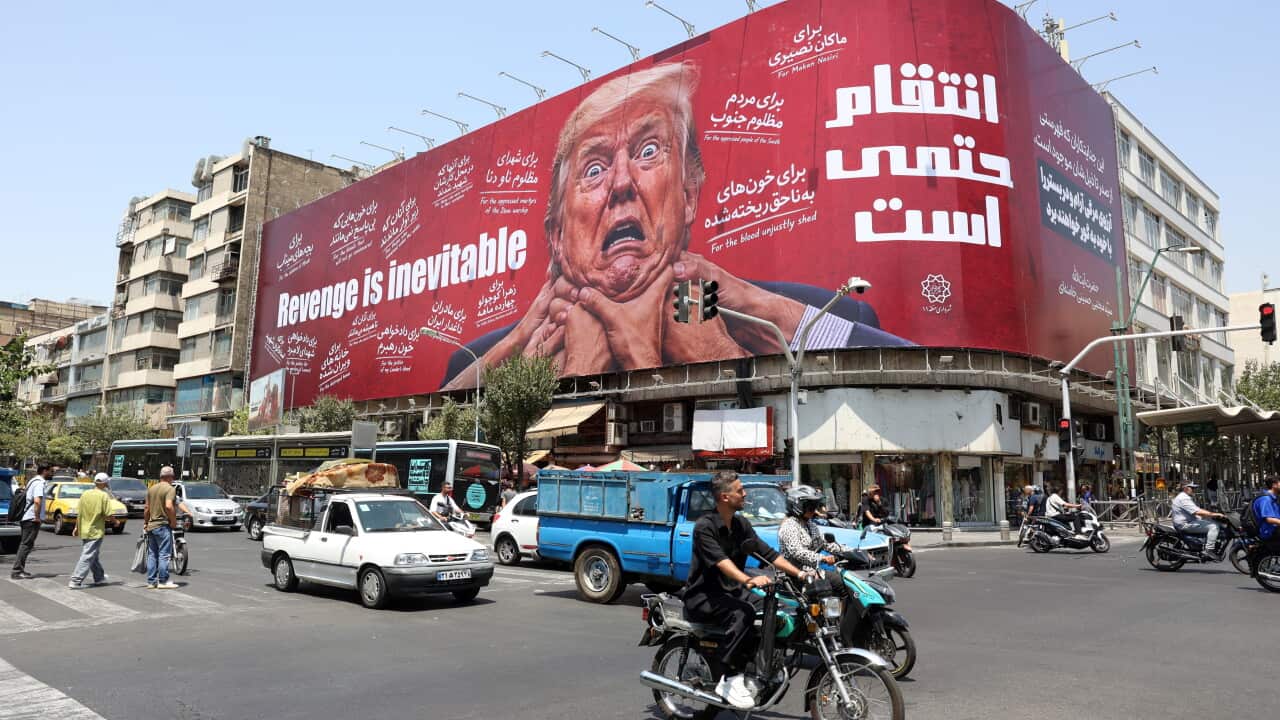
Iran has warned the US this weekend against any "adventurous action" and said it would retaliate decisively if US forces followed through on Trump's threats of fresh attacks on Iranian targets.
Iranian foreign minister Abbas Araghchi's made these comments in separate phone calls with senior Turkish, Pakistani and Saudi officials hours after Kuwait's army said it destroyed hostile drones launched by Iran against several vital facilities.
In his discussion with Pakistan's Army Chief Field Marshal Asim Munir and Turkish Foreign Minister Hakan Fidan, Araghchi said Iran would respond decisively to any "aggression" and discussed the consequences of “destabilising actions" by the US, as well as prospects for heightened regional insecurity. This was published on Araghchi's Telegram account.
Araghchi later told Saudi Foreign Minister Prince Faisal bin Farhan that any attacks by the US and Israel or participation by regional countries in such actions would be met with a “proportionate response.” Saudi Crown Prince Mohammed bin Salman spoke to Trump on Saturday and "expressed concern and asked for clarity" about US plans for Iran, a US official had told Axios.
Nournews, a media outlet affiliated with Iran's top security body, said US attacks on Iranian energy infrastructure would prompt Iranian strikes on oil fields in Saudi Arabia and the United Arab Emirates, as well as the gas fields of Qatar and Israel, saying, "all will be burned to ashes."
Iran’s acting defence minister, Brigadier General Majid Ebn Al-Reza, said the country viewed recent US threats as “psychological and cognitive warfare” but was treating them seriously, adding that Iran would boost preparedness and deterrence rather than be caught off guard or remain passive, Press TV had reported.
At a cabinet meeting on Friday at the Camp David retreat, Trump said he believed US negotiators, including his son-in-law Jared Kushner, special envoy Steve Witkoff and Secretary of State Marco Rubio, could still reach a deal with Iran.
But Trump also said he was losing faith in the Iranians, saying, "They break their word so often" — a claim Tehran has frequently leveled at Washington — and said he would be "hitting them".
Strait of Hormuz remains fragile
Oil prices have remained elevated since US and Israeli forces started the war with strikes on Iran on 28 February. Trump has argued that his stated goal of keeping Iran from gaining nuclear weapons justifies higher fuel costs in the near term, but the economic pain has put political pressure on him to find a way to end the war.
Benchmark Brent crude futures rose 24% in July, and analysts polled by Reuters expect prices to rise further this year.
The risk of Iranian attacks has deterred most shipping through the Strait of Hormuz, an important conduit for global energy supplies, since the start of the conflict, sending shockwaves through the world economy.
A government facility in northern Kuwait and civilian property belonging to a company on Bubiyan Island were hit on Saturday, with falling shrapnel causing material damage but no casualties, the Kuwaiti army said.
Adding to the energy industry's concerns, Iran's Houthi allies in Yemen recently began threatening the Bab el-Mandeb, the strait at the other end of the Red Sea from the Suez Canal, another export route for Saudi crude.
The United Kingdom Maritime Trade Operations said it had received reports of two maritime incidents off Oman, including one in which a tanker was struck by an unknown projectile that damaged the engine room. In the other incident, the master of a tanker reported seeing a large splash and an explosion close to the vessel, though no damage was reported.
For the latest from SBS News, download our app and subscribe to our newsletter.







