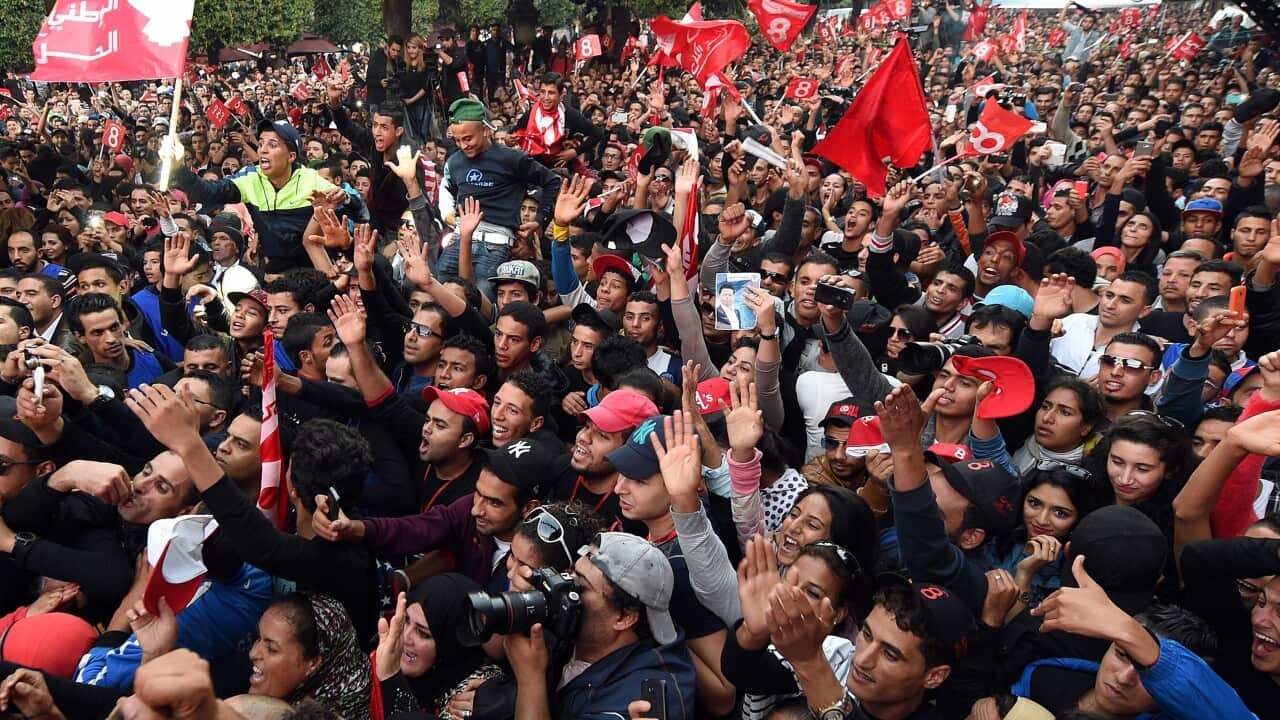
Among the 27 candidates, the favourite is former premier Beji Caid Essebsi, an 87-year-old veteran whose anti-Islamist Nidaa Tounes party won parliamentary elections last month.
Others vying for the presidency include outgoing President Moncef Marzouki, several ministers who served under former dictator Zine El Abidine Ben Ali, leftwinger Hamma Hammami, business magnate Slim Riahi and a lone woman, magistrate Kalthoum Kannou.
Some 5.3 million people are eligible to vote, with tens of thousands of police and troops deployed to guarantee security amid fears Islamist militants might seek to disrupt polling day.
News that makes sense
Your trusted source for staying up-to-date with the world around you. Get free daily news updates and analysis, straight to your inbox.
Polling hours were restricted to just five in some 50 localities close to the Algerian border, where armed groups are active. Everywhere else, polls were due to close at 1700 GMT.
A run-off vote will be held at the end of December if no one secures an absolute majority.
Until the revolution, Tunisia knew only two presidents -- Habib Bourguiba, the "father of independence" from France in 1956, and Ben Ali, who deposed him in a 1987 coup.
To prevent another dictatorship, presidential powers have been restricted under a new constitution, with executive prerogatives transferred to a premier drawn from parliament's top party.
Essebsi has run on a campaign of "state prestige", a slogan with wide appeal to Tunisians anxious for an end to instability.
Supporters argue only he can stand up to the Islamists who first held power in the post-Ben Ali era, but critics charge he is out to restore the old regime, having served under both former presidents.
Marzouki has been hammering home the argument that he is the only leader capable of preserving the gains of the uprising, and has said Sunday's vote is the "last stand" for the old guard.
Moderate Islamist party Ennahda, which came second in the legislative election, has not put up a candidate and has invited its members "to elect a president who will guarantee democracy".
Speculation has been rife on the make-up of a new government and the possibility of a coalition between Nidaa Tounes and Ennahda despite their fundamental differences.
Tunisia has won international plaudits, despite security and economic setbacks, for having largely steered clear of the violence, repression and lawlessness of fellow Arab Spring countries such as neighbouring Libya.
Whoever wins, tackling the faltering economy will be a top priority, with unemployment, a leading cause of the revolution, running at 15 percent.







