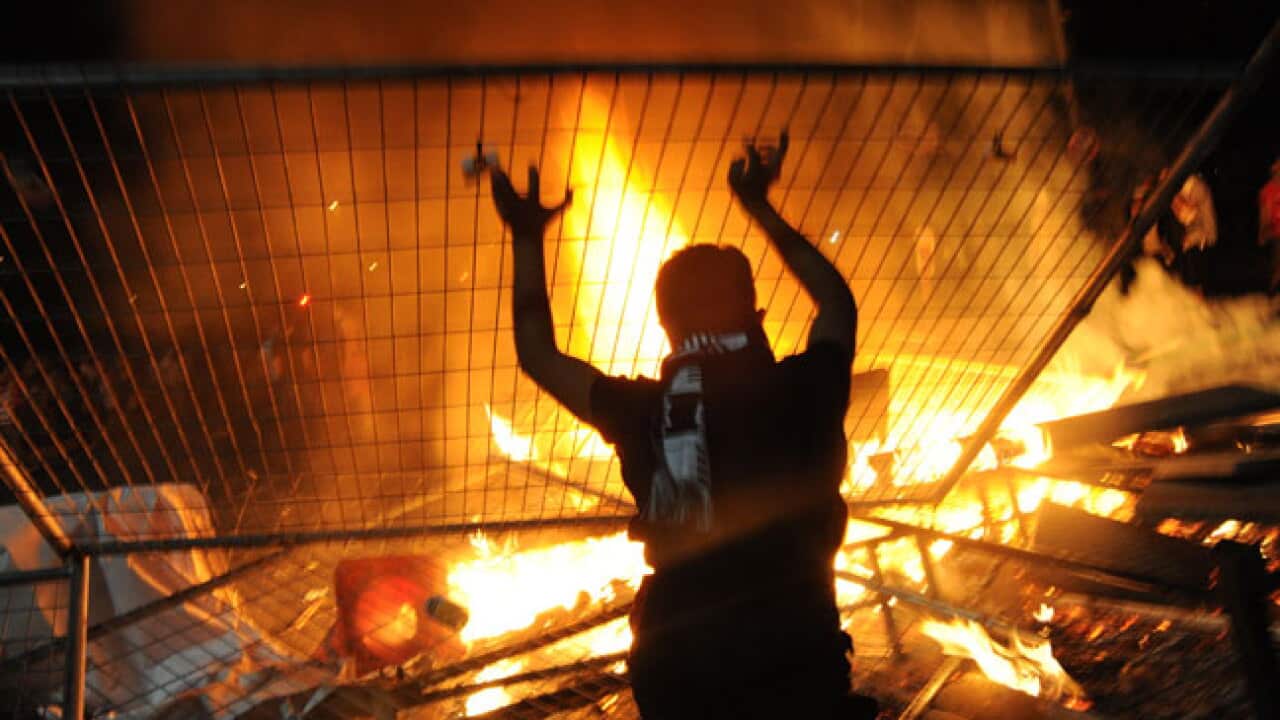
In New York, hundreds of people demonstrated in a show of support for mass protests in Turkey against Prime Minister Recep Tayyip Erdogan's government.
The marchers gathered at Zuccotti Park, near Wall Street, which was also the nerve centre for the Occupy Wall Street movement when it took over the public space in late 2011.
Activists and news website Press TV said thousands took part in protests in the Turkish part of Cyprus.
News that makes sense
Your trusted source for staying up-to-date with the world around you. Get free daily news updates and analysis, straight to your inbox.
In Berlin, activists said thousands took part in protests in the suburb of Kreuzberg, home to many of the country's Turkish residents. German newspaper The Tageszeitung said demonstrations also took part in Cologne, Hamburg and Stuttgart.
Activists posted photos of similar protests in Sydney on Saturday, as well as Occupy-affiliated demonstrations in Melbourne.
ACTIVISTS CLAIM 'WIN'
Thousands of protesters in Istanbul celebrated a victory Saturday as police withdrew from Taksim Square, in one of the largest demonstrations against Turkey's Islamist-rooted government.
"Government, resign!" protesters shouted as riot police pulled back from the city's central square, the epicentre of demonstrations that have left dozens injured and earned Turkey a rare rebuke from its Western allies.
"We are here Tayyip, where are you?" they cried, shouting taunts to Prime Minister Recep Tayyip Erdogan.
Many protesters, including artists and political party representatives, were dancing and singing, while others launched fireworks in celebration.
What began as an outcry against a local development project has snowballed into widespread anger against what critics say is the government's increasingly conservative and authoritarian agenda.
The unrest has spread to other cities across the country, with police on Saturday blocking a group of demonstrators from marching to parliament and the prime minister's office in Ankara.
Erdogan has called for an immediate end to the violent protests and admitted there may have been some cases of "extreme" police action.
"I call on the protesters to stop their demonstrations immediately," Erdogan said in a speech, as clashes raged for a second day at Taksim square, a popular tourist destination and traditional rallying site in Istanbul.
"It is true that there have been some mistakes, extremism in police response," Erdogan added, and the interior ministry said legal action would be taken against police officers acting "disproportionately."
The Turkish premier however remained defiant, vowing to push forward with controversial plans to redevelop the iconic Taksim square -- the issue that had sparked the protests.
"But our fight is not over either," said 19-year-old law student Batuhan Kantas, sitting exhausted on the ground in the square. "We are still ruled by a prime minister who thinks people are lambs and declares himself the sultan."
-- 'We have become one fist' --
Turkey's President Abdullah Gul meanwhile said the protests had reached a "worrisome level" and called on police and the demonstrators to act with restraint.
Authorities said a dozen people were being treated in hospitals, but Amnesty International said more than 100 protesters were reportedly injured in clashes.
Interior Minister Muammer Guler said that 53 citizens and 26 police officers were injured in nationwide protests. One of the injured civilians was in intensive care unit at an Istanbul hospital, he said.
The minister also said police have detained 939 protesters in over 90 demonstrations in 48 cities, adding that some of them were released after giving testimonies.
"We have become one fist," 33-year-old Ataman Bet said as he swept up shattered glass outside his small coffee shop near Taksim.
He noted that the protesters came from across the political spectrum, and even included some Erdogan supporters.
"People are angry, I am so proud of them," he said, calling the damage to his shop a "necessary sacrifice".
The Istanbul protest began as a peaceful sit-in at Gezi park across the iconic square.
The demonstrators had been preventing workers from razing some the park's 600 trees, the last patch of green in the commercial area, to make way for the restoration of Ottoman era military barracks. Residents fear that the barracks will be turned into a shopping mall.
But the demonstration soon took a violent turn, with police firing rounds of tear gas to disperse the protesters.
"We were sitting there around the square and reading a press statement when the police came toward us with riot vehicles, spraying gas," said one demonstrator, 34-year-old Burak Ozbey.
He said his friend had to undergo a second brain surgery after she was hit in the head on Friday by a gas cannister and remains in critical condition.
Local media reported that Istanbul police were running short of tear gas supplies, and that the units had been warned to use the gas sparingly.
Clashes raged during the night, with thousands of people marching through the city, some banging pots and pans as residents shouted support from the windows.
Others held up cans of beer in defiance of the recent alcohol law by ruling Justice and Development Party (AKP) that would bring severe restrictions to the sale and advertising of alcohol, which was seen by critics as the latest sign of creeping conservatism.
"They want to turn this country into an Islamist state, they want to impose their vision all the while pretending to respect democracy," said one protester in Istanbul, declining to give her name.
The US State Department said Turkey should uphold "fundamental freedoms of expression, assembly and association, which is what it seems these individuals were doing."
The British foreign office Saturday urged Turkey "to exercise restraint and not to use tear gas indiscriminately."
Erdogan's populist government is regularly accused of trying to make the predominantly Muslim but staunchly secular country more conservative.







