

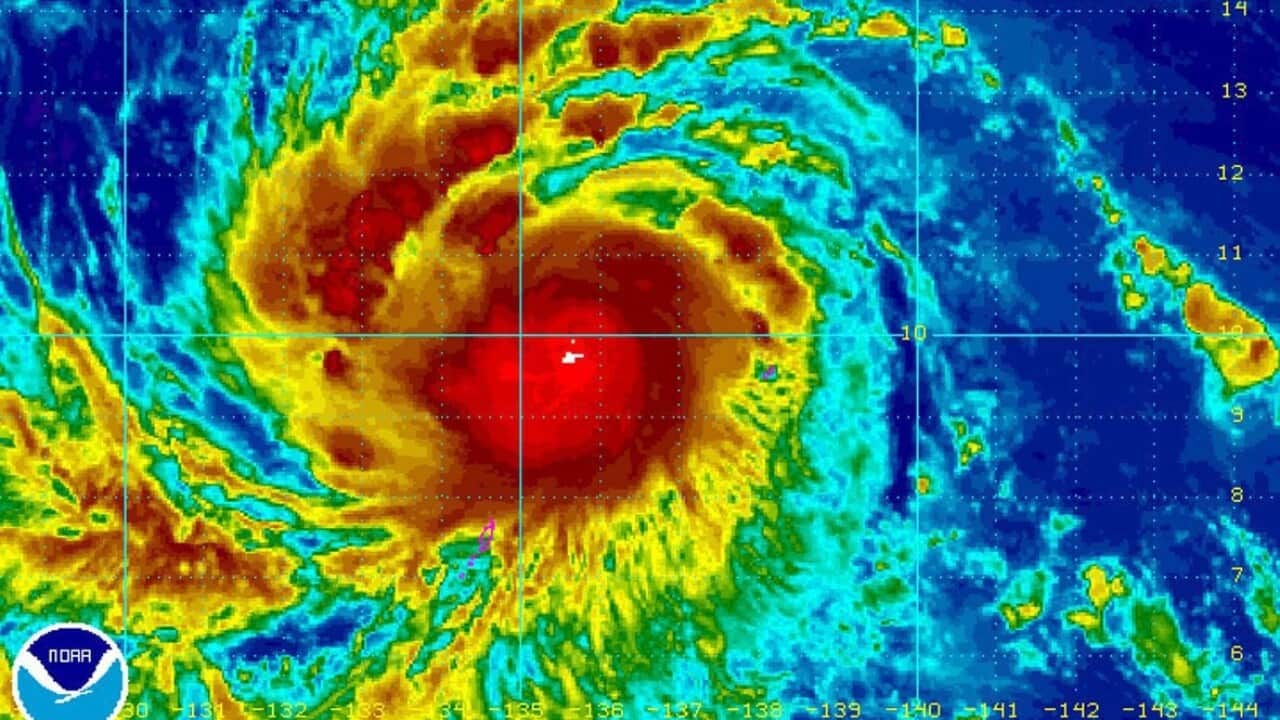
Heavy rains and strong winds flattened houses on coastal areas as typhoon Noul crashed into the northeastern tip of the Philippines, killing two people and prompting more than 3,000 residents to move to shelters.
The typhoon weakened slightly after hitting land, with winds of 160 kph (99 mph) near the centre and gusts of up to 195 kph (121 mph) as of Monday.
It is expected to move north at 19 kph and head to southern Japan by Tuesday, the weather bureau said.
British-based Tropical Storm Risk downgraded Noul on Monday to category four typhoon from category five.
Noul made landfall on Sunday in the rice- and corn-producing province of Cagayan about 400 km (250 miles) north of the capital, Manila, toppling trees and cutting power in wide areas of the province.
News that makes sense
Your trusted source for staying up-to-date with the world around you. Get free daily news updates and analysis, straight to your inbox.
It is now hovering 185 km north of the town of Aparri in Cagayan.
"The typhoon has moved away, but our problem so far is how to fix what was destroyed. The small houses of our poor townmates in coastal areas were badly hit," Darwin Tobias, mayor of Santa Ana town in Cagayan, said in a radio interview.
The national disaster agency said two men died from electrocution as they were strapping down a tin roof on a house during the height of the typhoon in Aparri. More than 3,400 residents from Cagayan and Isabela provinces were moved to evacuation centres in schools, gymnasiums and town halls before the typhoon, officials said.
Tobias said some residents from his town started returning to their homes early on Monday when the rains stopped.
Despite the destruction wrought by Noul, it also brought much needed rains to rice and corn farms that had been hit by intense summer heat.
"The rains brought by Dodong (local name of Noul) helped our farmers greatly," said James Geronimo, public information officer of Isabela, the country's top corn producer and the second biggest rice-growing province.
An average of 20 typhoons cross the Philippines annually, with the storms becoming fiercer in recent years.
More than 8,000 people died or went missing and about a million were made homeless by Haiyan, another category 5 typhoon that struck the central Philippines in 2013, bringing 5-metre high storm surges.
(Reporting by Rosemarie Francisco; Editing by Joseph Radford)