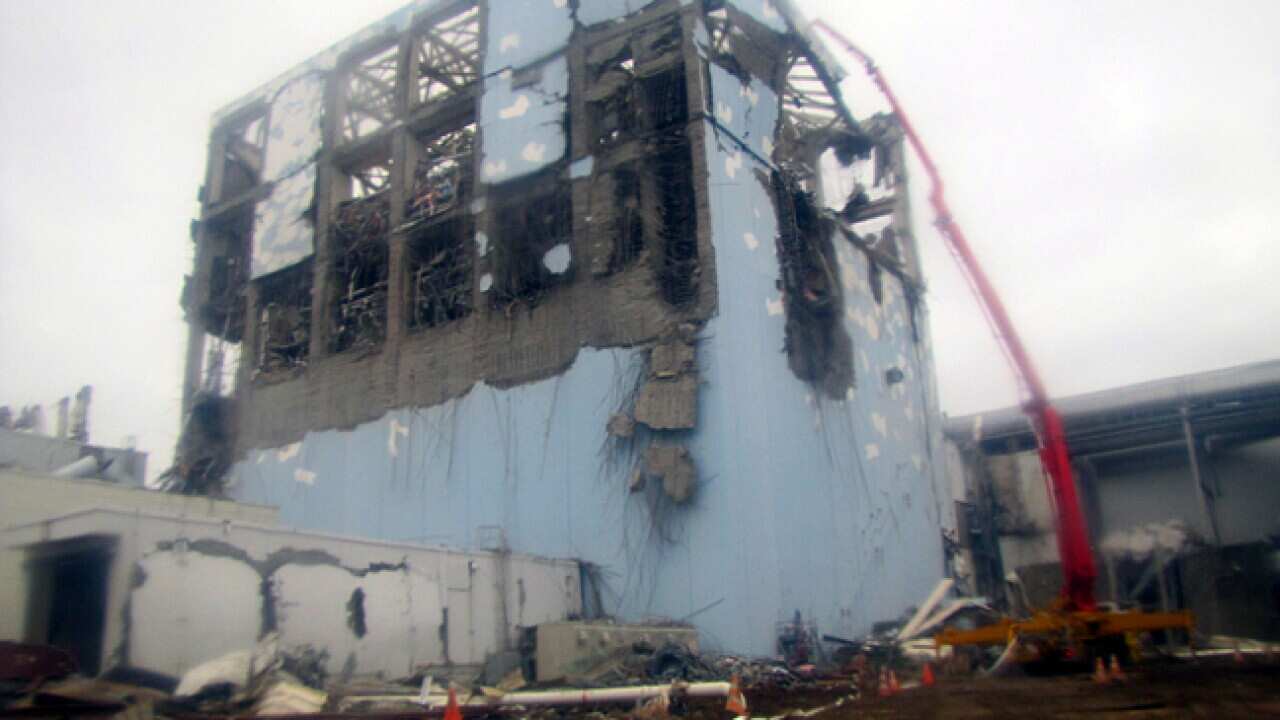
Three workers at Japan's stricken Fukushima Daiichi plant were exposed to high radiation as they attempted to restore power to reactor number three, with two hospitalised, the nuclear safety agency said.
"Three workers who were working to lay cables in the basement of the turbine building were exposed to radiation between 170 to 180 milli-sieverts," a spokesman for the Nuclear and Industrial Safety Agency (NISA) said.
"Two were sent to hospital after they found themselves in a puddle of water. Although they wore protective clothing, the contaminated water seeped in and their legs were exposed to radiation."
News that makes sense
Your trusted source for staying up-to-date with the world around you. Get free daily news updates and analysis, straight to your inbox.
An exposure of 100 milli-sieverts per year is considered the lowest level at which any increase in cancer risk is evident.
"Direct exposure to radiation usually leads to inflammation and so that's why they were sent to the hospital to be treated," the spokesman added.
All three were workers with subsidiaries of Tokyo Electric Power Co. (TEPCO) which operates the crippled Fukushima Daiichi plant situated roughly 250 kilometres (155 miles) northeast of Tokyo.
The March 11 quake and tsunami cut electricity to the plant and knocked out backup systems, causing the cooling systems to fail.
This left the fuel rods inside to heat up and evaporate water, threatening a full meltdown. The plant has been hit by explosions and fires and has emitted high levels of radiation, prompting the evacuation of tens of thousands.
Fire and army crews have hosed down the reactors to cool them and topped up spent fuel rod pools in desperate measures intended to stop a major disaster, but also creating radioactive steam.
The government has declared an exclusion zone with a radius of 20 kilometres around the power station, while telling those within 20 to 30 kilometres to stay indoors.







