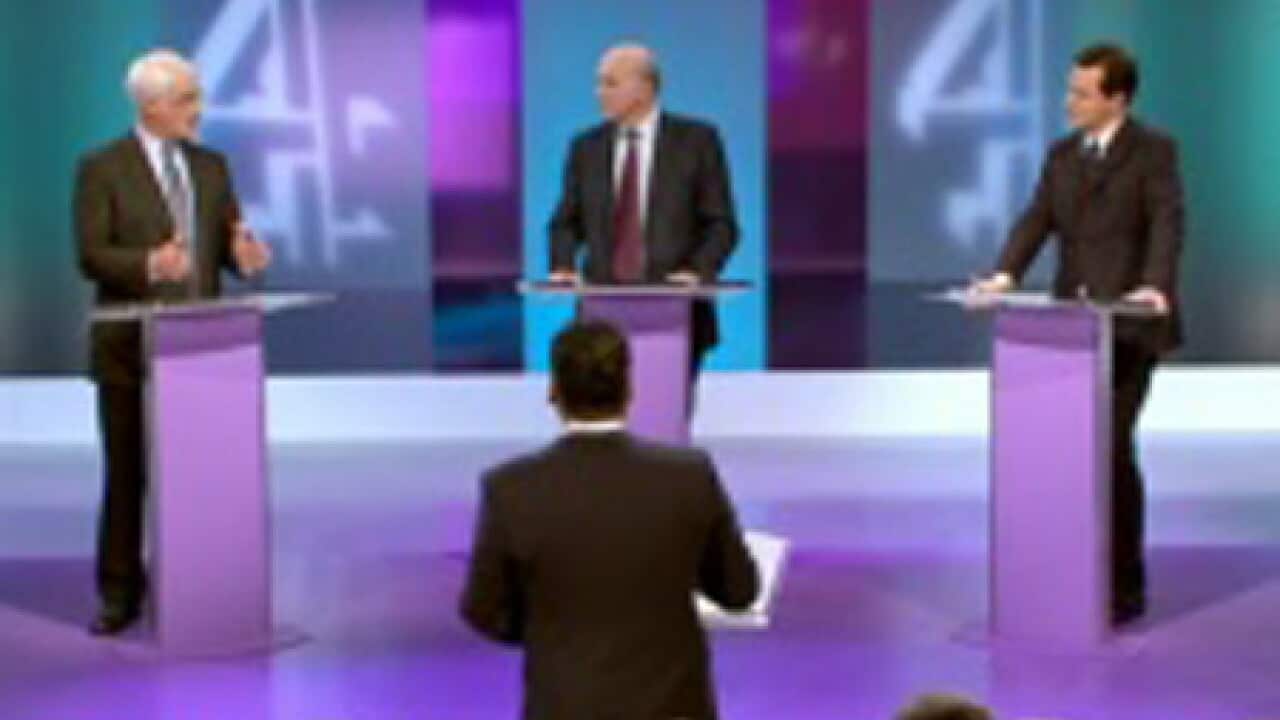
The UK election race kicked off in earnest last night, with the Labour Chancellor clashing with his two main counterparts in a televised debate.
The first of its kind in UK politics, the debate saw Chancellor Alistair Darling clash with the Conservative George Osbourne and Liberal Democrat contender Vince Cable.
Despite historically polling far below Labour and the Tories, Cable's pragmatism and perceived honesty saw polls after the debate put Cable ahead as the clear winner, with Darling second and the inexperienced Osbourne in third.
News that makes sense
Your trusted source for staying up-to-date with the world around you. Get free daily news updates and analysis, straight to your inbox.
Cable's popularity has grown exponentially since the financial crisis took hold of the UK, but, analysts say, the fact that there is little chance of the Lib Dems taking power allowed him a luxury his other two opponents did not have.
Darling's ruling Labour party trails David Cameron's Conservatives, and he clashed with Conservative Osbourne over how to tackle the country's record deficit, just weeks before a knife-edge election.
Darling accuess Conservatives of risk
Darling also accused his counterpart George Osborne, from the main opposition Conservatives, of "taking a terrible risk with the economy" over planned changes to taxation.
Ironically, the Conservatives have spent the bulk of the last two years extolling the virtues of austerity, but in recent weeks, and in last night's debate, it was Labour who managed to make the Conservatives look irresponsible when it came to spending.
Yet all three conceded public spending cuts would have to be the deepest for around 20
years to tackle the deficit.
Despite polls putting the Conservatives ahead, their lead has narrowed, and is talk of a hung parliament in which no single party gets an overall majority.
Monday's debate, in a program called "Ask the Chancellors" broadcast on Channel 4 television, kicked off a series of TV showdowns which are the first in British election history.
Labour wants to bring spending down
In the hour-long clash, Darling reiterated Labour's plans to bring down borrowing gradually over a four-year period.
"I think to go further and faster than that would actually run a serious risk of tipping us back into recession," said the chancellor.
But Osborne, whose Conservatives have pledged to slash spending straight away if they win power, lambasted Darling for not seeking to tackle the debt sooner.
"We have got a debt problem and a new government has to get out of the starting blocks and deal with it," he said.
Debt ballooning
Britain's debt has ballooned to £167 billion ($A272.85 billion)(11.8 per cent of GDP) in the current financial year.
As is the case with the televised debate popularised in the US - and utilised in Australia in recent weeks - the aim is to knock a killer blow. No killer blows were dealt and analysts mulled the dodging of a range of topics.
Prime Minister Brown will meet two of the men who want his job - the Conservative's David Cameron and still little-known Lib Dem Nick Clegg - in a series of three TV debates on the BBC, Sky News and ITV.
Brown is expected to call a general election within the next few days, with the economy likely to be a key battleground.







