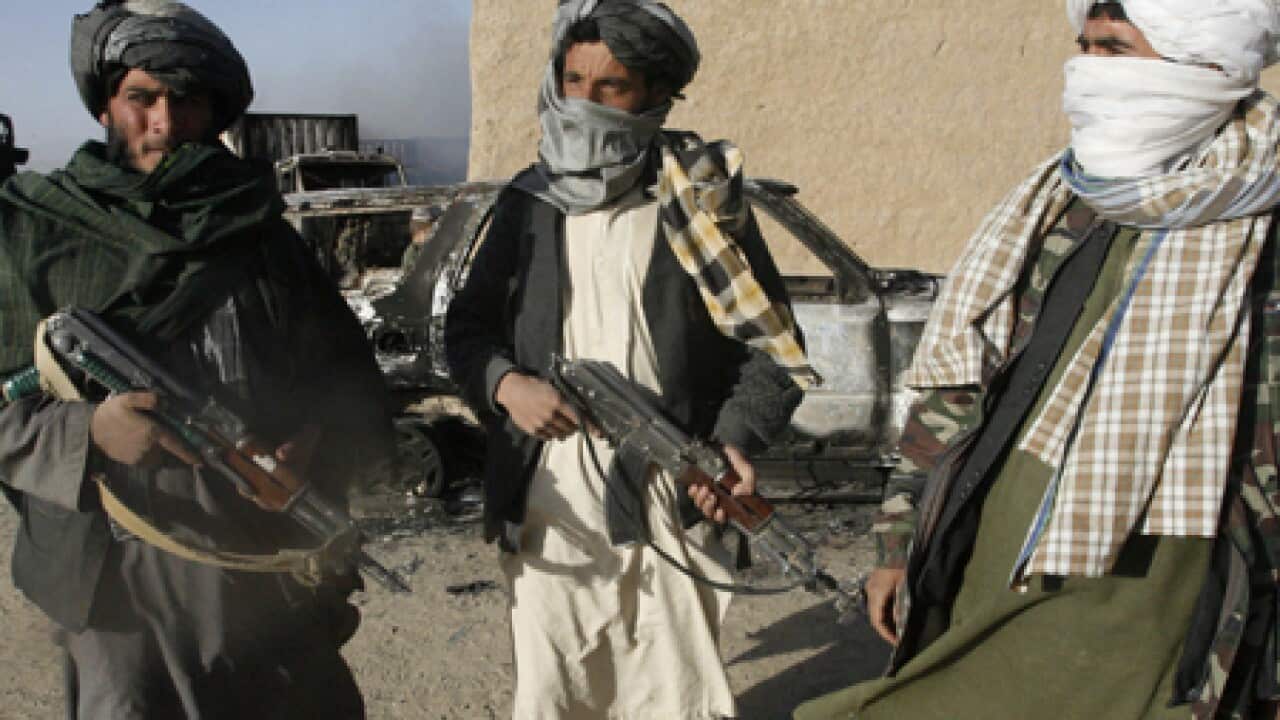
British Prime Minister David Cameron said the Taliban could have a future in the mainstream politics of Afghanistan, with the 10-year war resolved like the conflict in Northern Ireland.
On a day that four NATO soldiers were killed in eastern Afghanistan, he also announced the creation of a Sandhurst-style military academy to train Afghan officers ahead of the pullout of Western combat forces by 2015.
"In terms of the political process and political reconciliation, firstly I would say to the Afghan people, we are with you, we want to help you," Cameron told a joint news conference with Afghan President Hamid Karzai in Kabul on Tuesday.
News that makes sense
Your trusted source for staying up-to-date with the world around you. Get free daily news updates and analysis, straight to your inbox.
"To the Taliban my message is very clear. Stop bombing, stop killing, stop fighting, put down your weapons, join the political process and you can join the future of this country."
Violence in Afghanistan has been at record highs, nearly 10 years after US-led troops invaded to bring down the Taliban regime for refusing to give up Osama bin Laden after the September 11, 2001 attacks on the United States.
"I have seen in it in my own country. In Northern Ireland, we had people trying to bomb and kill police and now they are taking part in politics themselves," said Cameron.
The Taliban have always refused to lay down arms until all foreign forces leave Afghanistan, but in recent weeks officials have said efforts are being made to establish contact between the insurgents, Kabul and the United States.
Cameron said a British-led military academy hoped to open its doors in 2013 and would train 1350 Afghan officers a year, with around 120 British military trainers, attracting a funding pledge of $US38 million ($A35.48 million) from the United States.
"Today the president and I have been discussing our plan to build an Afghan Sandhurst to train the officers of the future that will form the backbone of the already successful Afghan army," said Cameron.
He also defended plans to increase British aid to Afghanistan, despite austere budget cuts at home, branding opponents "hard-hearted".







