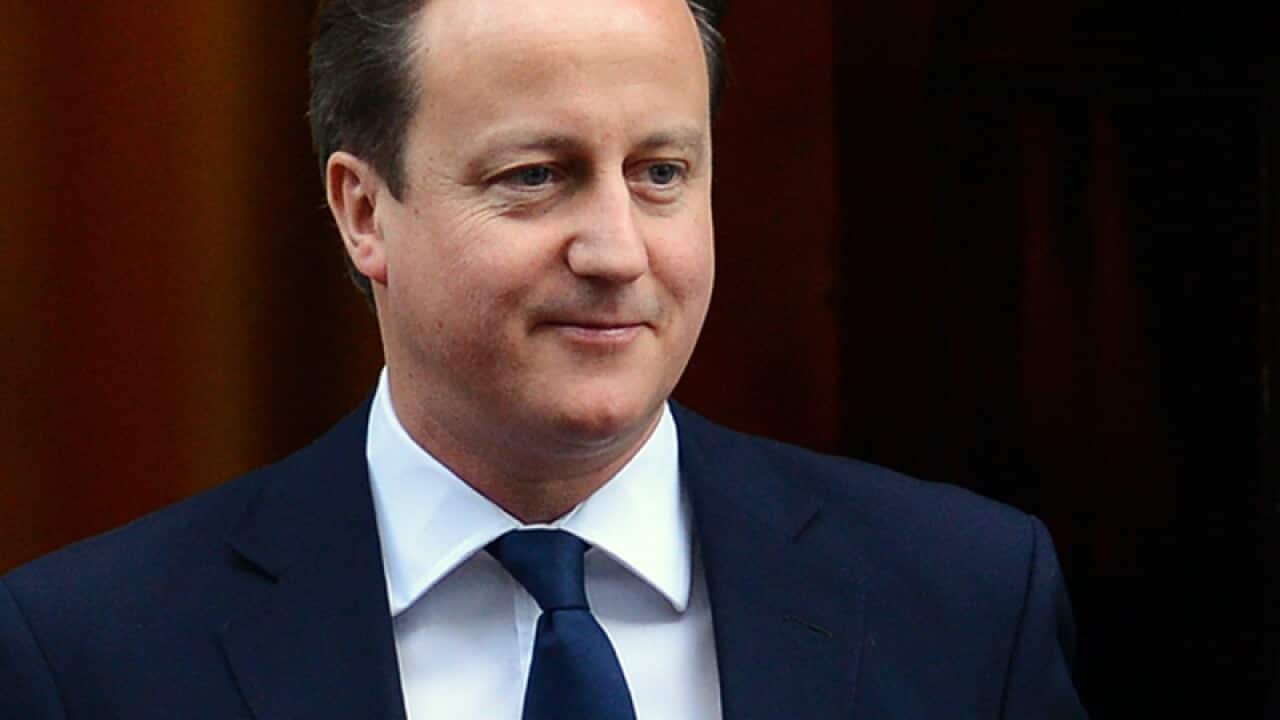
Prime Minister David Cameron will propose holding a referendum after 2015 giving British people the choice of staying in or leaving the European Union.
Cameron will say in a long-awaited speech in London that he wants to renegotiate the terms of Britain's membership because "public disillusionment with the EU is at an all-time high", and then put the new terms to the people.
According to pre-released excerpts, Cameron will say his Conservative party will make the pledge in its campaign for the general election scheduled to take place in two years' time.
News that makes sense
Your trusted source for staying up-to-date with the world around you. Get free daily news updates and analysis, straight to your inbox.
"The next Conservative manifesto in 2015 will ask for a mandate from the British people for a Conservative government to negotiate a new settlement with our European partners in the next parliament," the speech says.
"And when we have negotiated that new settlement, we will give the British people a referendum with a very simple in-or-out choice to stay in the EU on these new terms, or come out altogether. It will be an in-out referendum."
If a Conservative government wins outright victory, a referendum would be held in the first half of the next parliament, he adds.
Cameron will say he believes a referendum on British membership of the 27-nation bloc is necessary because in its current form the EU is intruding into British life.
"People feel the EU is heading in a direction they never signed up to. They resent the interference in our national life by what they see as unnecessary rules and regulation. And they wonder what the point of it all is," he will say.
Cameron had been due to give the speech in Amsterdam last Friday but postponed it because of the Algeria gas plant hostage crisis.
In the re-scheduled speech, Cameron says he understands the "impatience" of those who want to hold a referendum immediately, but insists the time is not right.
"I don't believe that to make a decision at this moment is the right way forward, either for Britain or for Europe as a whole," it says.
"A vote today between the status quo and leaving would be an entirely false choice."
Explaining why he wants to wait, Cameron will say the eurozone crisis will leave the EU transformed "perhaps beyond recognition" and that Britain wants to help shape the future of the bloc that emerges from it.
Cameron has faced pressure from the eurosceptic rightwing of the Conservative Party to take a stand on Europe, an issue that has long divided the party.
But his insistence on holding a referendum with a stark in-or-out choice will anger many of Britain's fellow EU member states, as well as his coalition government partners, the pro-Europe Liberal Democrats.
It will also dismay many business leaders and the opposition Labour party, who have warned Cameron that to offer the possibility of a referendum risks creating uncertainty and will lead Britain to the edge of an "economic cliff".
Cameron has also faced warnings from Britain's close ally the United States against isolating the country from the EU.
The speech has been delayed a number of times.
Plans to give it first emerged six months ago, and there was talk that Cameron might deliver it at the Conservative party's annual conference in October, followed by reports that he would give it at Christmas.
The speech was then widely expected on January 22, but Cameron moved it forward when it emerged that it clashed with commemorations for the 50th anniversary of Franco-German reconciliation following World War II.
Then the Algeria crisis intervened to force another change of plans.







