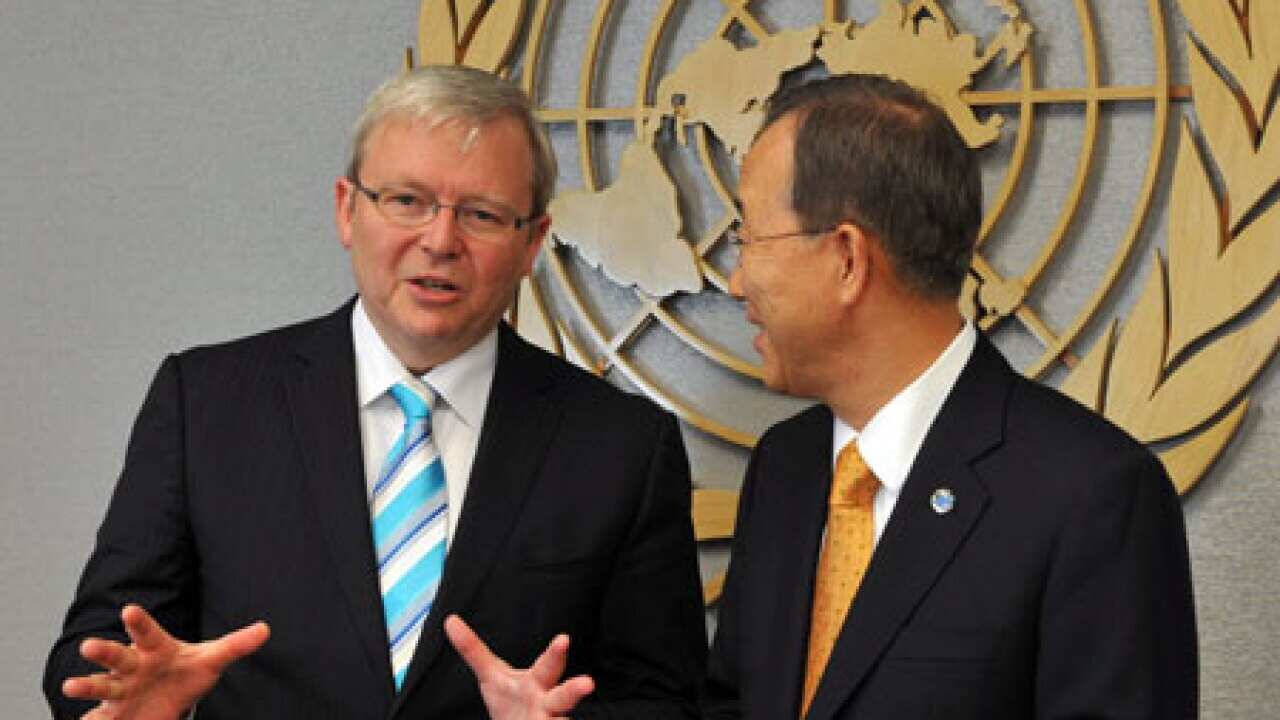
UN Secretary-General Ban Ki-moon called for an "urgent" global response to the Pakistan floods as he opened an international ministerial meeting on the disaster.
The meeting, which brought together US Secretary of State Hillary Clinton and about 25 other top ministers, sought extra resources for the stricken country after the United Nations issued a record two billion dollar emergency appeal.
Clinton said that the United States has now allotted about 340 million dollars in disaster relief to Pakistan. Britain on Sunday doubled its aid to about 200 million dollars and the European Union said it has now contributed 315 million dollars.
News that makes sense
Your trusted source for staying up-to-date with the world around you. Get free daily news updates and analysis, straight to your inbox.
Iran said it has now set aside 100 million dollars, China and other countries also announced new financial contributions and emergency food aid, but it was unclear whether it would all add up to the two billion dollars requested.
"We are here because the Pakistan floods are one of the biggest, most complex natural disasters we have faced in the history of the United Nations," Ban told the meeting.
Foreign Affairs Minister Kevin Rudd has told the UN he is very worried about an outbreak of disease in Pakistan, following devastating floods there.
Mr Rudd visited flood-affected areas of Pakistan last week, before heading to the US for his first diplomatic meetings since being deposed as prime minister by Julia Gillard in June.
He said he was concerned a humanitarian disaster could result from the floods if more wasn't done to help Pakistan.
"We are concerned on the relief effort that we may still see the prospect of a serious epidemic arising from water-borne diseases," he told the UN in New York.
"The early evidences in our field hospitals suggest a rising number of cases of cerebral malaria, other serious diseases, as well as early signs of malnutrition."
Torrential rain started falling in northern Pakistan in late July and the floods have since been moving slowly south, wiping out villages and farmland. Ban highlighted that it had affected an estimated 20 million people, with up to 12 million needing urgent humanitarian assistance.
The UN asked for 460 million dollars in August but has been forced to quadruple the figure because of the scope of the disaster.
"This new appeal extends the emergency relief to six months and includes the crucial element of early recovery for the next 12 months. I call for your urgent response," said the UN chief.
"The floods in Pakistan are a global disaster, a global challenge, and a global test of solidarity," he said.
"Of course, we know this is happening in a part of the world where stability and prosperity are profoundly in the world's interests."
A special analysis on the impact of the floods is to be prepared for mid-October and the Pakistan government and UN agencies will then outline new long term plans to rebuild the stricken area.
But Lieutenant General Nadeem Ahmad, head of Pakistan's National Disaster Management Authority, told the meeting that the country had only 20 percent of the food and 20 percent of the water needed for the stricken 20 million people.
Pakistan Foreign Minister Shah Mehmood Qureshi said the world community should multiply the impact of Hurricane Katrina in the United States in 2005 by 100 times to understand the scope of the devastation.
Clinton said the United States has already provided about 345 million dollars in governmental assistance, through cash, emergency relief supplies and rescue work.
She highlighted the role that Pakistan must play however in becoming self-sufficient and raising more money for reconstruction at home and the need for "transparency" in the use of aid.
"We must better coordinate our efforts. We must be very mindful of what Pakistan says its needs are," Clinton said.
Britain's International Development Secretary Andrew Mitchell announced that his country would add 70 million pounds to its existing 64 million pounds in emergency aid taking the total to about 200 million dollars.
"Grave challenges lie ahead as people in Pakistan begin to recover from the floods," Mitchell said.
"Aid so far has focused on keeping people alive. We need to continue to focus hard on the public health dangers, which remain extremely serious. But we also now need to start helping people to get back on their feet."







