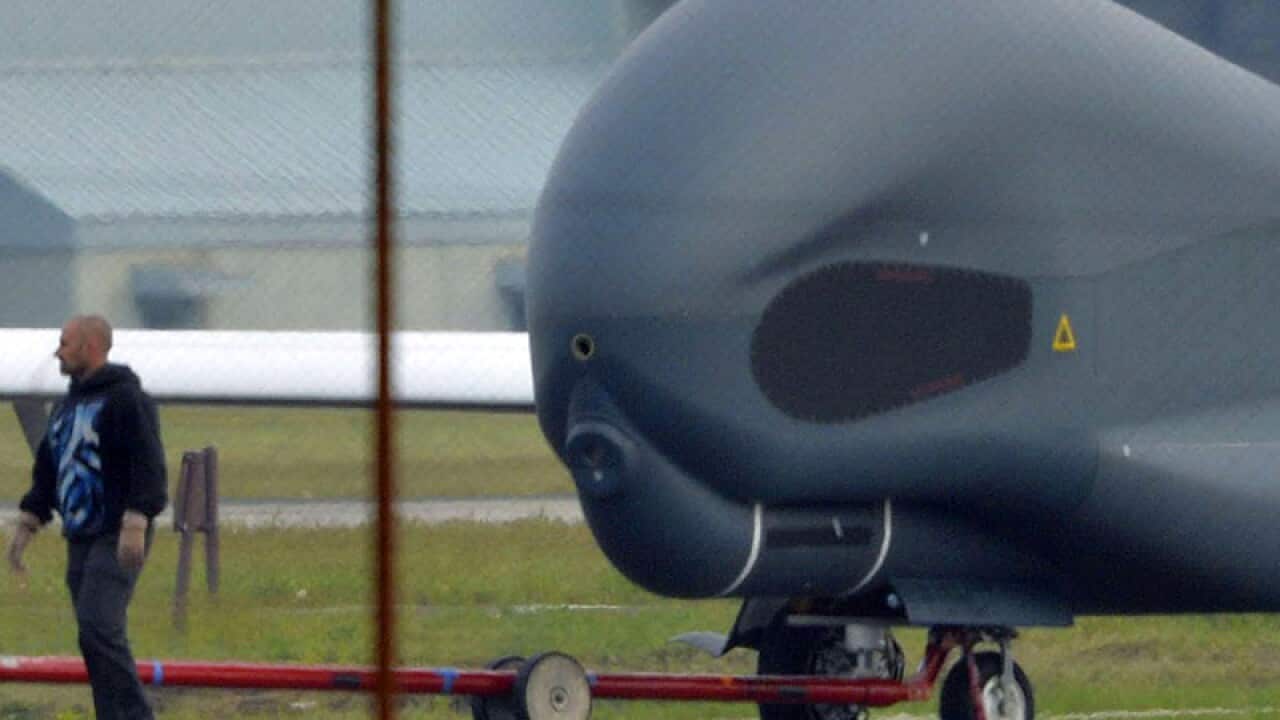
UN peacekeeping missions should deploy more drones and state-of the art technology to become more effective, limit boots on the ground and keep aid workers safer.
On the International Day of UN Peacekeepers, staff on Thursday paid tribute to more than 3,000 peacekeepers who have died since 1948, including 106 last year, and to those still serving on the frontline.
The head of UN peacekeeping, Herve Ladsous, said that a peacekeeper died on average once every three days in 2013, and that technology needs to be upgraded to assist a record number of UN boots on the ground.
The Security Council last month approved a new mission in the Central African Republic and in December voted to send an extra 5,500 soldiers to war-torn South Sudan.
"Clearly we cannot continue to afford to work with 20th century tools in the 21st century," Ladsous told reporters in New York.
News that makes sense
Your trusted source for staying up-to-date with the world around you. Get free daily news updates and analysis, straight to your inbox.
He said drones had already helped in the Democratic Republic of Congo and could be vital in improving humanitarian access.
"They (convoys) can use the images of the machines to make sure they are not going to be attacked or hijacked on the way. That, I think, is a very significant development," Ladsous said.
"We do need them (drones) in countries like Mali, like Central African Republic and clearly in South Sudan it would be my desire that we might deploy them," he said.
Surveillance drones could replace some military observers and make a big difference.
"In some cases using technology can make it necessary not to have so many boots on the ground and also, lets never forget, to improve on the delivery," Ladsous said.
Ladsous expressed hope that the quickening departure of Western troops from Afghanistan could see more European Union and NATO countries take part in UN peacekeeping missions.
"This is an opportunity for them to come back or move into United Nations peacekeeping, especially with high-tech assets, state of the art equipment... that could make the difference."
He pointed to Ireland, in the Golan Heights, and the Netherlands and Sweden, in Mali, as examples of EU and NATO countries who had also served in Afghanistan.
Ameerah Haq, head of field support, told reporters that fuel-efficient cars, solar power, night-vision capabilities and tethered balloons would also be useful.
"What gives the best capability to the troops? And if that is technology then certainly we want to study to see what is in our means to deploy," she said.
Haq said UN peacekeepers were more at risk than ever.
Ladsous singled out the UN missions in Darfur and South Sudan as the deadliest in 2013.
He also expressed frustration about the extra 5,500 troops approved for South Sudan being "too slow" to deploy.
In Darfur, he said violence was also on the rise, with another 300,000 people internally displaced since the end of last year - the same number as during the whole of 2013.







