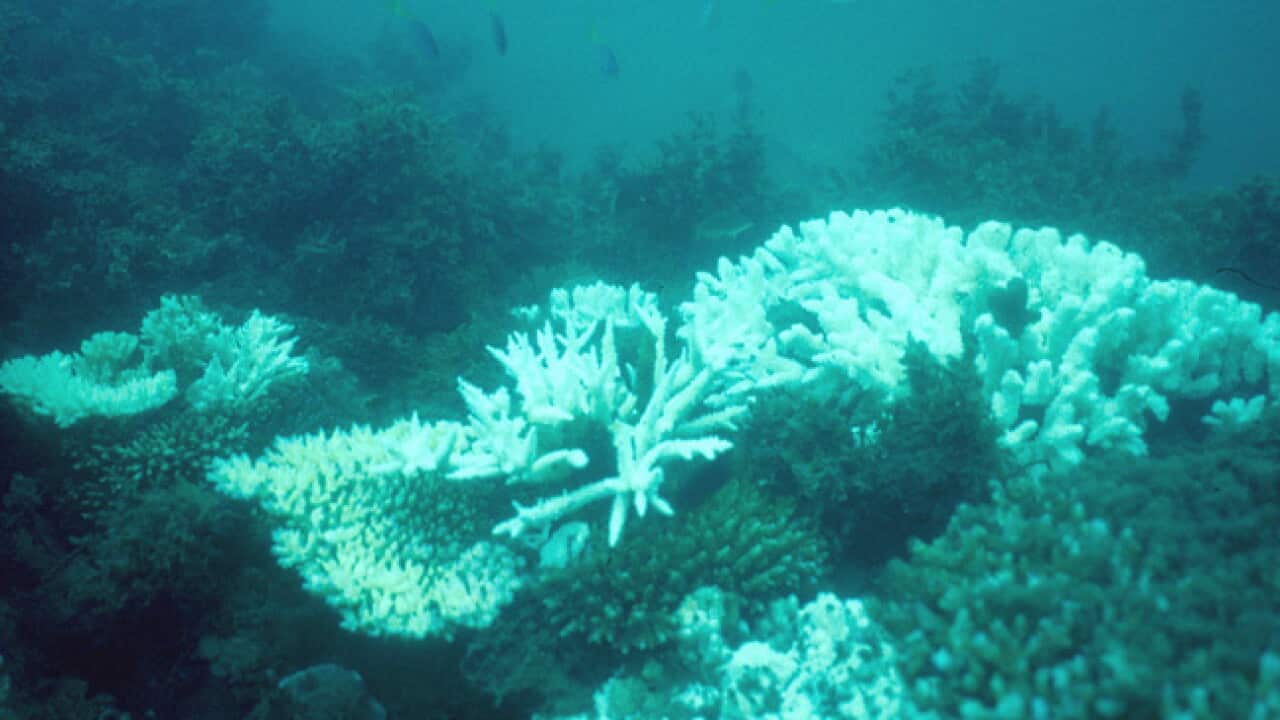
The federal and state governments have welcomed the time to respond, but environmental groups and scientists says the state and federal governments need to act more quickly to address the concerns on industrial development.
(Transcript from World News Australia Radio)
The issue of whether the heritage listing of the Great Barrier Reef should be changed to a listing of "in danger" was scheduled for debate at the United Nation's World Heritage Committee annual session in Cambodia's capital, Phnom Penh.
The committee agreed to adopt a draft decision to defer the matter until the committee's next meeting in June 2014.
The committee says while progress has been made on water quality concerns, more work needs to be done to protect the Reef from increasing coal and gas extraction and shipping.
News that makes sense
Your trusted source for staying up-to-date with the world around you. Get free daily news updates and analysis, straight to your inbox.
The Greens say the new deadline effectively puts the state and federal governments on notice to address the impacts of coastal development.
Greens Senator Larissa Waters has a bill before the Senate to halt new developments in pristine areas.
She says the state and federal governments need to drastically scale up their response.
"Australia needs to take urgent and decisive action to act on those recommendations about ports. So I'm afraid it's all very well for the Queensland and Commonwealth governments to tinker around the edges but they are still avoiding the key recommendations which are saying don't turn the Reef into a coal and gas highway and rubbish trip for dredge spoil."
But Queensland Environment Minister Andrew Powell says planned port expansions do not pose a threat the Reef.
He says the state government has acted to restrict port developments to clearly designated areas as recommended by the World Heritage Committee.
"We made it very clear in the draft port strategy that we put out for consultation that it is our expectation that we focus expansion efforts on existing port development areas for the next 10 years. So I'm still uncertain where UNESCO is getting the impression that they are. We will work to ensure that communication to them."
A strategic assessment on the Great Barrier Reef from the state and federal governments was due in March and has yet to be released.
Minister Powell acknowledges the state government could have acted more quickly to produce the assessment.
"Look that strategic assessment is a joint piece of work being led by the Commonwealth government. What we have been frustrated about is that there have been additional pieces of information that we could have got to UNESCO sooner in their preparation of this more recent draft recommendation. For example the second report card on the water quality in the Reef was due out last September. It was ready to go before Christmas yet wasn't released by the Commonwealth government until April, which was after UNESCO had formulated their draft recommendations."
Meanwhile, federal Environment Minister Tony Burke has welcomed the World Heritage Committee's report as evidence of the progress made by the federal government in managing the reef.
He says significant improvements have been made in the independent review of port developments and the monitoring framework for the Reef.
But scientist Jon Brodie, from the Australian Centre for Tropical Freshwater Research at James Cook University, says he still has concerns.
"In the environmental impact assessment process, you'd want it to be internationally and independently reviewed. That doesn't happen. For large cumulative developments, like Gladstone, potentially Abbott Point, you would want it to be looked as one big development and not several individual large developments actually. That's not done, they're done one at a time. There was no assessment of cumulative impacts of under the environmental impact assessment process. And then for instance the monitoring programs are done - the compliance monitoring to make sure that things aren't going bad - they're all done by consultants and not independently reviewed either. There's just no level of transparency or independence in the environmental management of these port developments."
Meanwhile, the Opposition's environment spokesman, Greg Hunt, says an incoming Coalition government would direct its efforts towards reducing what the Coalition believes are the key factors behind the pollution of the Great Barrier Reef.
"Our task is to put in place a Reef 2050 plan. And we have a plan based on incentives to reduce run-off, which in turn helps us with a direct assault on the crown of thorns [starfish], which is the key killer of the reef. And the third element is assistance for maintaining and improving the populations of the iconic turtle and dugong species."
The Australian Marine Conservation Society says the World Heritage Committee's report will put pressure on both the federal and the state governments to protect the Reef from port developments.
The group has renewed its call for a moratorium on new port developments.
Campaign director Felicity Wishart says such a moratorium is needed to prevent a downgraded "in danger" listing for the reef that would set a worrying precedent.
"As a developed nation with one of the most well-known marine ecosystems on the planet -- the Great Barrier Reef is one of the seven natural wonders of the world -- there is a very high expectation that Australia will look after it and set the standard by which everyone else should aspire. So for us to be at risk of having this site being put on the "in danger" list would be a terrible thing in many ways. Most of the "in danger" sites that we see in the world for world heritage are ones in war-torn countries where there are terrible problems with poverty and inability for those countries to look after those sites properly. We don't have those problems here. So Australia really needs to set the standard."







