In Brief
- An independent UN Commission of Inquiry found Gaza's ceasefire has not ended the deliberate targeting of children in Gaza.
- Since the ceasefire, children have been killed crossing the "yellow line" that divides Israel and Hamas-held territory.
Eight months after the Gaza ceasefire began, Palestinian children are still being targeted by Israeli forces for crossing the vaguely defined "yellow line", according to a new report from the United Nations Independent International Commission of Inquiry.
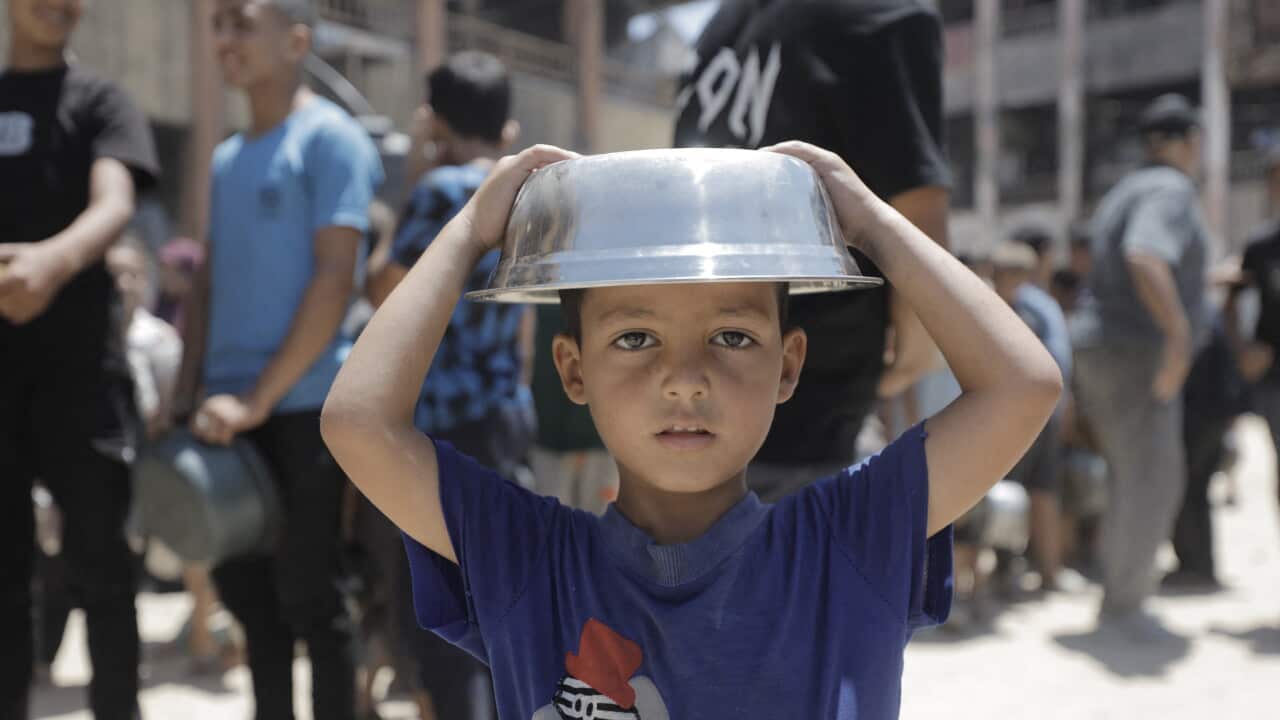
The commission alleges Israeli forces have continued to deliberately target Palestinian children during the ceasefire, which, alongside the targeting of healthcare and education facilities and restricting the flow of aid, it says is severely impacting the ability of children to thrive.
"Even if the bombs and guns fall silent in Gaza and the West Bank, Palestinian children will not simply recover overnight," the commission's chair, Srinivasan Muralidhar, said in a statement.
The United Nations Independent International Commission of Inquiry, which does not speak on behalf of the UN as a whole and has been sharply criticised by Israel, concluded in September that Israel is committing genocide in Gaza.
Israel is separately defending a genocide case at the International Court of Justice (ICJ), which has ordered provisional measures but has yet to issue a final ruling.
News that makes sense
Your trusted source for staying up-to-date with the world around you. Get free daily news updates and analysis, straight to your inbox.
A spokesperson for Israel's Ministry of Foreign Affairs rejected the recent report's findings, calling it a "propaganda piece as outrageous as its previous ones".
"It completely erases Israeli children who were brutally murdered, kidnapped, and targeted by Hamas, while ignoring Hamas' cynical use of Palestinian children as human shields and pawns of war," it said.
Since the ceasefire began in October, the Ministry of Health in Gaza reported that at least 978 Palestinians had been killed, and just under 4,000 injured — a statistic that cannot be independently verified as Israel does not permit international journalists to enter Gaza.
The United Nations Children's Fund (UNICEF) estimated 265 of post-ceasefire deaths were children.
Israel and Hamas have repeatedly accused each other of violating the truce since it came into effect.
What's in a ceasefire?
Australian emergency doctor Thienminh Dinh, 37, managed medical activities at the Doctors Without Borders field hospital in Al-Zawaida, Gaza, for two stints.
The first, between May and June 2025, was before the ceasefire. The second stint, between October and December 2025, began shortly after the ceasefire was announced.

She told SBS News there was a slight decrease in the volume of air strikes after the ceasefire, but the attacks still continued.
"Ceasefires have lost all meaning. The violence never truly stopped," she said.
"There were still daily blasts. We also saw critical medical supplies, humanitarian and infant formula repeatedly delayed or obstructed from reaching our team."
Children, who made up half of Gaza's population before Hamas' 7 October 2023 attack on Israel, were disproportionately impacted.
"We treated screaming children with severe blast injuries that had torn through their bodies," she said.
"I remember a father rushing into our emergency department, carrying his infant daughter, pleading with us to bring her back to life.
"For most patients, it wasn't just a single injury. The severity of the airstrikes was such that most patients came in a combination of everything."
The ceasefire initially came with the promise of a joint peace-keeping force to help the flow of aid and provide stability. The force, along with the stability, never eventuated.
Eight months on, Dinh reported colleagues on the ground were struggling with equipment and medicine shortages.
She said her colleagues are "forced to buy metals and plastics at home from the local markets and putting together prostheses from that".
Dinh urged people not to forget that violence is still part of everyday life in Gaza.
"For any civilians, especially the children, the violence never stopped."
Yellow concrete blocks
The report alleged direct and indirect Israeli military attacks, torture, and the targeting of critical infrastructure all contributed to the deaths of at least 20,179 children since 7 October 2023.
Since the ceasefire, the report highlighted an arbitrary border it argued was being used to deliberately target children: the "yellow line".
In one alleged targeted killing on 29 November 2025, two brothers, Fadi and Juma Abu Assi, were killed by Israeli forces while gathering firewood near Khan Younis in southern Gaza. It's understood they were collecting firewood on behalf of their father, who used a wheelchair.
The report said the Israeli military had identified the boys, aged nine and 10, as "suspects" crossing the "yellow line".
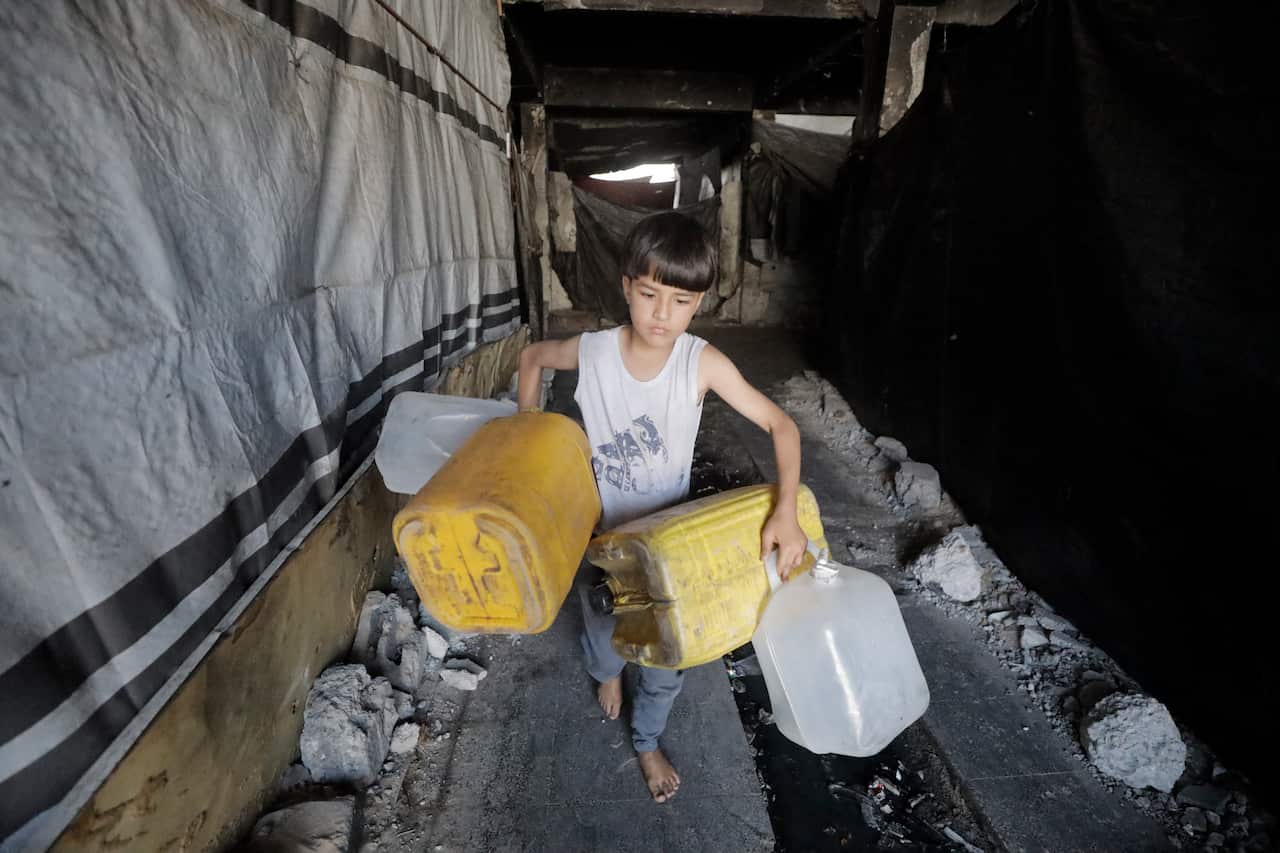
After the ceasefire agreement in October 2025, Israel agreed to withdraw to an area marked by what's called the "yellow line".
The line gives Israel approximately 53 per cent of the territory in the Gaza Strip, with the remaining territory under Hamas control.
The UN Commission of Inquiry said the "yellow line", which is marked by concrete blocks and often shifting positions, was lethally enforced without clear and transparent communication.
The Times of Israel reported in October that Israeli defence minister Israel Katz had ordered physical markers to be placed along the yellow line, with the markers to serve as a warning to "Hamas terrorists and Gaza residents that any violation or attempt to cross the line will be met with fire".
Dinh told SBS News most residents had no idea where the line was.
"Palestinians who don't have access to media, most of them don't have access to the internet, they don't know when the lines are moved."
One doctor who had worked in Gaza after the ceasefire told the commission it was difficult for Palestinians to know where the line was.
"It is just some random yellow blocks placed at random distances, and there is nothing clearly marking it ... so it is impossible for people, particularly children, to know or locate the line."
Since the "yellow line" was established, it has since moved to encompass 64 per cent of the territory in the Gaza Strip.
In May, Israeli Prime Minister Benjamin Netanyahu declared his intention to expand Israeli-controlled territory to roughly 70 per cent. The expanded territory is referred to as the "orange line" and is unmarked.
Dinh said the ever-expanding territory was a lose-lose for children in Gaza.
"It doesn't matter what side of the line they're on," Dinh said.
"They're still attacked. They're still bombed, and shot at with drones."
For the latest from SBS News, download our app and subscribe to our newsletter.







