The United Nations says "the race is on" to make sure Syria keeps to deadlines to destroy its chemical weapons with a key treaty taking effect for Damascus.
The Chemical Weapons Convention came into force for Syria on Monday.
That is one month after the Organization for the Prohibition of Chemical Weapons (OPCW) accepted President Bashar al-Assad application, submitted in a bid to head off a Western military strike.
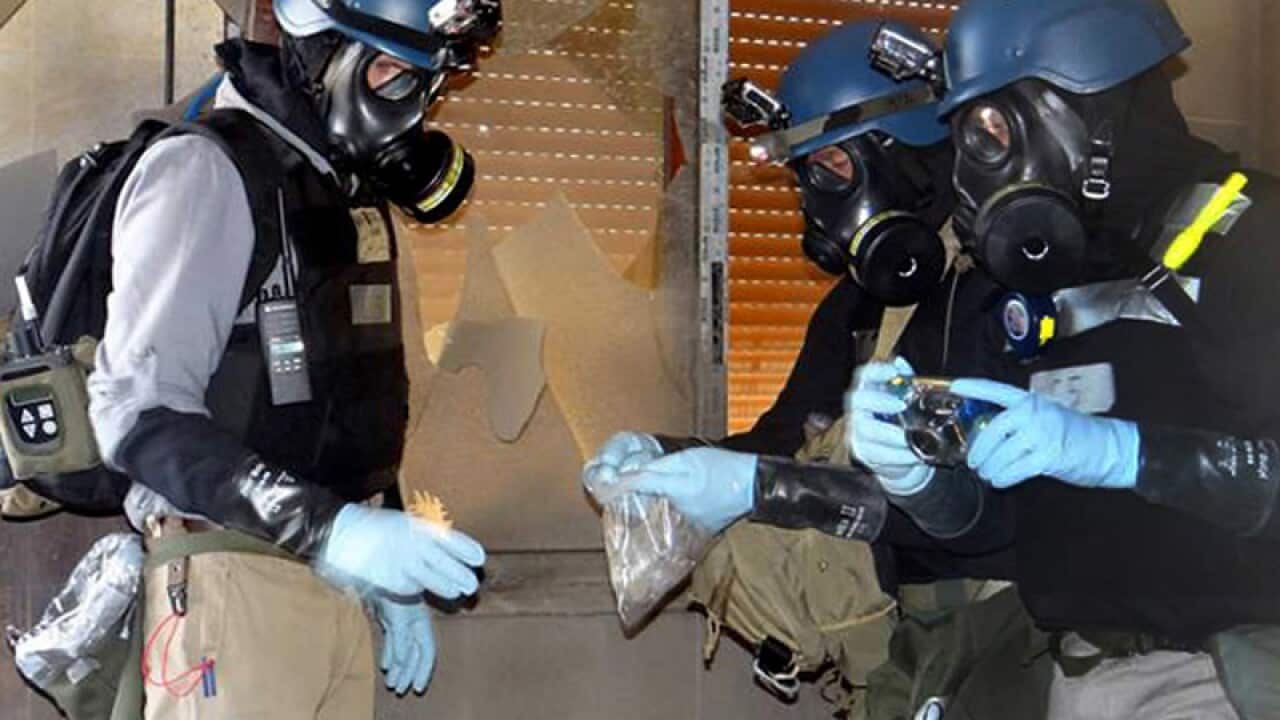
The OPCW and the United Nations have about 60 experts already working in Syria to eradicate the war-torn country's banned arms. This will eventually be increased to 100.
UN spokesman Martin Nesirky said Syria was providing "good co-operation," but the official backing of the convention was a key step.
News that makes sense
Your trusted source for staying up-to-date with the world around you. Get free daily news updates and analysis, straight to your inbox.
"Of course there are very tight deadlines to be kept, but it is a very welcome development," Nesirky told reporters.
The inspectors' work is now being done in a legal framework, Nesirky said.
"The race is on really to make sure that those deadlines continue to be met."
The United States threatened a military strike after an August 21 chemical weapons attack near Damascus in which hundreds died.
Under a disarmament plan that has been given legal force by a UN Security Council resolution, the government has until mid-2014 to get rid of its sarin, mustard and VX gas.
But UN leader Ban Ki-moon warned when he set out key steps in the disarmament plan that such an operation has "never been tried before".
Syria met deadlines to declare its chemical facilities, and the information is now being checked by the OPCW experts.
But the chemical watchdog says Syria's war is already holding up the work and has appealed for local truces to get access to weapons sites.
Syria must give the OPCW a plan for destroying its estimated stockpile of 1000 tonnes of chemicals by October 27 - one month after the Security Council resolution.
The plan lays down that Syria's arms production and chemical mixing facilities must be destroyed by November 1. But the OPCW inspectors have not yet visited all of Syria's chemical sites.
Then, by November 15, the OPCW will have to set out a detailed plan with a timetable for the destruction the actual chemicals by next year.
Russia and the United States, which drew up the disarmament plan, are still working with the OPCW on how to destroy them, diplomats said.







