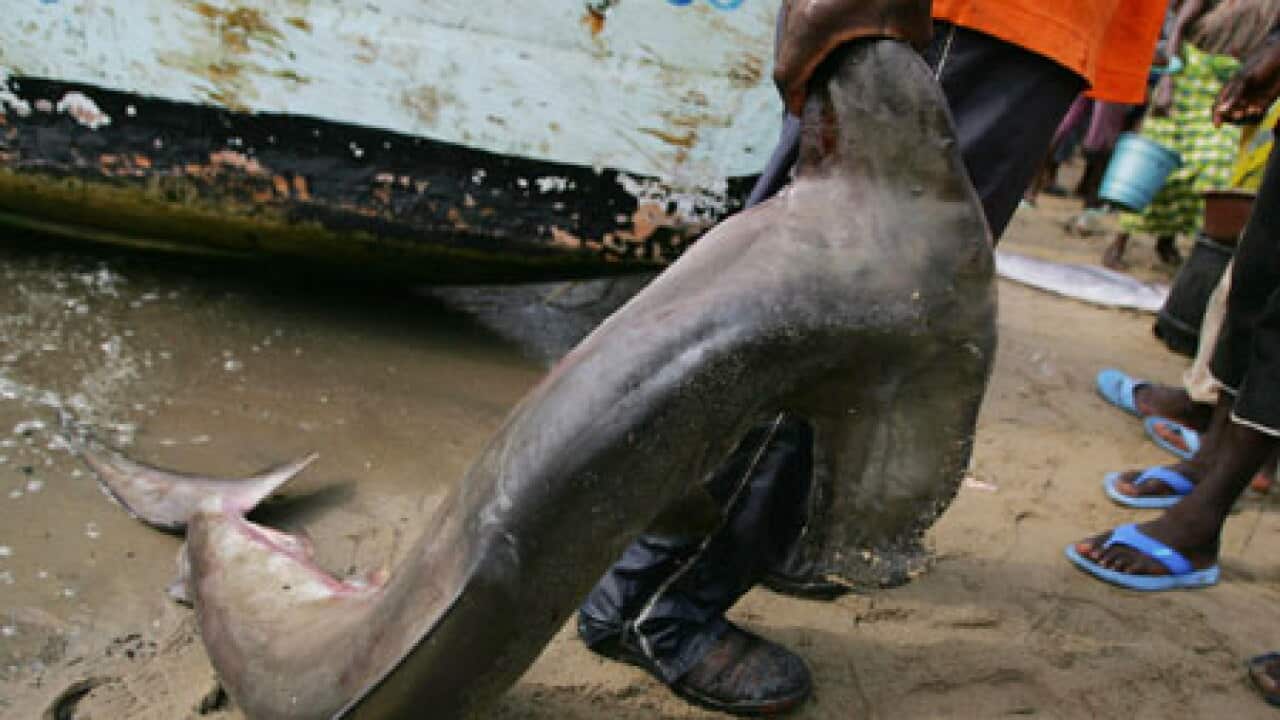
The only marine species granted protection at a meeting of the Convention on the International Trade in Endangered Species was the temperate zone porbeagle, a shark fished for its meat.
Earlier, bids to impose a global trade ban on Atlantic bluefin tuna and to require export monitoring for seven species of precious coral both fell well short of the required two-thirds majority.
News that makes sense
Your trusted source for staying up-to-date with the world around you. Get free daily news updates and analysis, straight to your inbox.
The shark species left exposed to regulated global commerce were the scalloped hammerhead, the oceanic white tip and the spiny dogfish.
Millions of hammerhead and whitetip are extracted from seas each year, mainly to satisfy a burgeoning appetite for sharkfin soup, a prestige food in Chinese communities around the world.
The US proposals were rejected by a narrow margin, opening the possibility that one or both could get a second hearing on Thursday when the 13-day conference ends.
Only decades ago, the two species were among the most common of the semi-coastal and open-water sharks.
But incidental catch and demand for fins has slashed populations by 90 percent in several regions.
The fish are often tossed back into the water after their precious fins have been sliced away.
The scalloped hammerhead is listed by the International Union for the Conservation of Nature (IUCN) as "vulnerable" globally, while the whitetip is "critically endangered" in the northwestern Atlantic, and "vulnerable" elsewhere.
Once the highest level of biomass in the Gulf of Mexico, the whitetip is 99 percent depleted there today, according to marine biologist Julia Baum.
Japan led opposition to the four measures, arguing that management of shark populations should be left to regional fisheries groups, not CITES.
Conservationists counter that fishing for sharks is currently unregulated.
"The problem today is not there is serious mismanagement of trade in sharks, as for tuna, but that there is no management at all," said Sue Lieberman, policy director for the Washington-based Pew Environment Group.
The proposals called for listing on CITES' Appendix II, which requires countries to monitor exports and demonstrate that fishing is done in a sustainable manner.
The scientific panel of the UN Food and Agriculture Organisation (FAO) recommend protection for all the species except the spiny dogfish which, along with the porbeagle, was also voted down at the last CITES meeting in 2007.
Fished for its meat not its fins, stocks of porbeagle -- which gestates for nine months and can live up to 65 years -- have collapsed to about 10 percent of historic levels in the Mediterranean and the northeast Atlantic.
Conservation groups reacted angrily to the three "no" votes.
"It appears that science no longer matters," said Elizabeth Griffin of wildlife conservation group Oceana, based in Washington. "CITES is not fulfilling its obligation to protect species threatened by international trade."
Gus Sant, a shark expert at wildlife monitoring group TRAFFIC said: "The decision not to list all of these sharks is a conservation catastrophe. The current level of trade in these species is simply not sustainable."
Many NGOs said that intensive lobbying by Japan played a critical role in the measures being shot down.
"We see clearly now the Japanese motivation for opposing all these marine species proposals," said Anne Schroeer, a Madrid-based economist with Oceana.
"For the whales, they say we are catching it traditionally. For the bluefin tuna, they say we are eating it. But for the sharks, there is nothing but pure economic interest."
All told, a third of the world's 64 species of pelagic, or open water, sharks face extinction, according to a report issued last June by the IUCN's Shark Specialist Group.







