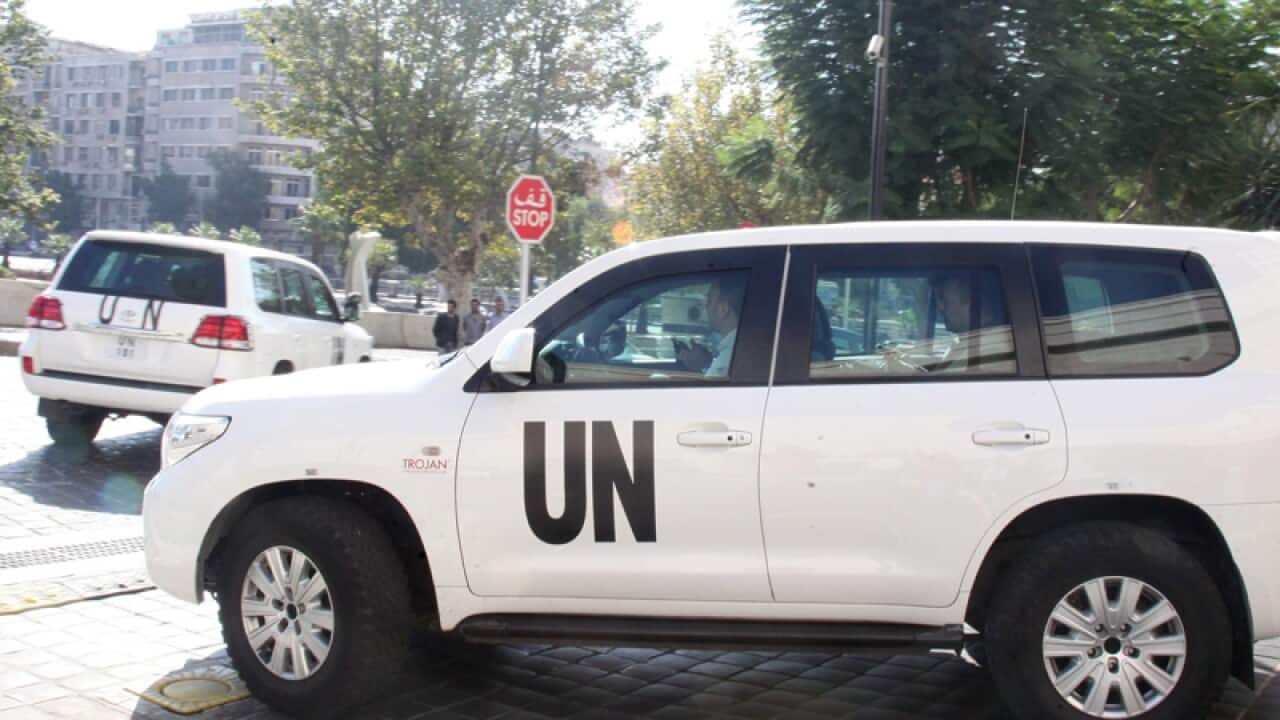
Syrian President Bashar al-Assad can take "credit" for moving quickly to eliminate his regime's chemical arms, US Secretary of State John Kerry said after experts began destroying the banned arms.
The operation, performed by Syrian personnel supervised by international disarmament experts, comes under the terms of a UN Security Council resolution that will see Damascus relinquish its chemical arsenal.
"The process has begun in record time and we are appreciative for the Russian cooperation and obviously for the Syrian compliance," Kerry told reporters Monday alongside Russian Foreign Minister Sergei Lavrov in Bali after the two held talks.
"I think it's extremely significant that yesterday, Sunday, within a week of the (UN) resolution being passed, some chemical weapons were being destroyed," Kerry said.
"I think it's a credit to the Assad regime, frankly. It's a good beginning and we welcome a good beginning."
News that makes sense
Your trusted source for staying up-to-date with the world around you. Get free daily news updates and analysis, straight to your inbox.
Syria agreed to give up its chemical arsenal under last month's UN resolution that enshrined an agreement struck between Washington and Moscow aimed at averting US military action.
Under the plan, Syria's chemical weapons mixing and production facilities must be destroyed by November 1.
On Sunday, a statement released by the United Nations and the Organisation for the Prohibition of Chemical Weapons (OPCW) said inspectors were verifying details of Syria's chemical arsenal and overseeing destruction work.
Syrian workers "used cutting torches and angle grinders to destroy or disable a range of items", the statement said, to destroy or disable "missile warheads, aerial bombs and mixing and filling equipment."
Syria's chemical arsenal, believed to include 1000 tonnes of the nerve agent sarin, mustard gas and other banned arms at dozens of sites, must be destroyed by mid-2014.
As the operation got under way, Assad admitted in an interview that his government had made "mistakes" in the country's brutal conflict.
But he again denied that his forces used chemical weapons in an August 21 attack that killed hundreds of civilians.
The assault led to threats of a US strike and eventually the UN resolution requiring Syria to turn over its arsenal.
Later on Monday, UN chief Ban Ki-moon is expected to send a report to the Security Council detailing the logistics of what is considered one of the biggest and most dangerous disarmament operations ever staged because the conflict in Syria is still raging.







