In Brief
- At least 7,000 confirmed and suspected cases of a rarely fatal gastrointestinal disease have been identified.
- Authorities are yet to determine the outbreak's source, as case numbers continue to climb.
Salads? Lettuce? Fast food chains?
All possible culprits are under the microscope as health officials in the United States work to understand how thousands of people in 36 states came to be struck down by a foodborne parasite.
Health authorities there are scrambling to trace the origins of a cyclosporiasis outbreak.
Triggered by a microscopic parasite, the Centers for Disease Control and Prevention (CDC) says it has identified at least 7,000 confirmed and suspected cases in the outbreak, but has warned the number could be far higher.
By the same time last year, the US had only recorded 249 cases of the disease.
News that makes sense
Your trusted source for staying up-to-date with the world around you. Get free daily news updates and analysis, straight to your inbox.
The illness "spreads when people consume food or water contaminated with the parasite, typically fresh produce that has not been adequately washed or cooked", Gwen Biggerstaff, deputy director of CDC's division of foodborne, waterborne, and environmental diseases, told Agence France-Presse.
"The true number of infections is almost certainly higher, because many people with mild illness recover," Biggerstaff staid.
The rarely fatal illness typically takes a week to make itself known. The CDC says its main symptom is persistent, watery diarrhoea "with frequent and sometimes explosive bowel movements."
The CDC says 141 people have been hospitalised with the illness so far.
The outbreak — which the CDC says will last well into August — has captured the internet's attention, with memes about the illness spreading widely.
Meal tracing underway
Infections have surged since May, when cases began appearing in Michigan.
Michigan's health department said it had completed more than 1,000 meal-tracing interviews — a task mirrored in other states — to identify the affected produce.
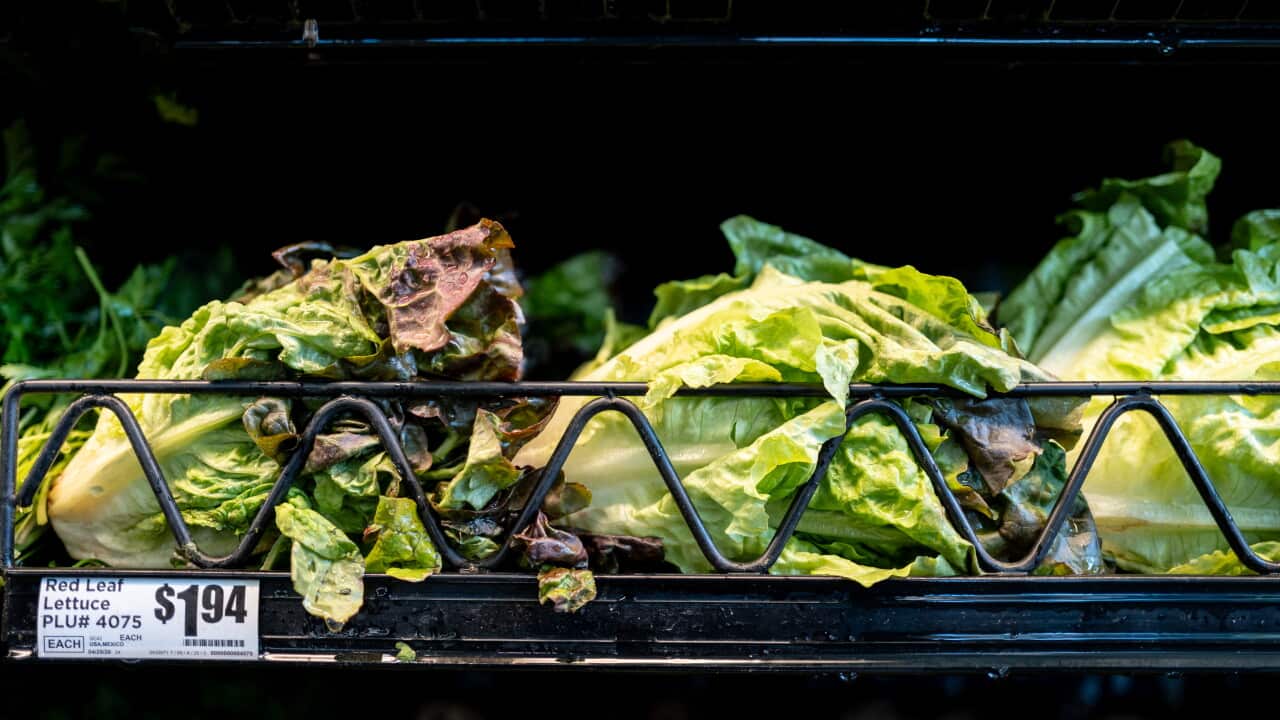
In a statement, it said: "While the investigation is ongoing, current results point to lettuce or salad greens as a potential source for this outbreak, although other food items cannot be completely ruled out.
"No specific type of produce, grower or supplier has been identified as the source."
The disease is notoriously difficult to trace.
Symptoms can set in up to two weeks after infection, by which time people have both eaten quite a few meals and may have forgotten everything they ate.
Testing produce is also extremely difficult. Health officials would need to wash large volumes of produce and test the runoff for the presence of the parasite.
A final hurdle is administrative. Different states have different reporting practices.
Some report both confirmed and likely cases as a single figure, while others wait to report to the CDC until investigations are complete, making it difficult to understand the scale and movement of the outbreak across state lines.
While no outlet, supply, or ingredient had been identified by health officials, Taco Bell — a US chain of Mexican fast food restaurants — told newspaper USA Today it had "voluntarily and temporarily removed limited ingredients at select restaurants as a precautionary measure".
Health authorities had not confirmed a link to Taco Bell, the restaurant said.
A 2018 outbreak of the disease was linked to McDonald's salads, and in 2013, lettuce imported from Mexico was blamed for 400 cases.
Questions about health department funding
While cases of watery stool with an unknown origin spread to more and more states, US media is turning its attention to a decision last year by the Trump administration to lay off thousands of public health workers.
The US$11.4 billion ($16.3 billion) cuts were made by US President Donald Trump's health secretary, Robert F Kennedy Jr, under the watch of billionaire Elon Musk's efforts to cut costs through his Department of Government Efficiency.
2,400 positions were cut from the CDC, 3,500 from the Food and Drug Administration and 1,200 from the National Institutes of Health.
These layoffs resulted in the loss of experts and forced the CDC to scale back one of its foodborne pathogen surveillance networks.
In 2025, Kennedy also made state reporting of cyclospora optional as it scaled back the CDC's Foodborne Diseases Active Surveillance Network.
— With additional reporting by Agence France-Presse.
For the latest from SBS News, download our app and subscribe to our newsletter.







