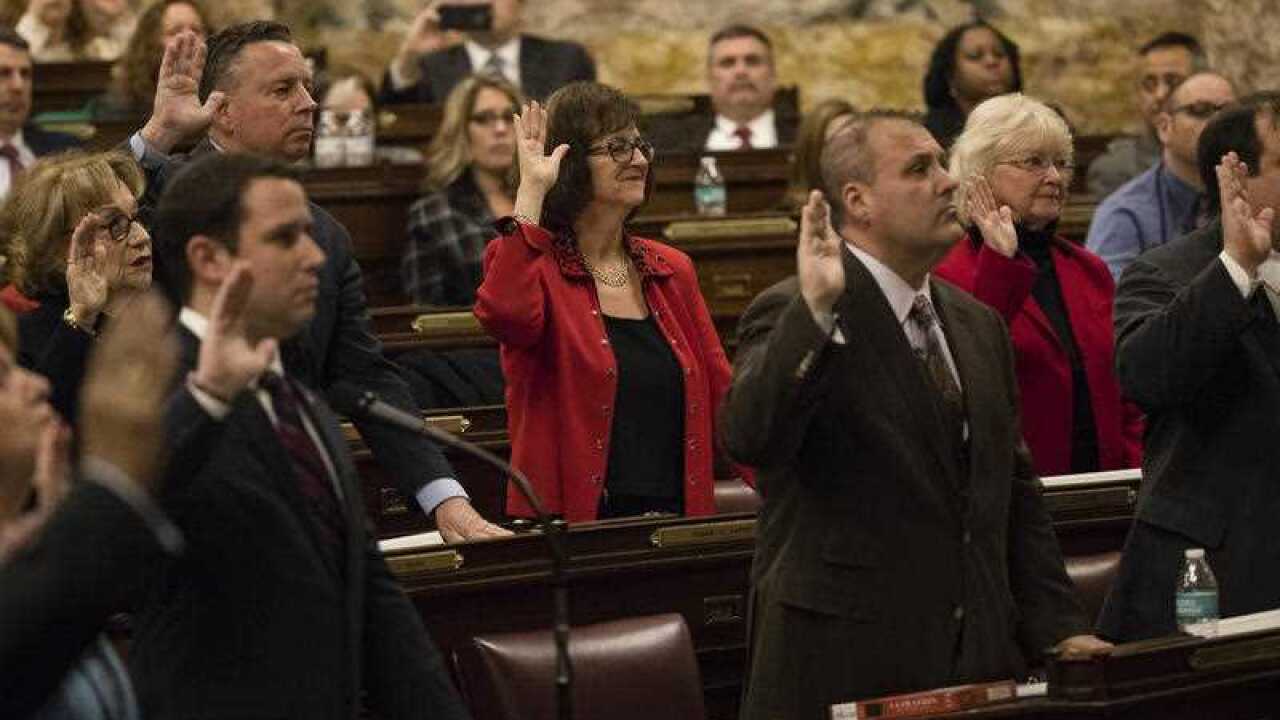
The US Electoral College is meeting to officially confirm Republican Donald Trump as the next president, a vote that is usually a formality but that has taken on extra prominence after an unusual and particularly acrimonious election campaign.
At meetings scheduled in every state capital and the District of Columbia, the institution's 538 electors, chosen by state parties, will cast official ballots for president and vice president.
The votes will be counted during a joint session of Congress on January 6. It is highly unlikely the vote will change the outcome of the November 8 election, which gave the White House to Trump after he won a majority of Electoral College votes.
The electors are expected to vote as directed by their state's popular ballot, and 24 states have laws requiring them to do so.
News that makes sense
Your trusted source for staying up-to-date with the world around you. Get free daily news updates and analysis, straight to your inbox.
But occasionally, "faithless electors" will ignore their pledge and change their vote.
Democrat Hillary Clinton won the popular vote by a margin of nearly 2.9 million ballots at the last tally, according to the Cook Political Report.
That outcome, combined with revelations by US intelligence agencies that Russia hacked into Democratic party emails to try to sway the election for Trump, has prompted some Democrats to urge electors to change their vote.
At least one elector - Christopher Suprun, a Republican elector in Texas - has said he won't vote for Trump.
In an op-ed in the New York Times, Suprun said he had concerns about Trump's foreign policy experience and business conflicts.
Another group of bipartisan electors formally requested an intelligence briefing on Russian interference in the election, but were denied.
The Electoral College was established in 1787 and is part of the US Constitution. It assigns each state electors equal to its number of representatives and senators in Congress.
When voters go to the polls to cast a ballot for president, they are actually choosing a presidential candidate's preferred slate of electors for their state.
A candidate must secure 270 votes to win. Trump won 306 electors from 30 states.







