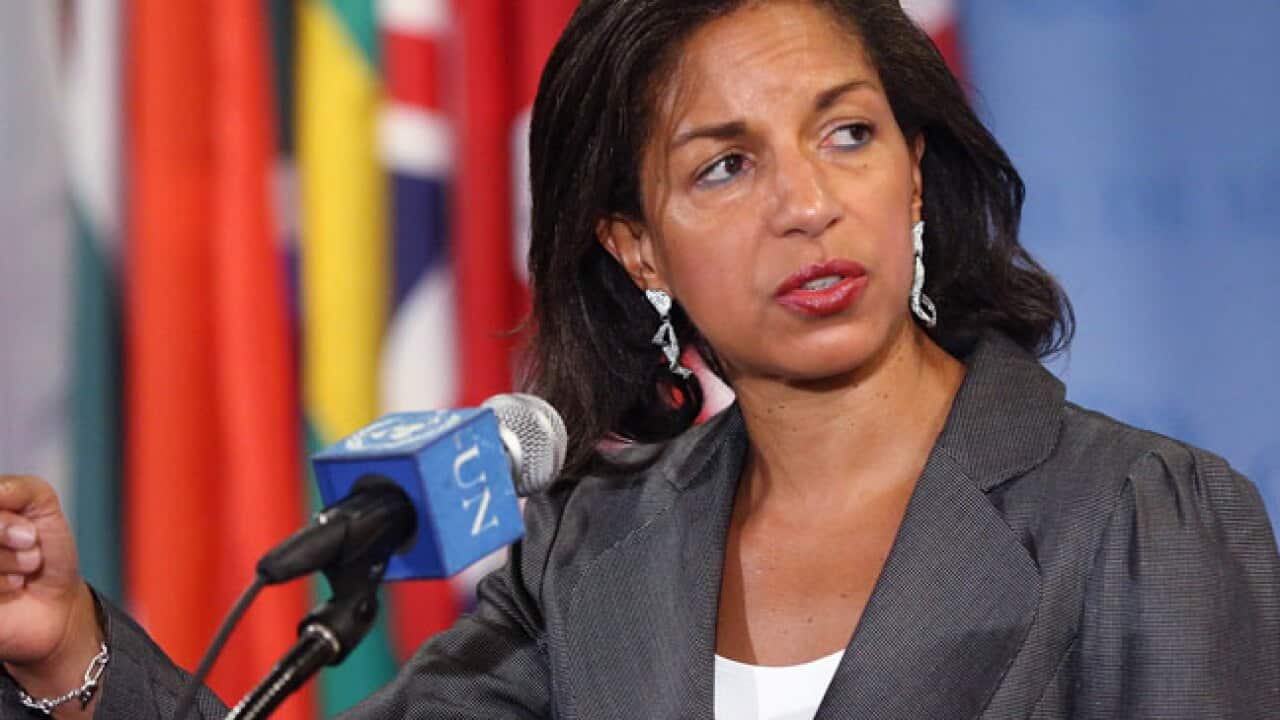
US envoy to the UN Susan Rice failed to quell a row with Republican lawmakers over the attack on a US mission in Libya that may damage her hopes of becoming the next secretary of state.
After hour-long talks, the lawmakers dug in their heels, saying they were more troubled than ever by the US administration's explanation, led by Rice, about the September 11 attack on the US mission in Benghazi.
Senator John McCain, who has led the Republican onslaught, said they had had a "very candid discussion" but "we are significantly troubled by many of the answers that we got and some that we didn't get."
News that makes sense
Your trusted source for staying up-to-date with the world around you. Get free daily news updates and analysis, straight to your inbox.
He later told Fox television he would be "hard-pressed" to support Rice if she is nominated to replace Hillary Clinton as secretary of state.
Clinton is set to step down as the top US diplomat early next year, and Rice is widely touted as the favorite to be nominated for the post.
President Barack Obama is due to reshuffle his cabinet heading into his second term in the White House, and veteran senator and foreign policy wonk John Kerry is also in the running for a possible secretary of state.
Rice appeared on Sunday talk shows five days after the Benghazi assault, in which ambassador Chris Stevens and three other Americans died, and she has been accused by Republicans of misleading the public.
During the shows, Rice, using talking points provided by the CIA, said it was the government's "best assessment" that the assault appeared to have started with a "spontaneous" reaction against an amateur anti-Muslim video.
In a statement after Tuesday's meeting, Rice admitted for the first time that the intelligence community talking points "were incorrect in a key respect: there was no protest or demonstration in Benghazi."
"While we certainly wish that we had had perfect information just days after the terrorist attack, as is often the case, the intelligence assessment has evolved," she said.
Rice insisted however that "neither I nor anyone else in the administration intended to mislead the American people at any stage."
Administration officials hit back Tuesday at suggestions that she had not been completely forthcoming during the meeting.
"There are no unanswered questions about Ambassador Rice's appearances on Sunday shows," White House spokesman Jay Carney said, also condemning the "obsession" in Washington about her television comments.
"People are more interested in talking points for a Sunday show several months ago, than they are in finding out what happened in Benghazi," he said.
Several leading Republicans have said they would oppose Rice's nomination, which needs to be approved by 60 out of the 100-strong Senate.
Republican senators Lindsey Graham and Kelly Ayotte also attended Tuesday's meeting with Rice, who was accompanied by acting CIA director Mike Morell, and fired off an angry riposte afterwards.
"Before anybody could make an intelligent decision about promoting someone involved in Benghazi, we need to do a lot more," said Graham.
"All I can tell you, that the concerns I have are greater today than they were before. We're not even close to getting the basic answers," he added.
State Department and FBI probes are currently under way to find out what happened in Benghazi, with the investigation ordered by Clinton due to report its findings around the middle of December.
State Department spokeswoman Victoria Nuland said it had done its "utmost in this period to be as open and transparent and cooperative with the Congress in its requests" and confirmed that another hearing was set for next week.
On November 14, in his first press conference after being re-elected, Obama rushed to Rice's defense, accusing the Republicans of an "outrageous" attempt to "besmirch her reputation" and challenging them to go after him instead.
Rice has had close links to Obama since his 2008 White House campaign.
Her supporters had hoped she had been absolved of blame when the office of the Director of National Intelligence said the terms "Al-Qaeda" and "terrorism" had been removed from the "talking points" brief she was given.







