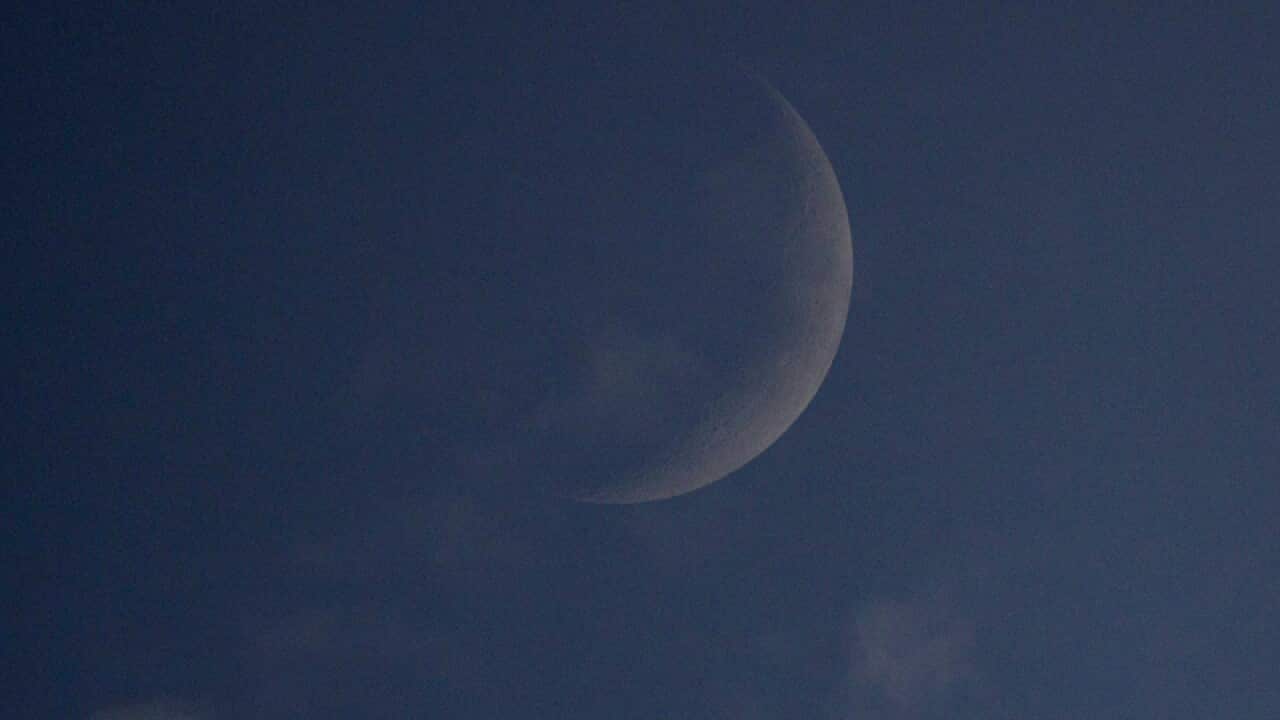
The new agreement covers Orion's first planned mission, set for 2017, which will take the spacecraft on an unmanned fly-by around the moon.
But NASA has bigger goals for Orion, hoping it will one day take humans beyond low-earth orbit -- for the first time since Eugene Cernan left the last footprints on the moon in 1972 -- and ultimately to an asteroid and to Mars.
News that makes sense
Your trusted source for staying up-to-date with the world around you. Get free daily news updates and analysis, straight to your inbox.
The US space agency said Orion's development may have started in the United States but that its final shape will be determined by an international effort.
"Today you get to see the first step of a cooperation as we look beyond lower orbit," said William Gerstenmaier, NASA's deputy director for manned exploration.
"Space exploration has to be international," he emphasized during a press conference at the Johnson Space Center in Houston, Texas.
The US, European and other space agencies already cooperate extensively at the International Space Station, while more ambitious missions further into space have remained national affairs.
But a recent report by the US National Academy of Sciences concluded that NASA's $18 billion-a-year budget would not cover all its missions, and future plans must incorporate international partners.
The European module, called an Automated Transfer Vehicle, or ATV, has already been resupplying the International Space Station since 2008.
The modified ATV will sit directly below Orion's crew capsule to provide propulsion, power, thermal control, as well as to supply water and gas to the astronauts.
Using the European-designed module "does not save money for NASA," Gerstenmaier said, but it does allow NASA to incorporate a pre-tested design, without going through the time and effort of testing a new system on its own.
ESA also cheered the agreement, with its human spaceflight director Thomas Reiter saying at the press conference: "This cooperation opens new perspectives."
"NASA's decision to cooperate with ESA on their exploration program with ESA delivering a critical element for the mission is a strong sign of trust and confidence in ESA's capabilities," Reiter added in a statement.







