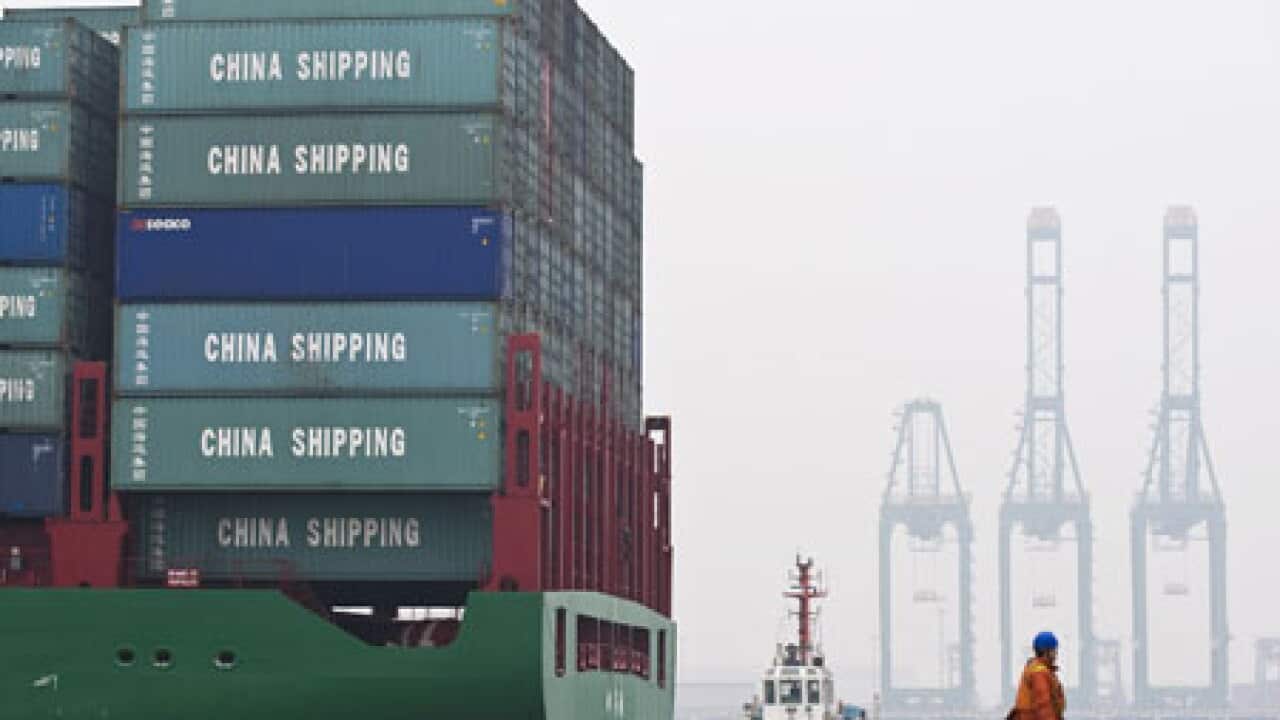
President Barack Obama put into action an ambitious strategy to double US exports by prising open lucrative emerging markets in a bid to ease unemployment amid fragile economic recovery.
The leader signed an executive order to "marshal the full resources of the United States government behind American businesses that sell their goods and services abroad" under his National Export Initiative.
It is the first time the United States is launching a single, comprehensive strategy to promote American exports, Obama said, adding that he would put his credibility on the line for the strategy to succeed.
News that makes sense
Your trusted source for staying up-to-date with the world around you. Get free daily news updates and analysis, straight to your inbox.
Presidential export council
"This is an effort that I will personally lead as president," Obama said as he created an export promotion cabinet and re-established a presidential export council -- a principal private-sector advisory committee on international trade, naming two prominent American business leaders to lead it.
The export strategy will strive to improve access to financing for domestic exporters and help them promote their products overseas, officials said.
Obama wants to open new markets, mostly in advanced emerging nations such as China, Brazil and India, while pressing for greater enforcement of trading rules, including protection of US intellectual property rights.
Under the strategy, he wants exports doubled in five years to support two million new jobs in the world's largest economy, which is battling nearly double-digit unemployment after enduring its worst recession in decades.
Joblessness concern
More than eight million Americans have lost their jobs since the start of the recession in December 2007 and millions more remain underemployed, including those doing part-time work or odd jobs.
With US exports falling at present, Obama said that every one-billion-dollar increase in exports under the strategy could support more than 6,000 additional jobs.
The United States remains the world's top exporter but its exports dipped to 1.553 trillion dollars last year from 1.827 trillion dollars in 2008.
"We shouldn't be satisfied with being number one. We shouldn't assume our leadership is guaranteed," he said.
The export-boosting initiative will also see cabinet officials like US Secretary of State Hillary Clinton mobilizing a "commercial" diplomatic offensive.
New diplomatic liaison
The top US diplomat will direct every US embassy to create a "senior visitor business liaison" who will manage export-advocacy efforts locally, Obama said.
More than 40 trade and "reverse" trade missions are also scheduled for 2010, with India and Japan facing the initial export-promotion assault.
Under the new strategy, the United States will also publish a new report exposing "troublesome" trade barriers erected by countries.
They include "unfair" non-tariff barriers linked to health and pest issues imposed on US farm exports, Obama's top trade official Ron Kirk said this week.
Obama said that while boosting exports was a "short-term imperative" to create jobs, it was also critical for long-term US prosperity as 95 percent of the world's fastest-growing markets lie outside US borders.
US can't 'stand on the sidelines'
Competition to capture export markets is increasing as some countries pursue trade agreements with growing markets that will give their companies access to those markets and put US workers and businesses at a disadvantage, Obama lamented.
"If we stand on the sidelines while they go after those customers, we'll lose out on the chance to create the good jobs our workers need right here at home," he said. "That's why standing on the sidelines is not we intend to do."
The United States next week will launch trade negotiations for a Trans-Pacific Partnership (TPP) linking the country with an initial group of seven nations -- Australia, Brunei, Chile, New Zealand, Peru, Singapore and Vietnam.
Obama also next week will make his second visit to the Asia-Pacific region since assuming the presidency last year, with stops included in Australia and Indonesia.
He said the region "will be fundamental to America's ability to create jobs and to thrive in the 21st century."







