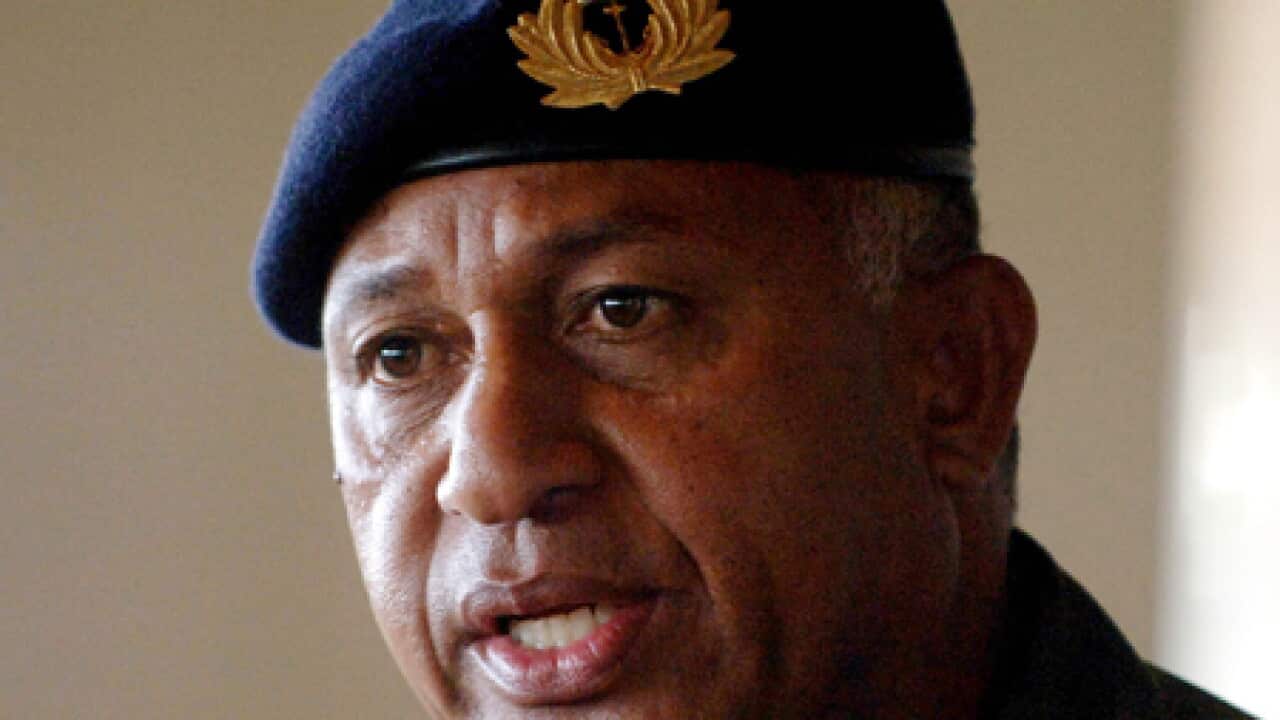
The United States says it is ready for dialogue with Fiji's military ruler Voreqe Bainimarama but that it would only ease sanctions in return for progress on democracy.
Kurt Campbell, the assistant secretary of state for East Asia, said that the United States wanted the Pacific island again to be a close US partner as it was before Bainimarama's 2006 coup.
"We now hope, in close coordination with regional players, to seek more direct engagement with Prime Minister Bainimarama to encourage his government to take steps to restore democracy and freedom," Campbell said.
News that makes sense
Your trusted source for staying up-to-date with the world around you. Get free daily news updates and analysis, straight to your inbox.
Testifying before Congress, Campbell said such engagement would offer Fiji a chance for international acceptance "while reinforcing the message that any easing of US sanctions is tied to the restoral of democratic processes."
"Our objective is to put Fiji back on track for reintegration into international institutions and for holding free and fair elections no later than 2014," Campbell said.
Bainimarama recently suggested the 2014 election date after expelling Australia's ambassador. The military leader had faced wide criticism after calling off elections he promised for 2009.
US law imposes sanctions on any nation where the military ousts an elected government, including restrictions on assistance, military sales and visas for coup leaders.
But Campbell said that the United States maintained limited assistance, including in disaster preparedness and on inter-ethnic dialogue, and found that the engagement was "yielding positive results."
President Barack Obama's administration has made engagement a hallmark of its foreign policy. The United States has pursued a similar line in Myanmar, also known as Burma, where Campbell has initiated dialogue but called for greater process on democracy.
Campbell was questioned by Congressman Eni Faleomavaega, a member of Obama's Democratic Party representing American Samoa, who said that Fiji's problems were "multidimensional" due to the island's colonial history and ethnic mix.
"US engagement is absolutely essential," Faleomavaega said. "Clearly, the Australian and New Zealand policy of sanctions and isolating and punishing Fiji have not only failed but totally been counterproductive."







