The US is deploying extra troops to protect its embassy in Baghdad and mulling air strikes against militants who have seized key cities, amid warnings that Iraq has been polarised irrevocably.
Militants who seized Mosul - a city of two million people - and then a vast swathe of territory north of Baghdad in a lightning offensive launched eight days ago, were on Tuesday making further advances, Iraqi officials said.
The police and army officials said the insurgents, led by the powerful Islamic State of Iraq and the Levant (ISIL), also known as ISIS, had seized most the Shi'ite majority town of Tal Afar, in Nineveh province, in fighting that left dozens dead.
Provincial council chief Nureddin Qabalan said militants controlled most of Tal Afar and the surrounding area, but said there were pockets of resistance, and that soldiers, policemen and residents held on to parts of the airport.
He said 50 civilians were killed in the course of the violence, along with dozens of militants and members of the security forces.
News that makes sense
Your trusted source for staying up-to-date with the world around you. Get free daily news updates and analysis, straight to your inbox.
Gunmen also launched an attack during the night on Baquba, capital of Diyala province just 60 kilometres north of Baghdad, but had been pushed back by Iraq's security forces.
The militant advance came as the prime minister of the country's autonomous Kurdistan region warned it will be "almost impossible" for Iraq to return to how it was before the offensive was launched on June 9.
Nechirvan Barzani told the BBC it would be difficult to find a resolution with Iraqi Prime Minister Nouri al-Maliki in power and recommended an autonomous region for Sunnis as a potential solution.
"Now we have to sit down and find a solution, find how to live together ... but if we expect, if we think that Iraq will go back like before Mosul, I don't think so, it's almost impossible."
Alarmed by the swift advance of the militants against an Iraqi army that wilted in the face of the onslaught, foreign governments have begun evacuating their nationals and pulling out diplomatic staff.
US President Barack Obama announced that about 275 military personnel were being deployed to Iraq to help protect the embassy in Baghdad and assist US nationals there.
The force, which began deploying on Sunday, has been sent "for the purpose of protecting US citizens and property, if necessary, and is equipped for combat", Obama said in a letter to congressional leaders.
"This force will remain in Iraq until the security situation becomes such that it is no longer needed."
Washington has already deployed an aircraft carrier to the Gulf, but Obama has ruled out a return to Iraq for US soldiers, who left the country at the end of 2011 after a bloody and costly intervention launched in 2003.
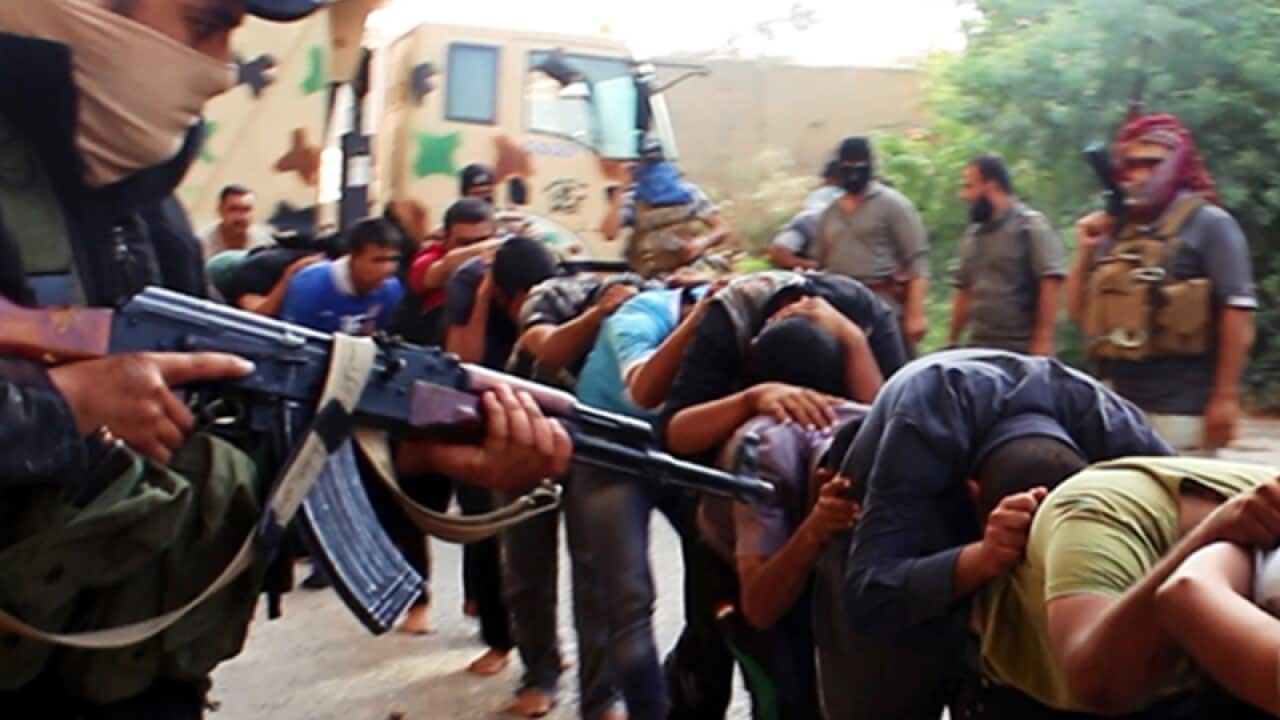
The jihadists are said to have killed scores of Iraqi soldiers as they pushed an advance on the capital, including in a "horrifying" massacre that has drawn international condemnation.
As Washington weighed its next move in the crisis, US Secretary of State John Kerry said on Monday that drone strikes could be used, after Obama said he was considering "all options" on how to support the Iraqi government.
Drones might not be the "whole answer", Washington's top diplomat told Yahoo News, "but they may well be one of the options that are important to be able to stem the tide and stop the movement of people who are moving around in open convoys and trucks and terrorising people".
While the US has ruled out co-operating militarily with Tehran, the two nations - which have been bitter foes for more than 30 years - held "brief discussions" on the crisis in Vienna.
It is yet to be determined "if we want to keep talking to Iran about Iraq", State Department deputy spokeswoman Marie Harf told CNN, acknowledging that Tehran and Washington had a shared interest in ensuring militants do not get "a foothold any more in Iraq".
Doubts are growing that the Iraqi security forces can hold back the militant tide, despite military commanders trumpeting a counter-offensive.
"This army is not a mature force," Anthony Cordesman of the Centre for Strategic and International Studies said.
The embattled security forces are being joined by a flood of volunteers after a call to arms from top Shi'ite cleric Grand Ayatollah Ali al-Sistani, but most of them are untrained.







