The spying row that has soured US-Europe relations has spread to Asia following media reports of clandestine surveillance by US embassies across the region.
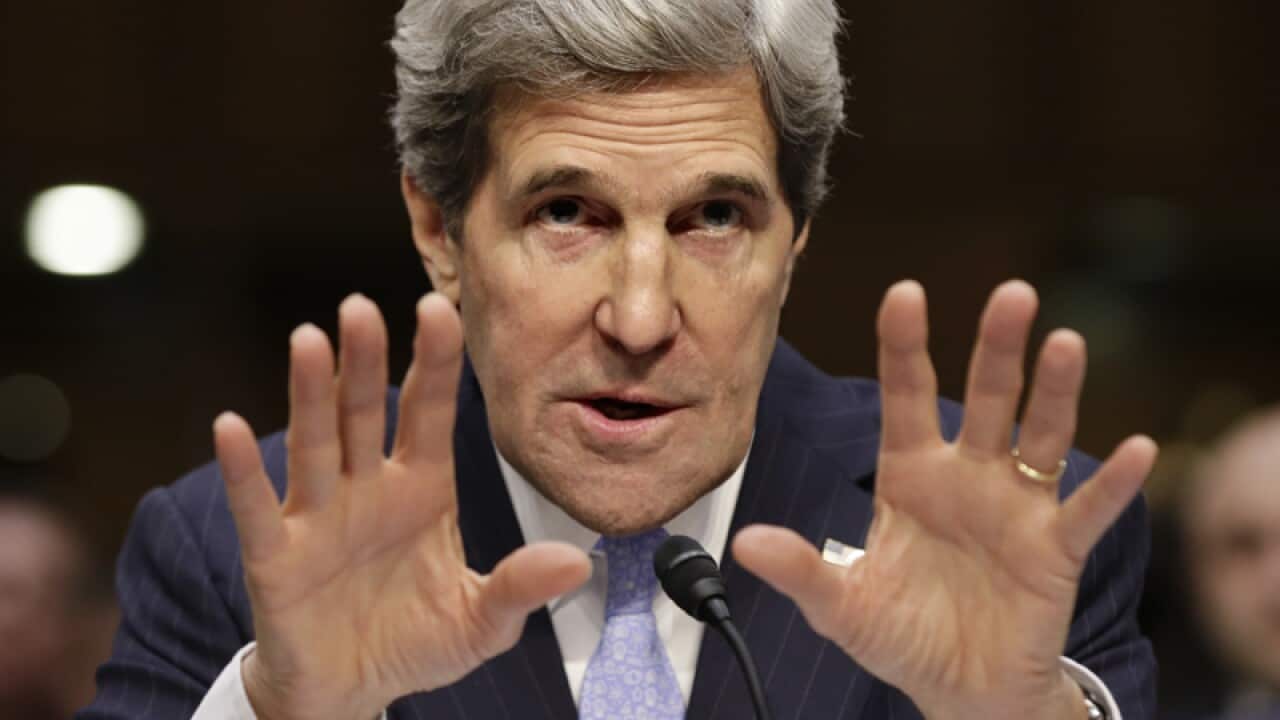
China and Indonesia were among the countries demanding answers from Washington over the reports as Secretary of State John Kerry admitted US spying had sometimes gone too far.
The row erupted in the region after the Sydney Morning Herald newspaper, amplifying an earlier story by German magazine Der Spiegel, this week reported a top-secret map leaked by fugitive intelligence analyst Edward Snowden showed 90 US surveillance facilities at diplomatic missions worldwide.
Its reports focused on secret US intelligence facilities in Asia and also said Australian diplomatic posts were being used to monitor phone calls and collect data as part of the American surveillance network.
Widespread reports of US National Security Agency spying based on leaks from Snowden, including that the agency was monitoring German Chancellor Angela Merkel's phone, had already sparked a major trans-Atlantic rift.
News that makes sense
Your trusted source for staying up-to-date with the world around you. Get free daily news updates and analysis, straight to your inbox.
But the latest reports have brought the scandal to Asia, a region where Washington has been seeking to improve ties its in recent years to counter growing Chinese dominance.
Indonesia has so far been the most vocal nation in Asia in voicing anger over the reported spying, earlier this week summoning the US ambassador over reports of clandestine surveillance from its embassy in Jakarta.
On Friday, Australian ambassador Greg Moriarty was summoned to the foreign ministry in Jakarta after the Sydney Morning Herald reported his embassy was being used in the US spying operation.
Indonesian Foreign Minister Marty Natalegawa on Friday described the reported spying activities as "just not cricket".
Natalegawa, speaking after talks with his Australian counterpart Julie Bishop in Perth, said his government was "obviously deeply concerned".
"Most of all, it's about trust," he said, adding: "I'm not sure what's the right term in Australian terminology, I guess it's not cricket to do this kind of thing."
Bishop said that Natalegawa had "raised his concerns, I took them on board and I take them seriously, but the Australian government does not and will not comment on intelligence matters".
The Sydney Morning Herald said the secret map showed there were US intelligence facilities at diplomatic posts across Southeast Asia as well as in East Asia, where activities were focused on China.
Beijing responded to the reports on Thursday by expressing "severe concerns".
"We require the US to make a clarification and give an explanation," Hua Chunying, a spokeswoman for China's Ministry of Foreign Affairs, told reporters.
"We require friendly diplomatic missions and personnel in China to strictly abide by international treaties ... and do not engage in any activity that ... may jeopardise China's security and interests."
In Malaysia, the foreign minister said it had "sought clarification" from the US ambassador to Malaysia, Joseph Yun, over the allegations.
The ministry "is working closely with the relevant Malaysian authorities on this matter and should there be any compelling evidence, the ministry would seek recourse", it said in a statement.
The reaction from other Southeast Asian nations mentioned in the report was more muted, however, with Thailand, Cambodia and Myanmar seeking to downplay the issue.
Meanwhile, Kerry sought to calm the row by admitting that spying had sometimes gone too far and by offering assurances that such steps would not be repeated.
"I assure you, innocent people are not being abused in this process, but there's an effort to try to gather information," Kerry told a London conference via video link.
"And yes, in some cases, it has reached too far, inappropriately."







