Key Points
- In a 6-3 decision, the justices ruled that the law at issue did not grant Trump the power he claimed to impose tariffs.
- Trump has vowed to pursue tariffs through other legal authorities.
United States President Donald Trump has moved swiftly to replace tariffs struck down by the US Supreme Court with a temporary 10 per cent global import duty for 150 days and ordered new investigations under other laws that could allow him to re-impose the tariffs.
Trump signed executive orders on Saturday to impose new tariffs starting on Tuesday under Section 122 of the Trade Act of 1974, partly replacing tariffs of 10 per cent to 50 per cent under the 1977 International Emergency Economic Powers Act (IEEPA) that the top court declared illegal, and ending collection of the now-banned duties.
The never-used Section 122 authority allows the president to impose duties of up to 15 per cent for up to 150 days on any and all countries to address "large and serious" balance of payments issues.
It does not require investigations or impose other procedural limits. After 150 days, Congress would need to approve their extension.
The orders continued exemptions already in place for aerospace products; passenger cars and some light trucks; goods from Mexico and Canada that are compliant with the US-Mexico-Canada trade agreement; pharmaceuticals and certain critical minerals and agricultural products.
News that makes sense
Your trusted source for staying up-to-date with the world around you. Get free daily news updates and analysis, straight to your inbox.
The court's landmark 6-3 ruling upended the leverage Trump and his trade envoys have wielded over foreign governments at negotiating tables to reshape diplomatic relations and global markets.
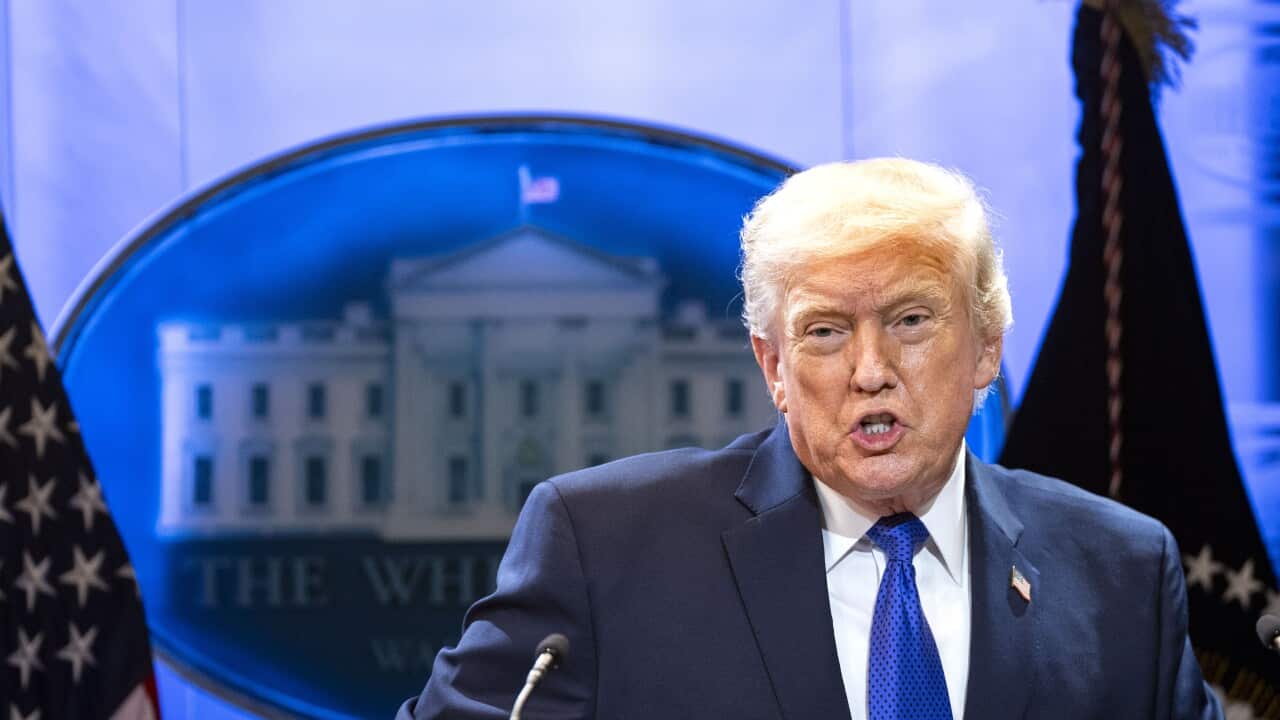
"I'm ashamed of certain members of the court, absolutely ashamed, for not having the courage to do what's right for our country," Trump told reporters at the White House, complaining that foreign countries were ecstatic and "dancing in the street."
He insinuated, without evidence, that the majority of the court caved to foreign influence: "They're very unpatriotic and disloyal to our Constitution. It's my opinion that the court has been swayed by foreign interests and a political movement that is far smaller than people would ever think."
Since returning to the White House 13 months ago, Trump has said he had what the court summarised as the "extraordinary power to unilaterally impose tariffs of unlimited amount, duration, and scope".
Citing a national emergency, he said the IEEPA meant he could set tariffs at any rate he chose.
The court grounded its opinion, which was written by chief justice John Roberts, with a quote from the US Constitution: "The Congress shall have Power To lay and collect Taxes, Duties, Imposts and Excises."
The argument by the Trump administration that it had identified a war-like emergency to justify a loophole failed to persuade the court.
"The government thus concedes, as it must, that the president enjoys no inherent authority to impose tariffs during peacetime," Roberts wrote. "And it does not defend the challenged tariffs as an exercise of the president's warmaking powers. The United States, after all, is not at war with every nation in the world."
Despite the court's bluntness in ruling the president had exceeded his authority, Trump told reporters: "It's ridiculous, but it's OK, because we have other ways, numerous other ways."
After a year of Trump's often ad hoc tariff announcements whipsawing markets and the global economy, the ruling and Trump's response reintroduced a hefty dose of uncertainty that economists, investors and policymakers had hoped was in the rearview mirror.
"I think it will just bring in a new period of high uncertainty in world trade, as everybody tries to figure out what the U.S. tariff policy will be going forward," said Varg Folkman, analyst at the European Policy Centre think tank.
US treasury secretary Scott Bessent said the court ruling could have mixed results.
"The Supreme Court has taken away the president's leverage, but in a way, they have made the leverage that he has more draconian because they agreed he does have the right to a full embargo," Bessent told Fox News.
"We will get back to the same tariff level for the countries. It will just be in a less direct and slightly more convoluted manner," he said.
Questions remain about trade deals, refunds
The fate of dozens of trade deals to cut IEEPA-based duties and negotiations with major US trading partners remained unclear in the wake of the ruling, though Trump said he expected many of them to continue. He said deals that are abandoned "will be replaced with the other tariffs."
The Supreme Court's ruling also puts about US$175 billion ($247 billion) in tariff revenue collected over the past year subject to potential refunds, according to estimates provided to Reuters by Penn-Wharton Budget Model economists.
Asked if he would refund the IEEPA duties, Trump said the matter would likely be litigated for two to five years, suggesting that a quick, automatic refund process was unlikely.
Speaking in Dallas, Bessent told business leaders that since the Supreme Court did not provide any instructions on refunds, those were "in dispute," adding: "My sense is that could be dragged out for weeks, months, years."
For the latest from SBS News, download our app and subscribe to our newsletter.







