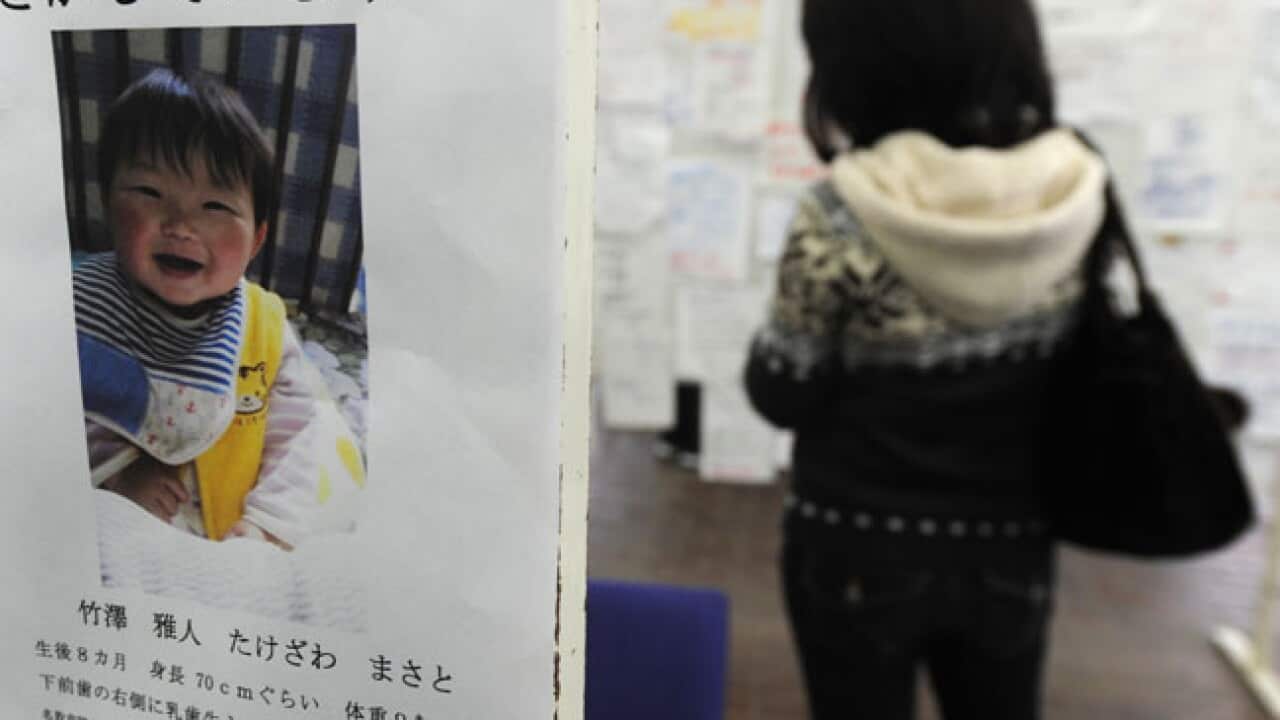
Thousands of Japanese and US troops have begun an intensive aerial and maritime search for bodies along Japan's north Pacific coast devastated by the March 11 quake and tsunami.
The allies were deploying 120 aircraft and helicopters as well as 65 vessels to look for at least 16,441 people still missing after the disaster, the Japan Defense Agency said. At least 11,532 people have been killed.
"The focus will be along the coastline, river mouths and land areas still submerged in sea water," a Japanese ground force official said.
News that makes sense
Your trusted source for staying up-to-date with the world around you. Get free daily news updates and analysis, straight to your inbox.
"Bodies washed out to the sea usually sink first. But they usually float again a few weeks later. So the sweep will be mainly for them," he said.
Thousands of military personnel will take part in the search, the official said, with the Yomiuri Shimbun daily saying 17,000 Japanese and 7,000 US forces would participate.
But the search will not cover the 30-kilometre (19 mile) radius of the stricken nuclear power plant in Fukushima prefecture.
The government has evacuated residents within a 20-kilometer radius of the plant, which has leaked high levels of radioactive materials after the tsunami wrecked its reactor cooling systems.
Those living within 30 kilometers of the plant were asked to stay indoors.
Emergency officials have not been able to recover up to 1,000 bodies of quake and tsunami victims from within the 20-kilometer zone around the Fukushima Daiichi nuclear plant because of the radiation in the environment.
Officials also voiced worries that the bodies cannot be cremated, as is commonly done in Japan, because that could spread radioactive materials into the air.







