

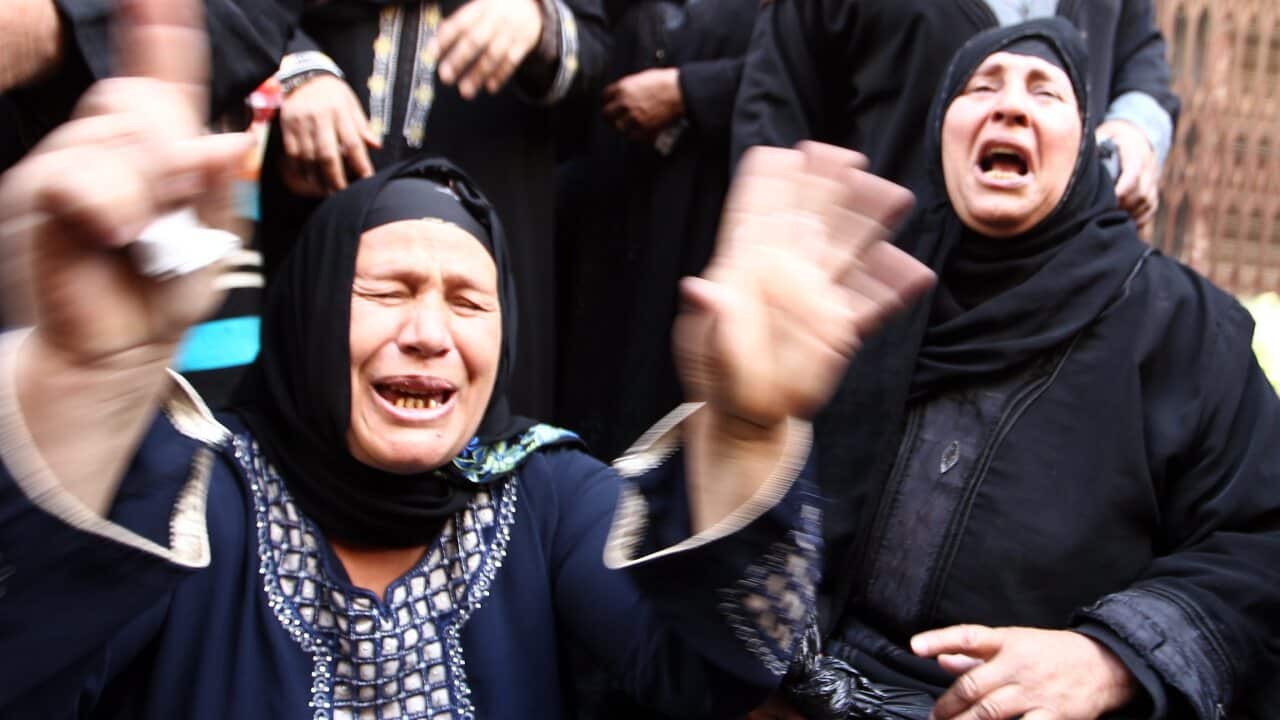
"Today's verdict, like the one last month, defies even the most basic standards of international justice," the White House said.
The defendants were sentenced to death in a ten-minute long proceeding in a court in the southern province of Minya.
The same court also reversed 492 of 529 previous death sentences it passed in March, commuting most of them to terms of life in prison.
News that makes sense
Your trusted source for staying up-to-date with the world around you. Get free daily news updates and analysis, straight to your inbox.
The White House said it was "deeply troubled" both by the mass trials and the death sentences, warning that repression of dissent would fuel instability and radicalization in Egypt.
"While judicial independence is a vital part of democracy, this verdict cannot be reconciled with Egypt's obligations under international human rights law," it said.
"We urge the Egyptian government to end the use of mass trials, reverse this and previous mass sentences, and ensure that every citizen is afforded due process," it said.
UN chief 'alarmed' by mass Egyptian death sentences
UN Secretary General Ban Ki-moon is "alarmed" by an Egyptian court's decision Monday to sentence 682 alleged Islamists and Muslim Brotherhood leader Mohamed Badie to death and fears it could impact the entire region, his spokesman said.
"Verdicts that clearly appear not to meet basic fair trial standards, particularly those which impose the death penalty, are likely to undermine prospects for long-term stability," Ban added, according to spokesman Stephane Dujarric.
Dujarric said the UN chief was "conscious of the regional and security implications of such sentences," adding that "stability in Egypt is essential for the overall stability of the entire North Africa and Middle East region."
The court in the southern province of Minya also reversed 492 of 529 death sentences it passed in March, commuting most of those to life in prison.
Ban meanwhile expressed concern about the banning by another Egyptian court of the April 6 youth movement that spearheaded the 2011 revolt that toppled strongman Hosni Mubarak.
Ban "was disappointed that the appeals court on 7 April upheld the jailing of three emblematic figures of the 2011 uprising, including two founders of the youth movement," Dujarric said.
Ban plans to discuss his concerns with Egyptian Foreign Minister Nabil Fahmy later this week, according to the spokesman.