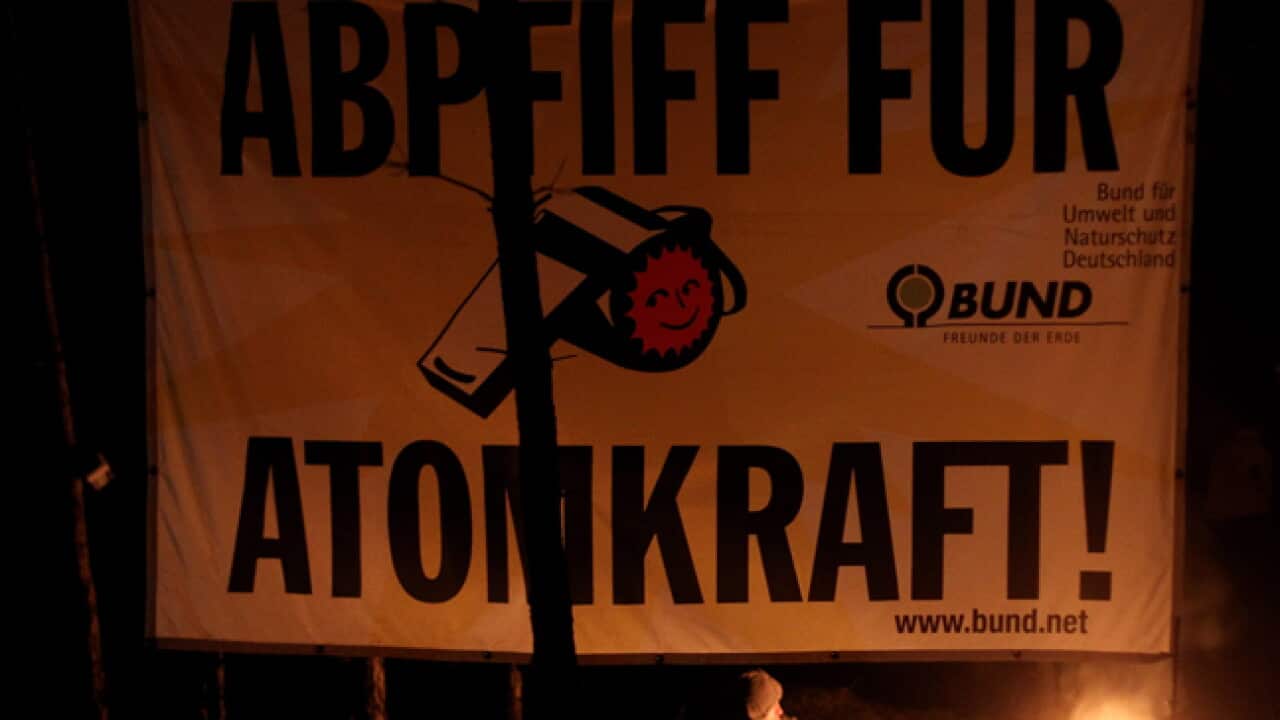
Trucks loaded with the waste rolled into a storage facility at Gorleben on Monday after completing the final leg of a 1200 kilometre journey which involved rows with protesters.
"1300 of the 1800 at Gorleben cleared," anti-nuclear group X-tausendmal quer wrote in a text message, describing the last pocket of resistance against police.
News that makes sense
Your trusted source for staying up-to-date with the world around you. Get free daily news updates and analysis, straight to your inbox.
"Those who refuse to walk feeling pain," it said, repeating a complaint of police roughness against demonstrators.
Medical service volunteers treating injured demonstrators said 321 had been hurt during the protests, four of them seriously. Police declined to comment on how many officers were wounded in operations against activists.
The train with 11 containers of the waste had pulled into the northern town of Dannenberg before dawn and was unloaded there onto the trucks that took it to its final stop at Gorleben.
This 13th shipment to Gorleben since 1995 has far overshot a 92-hour record set one year ago.
The waste was produced in German reactors several years ago and then sent to France for reprocessing.
The protesters argue that the shipment by train of spent fuel rods is hazardous and note that Germany, like the rest of Europe, has no permanent storage site for the waste, which will remain dangerous for thousands of years.
ANGER OVER RADIOACTIVE DANGERS
They are also angry that a pledged German phase-out of nuclear power, hastily agreed this year in the wake of the Fukushima disaster in Japan, will take another decade to implement.
Tobias Riedl, from environmental pressure group Greenpeace, said the levels of radioactivity in the containers were 44 times those registered at Fukushima.
"Forty-four Fukushimas are rolling towards Gorleben. It's an incalculable risk for the population," he said.







