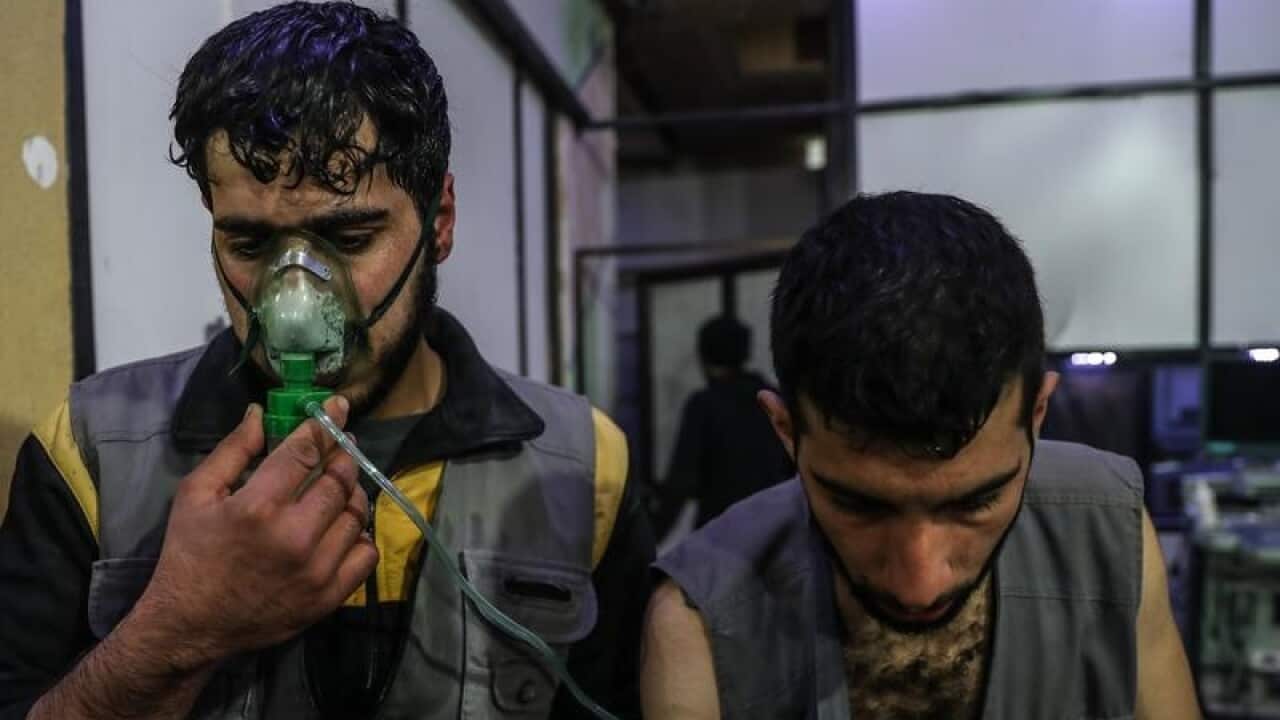
The world's chemical weapons watchdog has opened an investigation into attacks in the besieged, rebel-held Syrian region of Eastern Ghouta to determine whether banned munitions had been used, diplomatic sources have confirmed.
The Organisation for the Prohibition of Chemical Weapons (OPCW) will examine attacks, including one on Sunday which authorities said killed a child and caused symptoms consistent with exposure to chlorine gas, the sources said.
France, the United States and Britain have said they would back military action against Damascus if there was proof chemical weapons had been used by forces under President Bashar al-Assad.
The investigation by OPCWcomes as Syrian warplanes continued to strike Eastern Ghouta on Tuesday, despite a Russian call for a five-hour daily truce to allow the 400,000 people living there under siege to leave.
News that makes sense
Your trusted source for staying up-to-date with the world around you. Get free daily news updates and analysis, straight to your inbox.
Use of chlorine as a chemical weapon is prohibited under the 1997 Chemical Weapons Convention. If inhaled, chlorine gas turns into hydrochloric acid in the lungs and the build-up of fluids can drown victims.
The latest OPCW mission is seeking to determine whether chemical weapons were used in violation of the international weapons convention, which Syria signed in 2013 after hundreds died in a massive sarin gas attack in Ghouta.
The OPCW team does not plan to travel to Ghouta because of safety concerns but will gather witness testimony, photographic and video evidence, and interview medical experts, the sources said.
A UN-OPCW Joint Investigative Mechanism, established by the UN to identify those behind chemical weapons attacks, concluded in 2016 Syrian government forces had used chlorine on three occasions.
It also concluded last year government forces were behind a sarin attack on the town of Khan Sheikhoun that killed more than 80 people, many of them women and children.
The US fired 59 cruise missiles at Syria's Shayrat airbase in April, saying it had been used by Mr Assad's forces to carry out the sarin attack.
Syria and its close ally Russia, which provides military support to Mr Assad's forces, deny using chemical weapons and blame insurgents.







