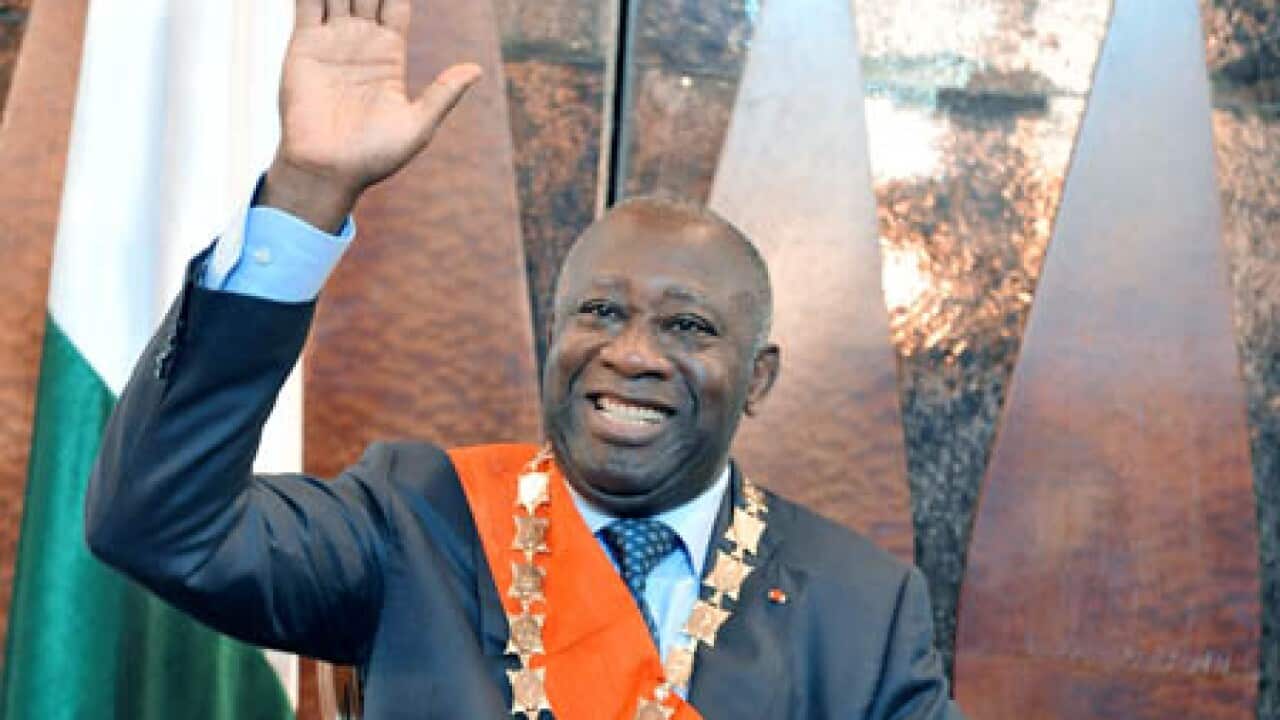
Security forces loyal to Ivory Coast strongman Laurent Gbagbo were posted Friday outside the shut headquarters of subsidiaries of French banks, a day after they were requisitioned by the regime.
France on Friday condemned Gbagbo for announcing that he was taking control of these banks and stated that the decision was null and void "since it comes from authorities that are not legitimate".
The United States also denounced the nationalisation, with State Department spokesman Philip Crowley telling reporters, that it "could result in serious implications for monetary stability and investor confidence" in Ivory Coast.
News that makes sense
Your trusted source for staying up-to-date with the world around you. Get free daily news updates and analysis, straight to your inbox.
In the Plateau business district, about a dozen soldiers were watching over the entrances to the SGBCI, the Ivorian subsidiary of France's Societe Generale, which was closed for business. A police truck was stationed nearby.
In front of the headquarters of the BICICI, subsidiary of French group BNP Paribas, more than a dozen policemen and paramilitary gendarmes were posted on guard. The BICICI has been shut since Monday.
Ordinary citizens were going about their business as usual outside the SGBCI building, headquarters of the biggest bank in the country, after a run on banks earlier this week that led Gbagbo to announce Thursday he would take control of the two French affiliates.
"We condemn the announcement by Laurent Gbagbo of the nationalisation of a certain number of foreign banks, including the subsidiaries of BNP Paribas and the Societe Generale," French foreign ministry spokesman Bernard Valero said in Paris.
"This decision has no legal effect since it comes from authorities that are not legitimate," Valero added. "France reiterates its condemnation of all violence and threats made against financial institutions and violence against civilians."Ongoing crisis
The west African country has been in political and economic crisis since November 28 presidential elections, which most of the international community recognised as won by Gbagbo's main rival Alassane Ouattara.
But Gbagbo has refused to quit power, despite strong domestic and foreign pressure. He has ruled the country, which was divided by conflict from 2002, since 2000.
The requisitions are "in all illegitimity and illegality void", said Ouattara spokesman Patrick Achi in a statement.
The banks' closures were due to agitation created by Gbagbo's regime that "undermines the foundations of our banking and financial system, compromises the security and deposits of populations and of economic operators", it said.
Amid the political and economic uncertainties, the African Banque Atlantique closed its doors on Thursday night, and at least six other banks, mainly French and American, have suspended their activities since Monday.
Last week, the west African central bank, known by its French acronym BCEAO, warned that banks dealing with Gbagbo's regime could face sanctions including being excluded from the region's clearing system.
European sanctions have also piled on the economic pressure, notably those that target the country's two ports.
Gbagbo announced on Thursday night that he was "taking control" of the banks that closed this week, particularly the SGBCI and the BICICI. He said that he was keen to "safeguard jobs and ensure that Ivorians and economic operators have access to their holdings... (in) the shortest possible time".
A mission by five African presidents to break the impasse is set to take place on Monday and has received a strong endorsement from UN Secretary General Ban Ki-moon.
The panel representing Africa's five regions is chaired by President Mohamed Ould Abdel Aziz of Mauritania and includes Jacob Zuma of South Africa, Idriss Deby of Chad, Jakaya Kikwete of Tanzania and Blaise Compaore of Burkina Faso.







