
Heightened classroom disruption, gender divides, dwindling reading and maths scores — a major global student performance report shows Australian schools are continuing to slide backwards on key measures.
Every three years, the global Programme for International Student Assessment (PISA) measures student literacy in mathematics, reading, science and computational problem-solving.
The 2025 edition, which tested 15-year-olds from 91 OECD countries and economies, also measured the effects of gender divides, differences between high and low socio-economic status, and the impacts of technology and classroom disruption.
In the latest report, released on Tuesday, Australia's scores continued a 20-year decline, with maths and reading at Australia's lowest since testing began in 2000.
But Pasi Sahlberg, a Finnish education expert, author and professor at the University of Melbourne, says reports focusing on issues with the Australian school system were missing the big picture.
News that makes sense
Your trusted source for staying up-to-date with the world around you. Get free daily news updates and analysis, straight to your inbox.
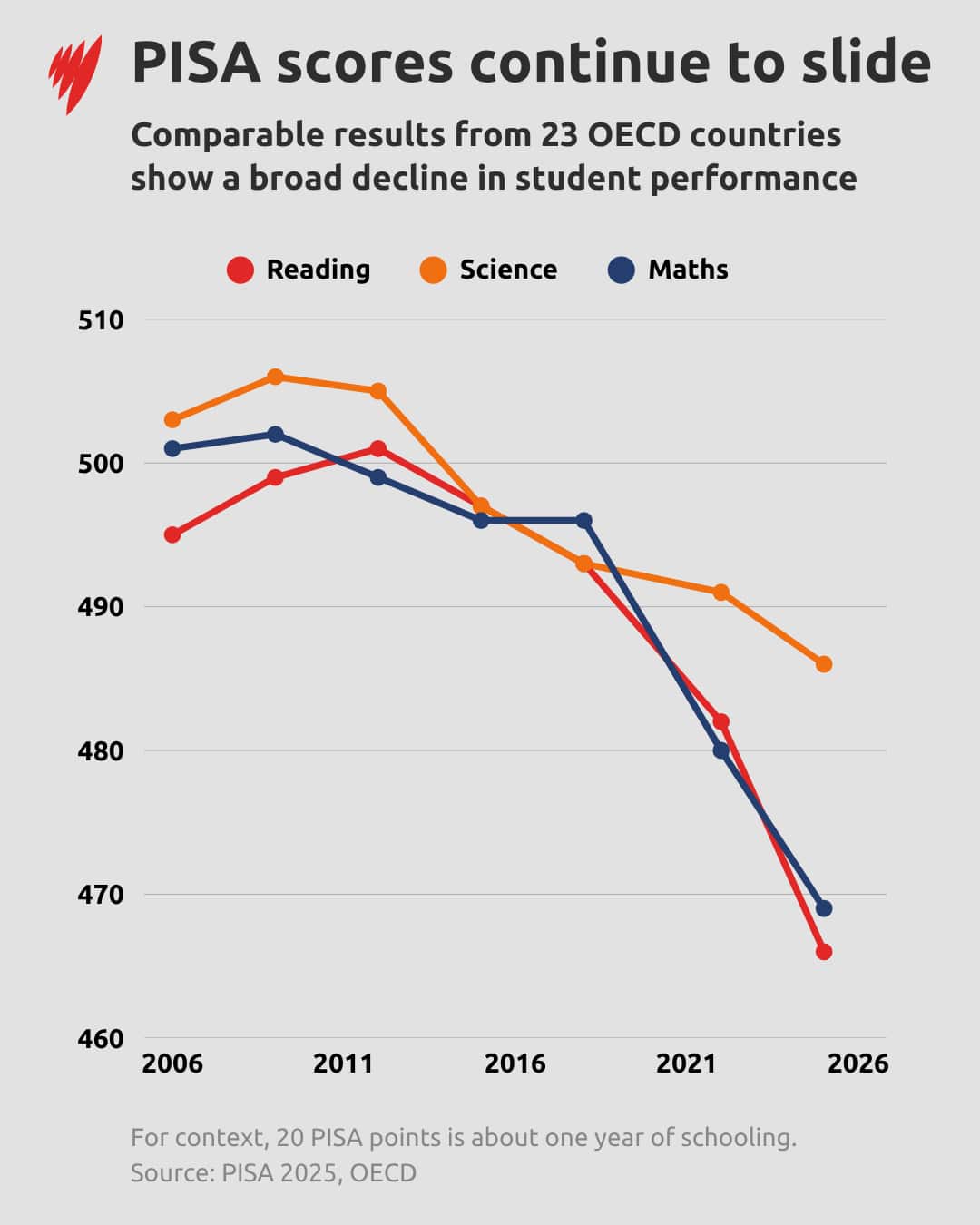
"The headline is that we have all-time-low results. I think it's absolutely astonishing that our mainstream media are saying this. The truth is every country in the OECD is showing all-time-low results in everything. Very few countries were able to improve their results in 2025," Sahlberg told SBS News.
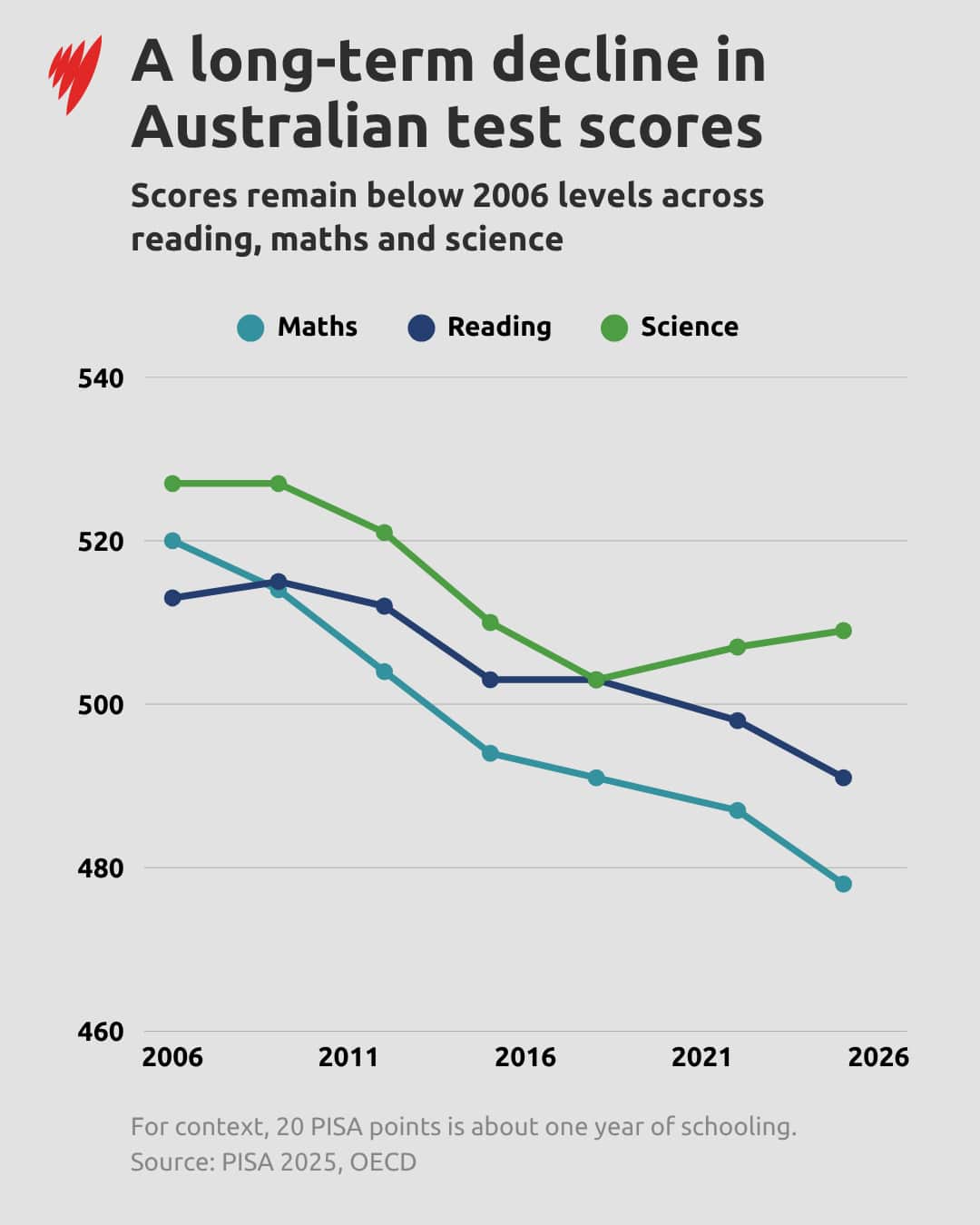
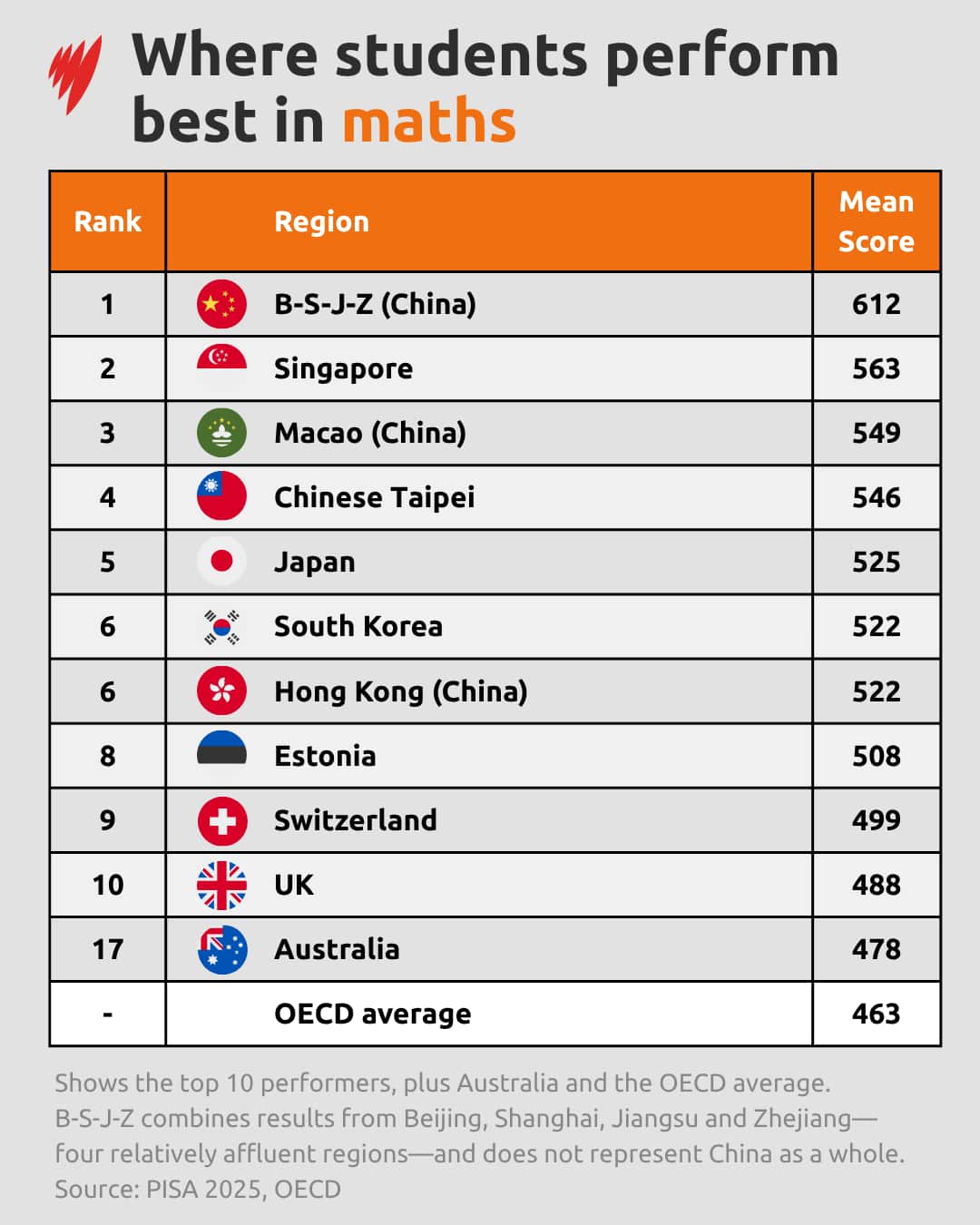
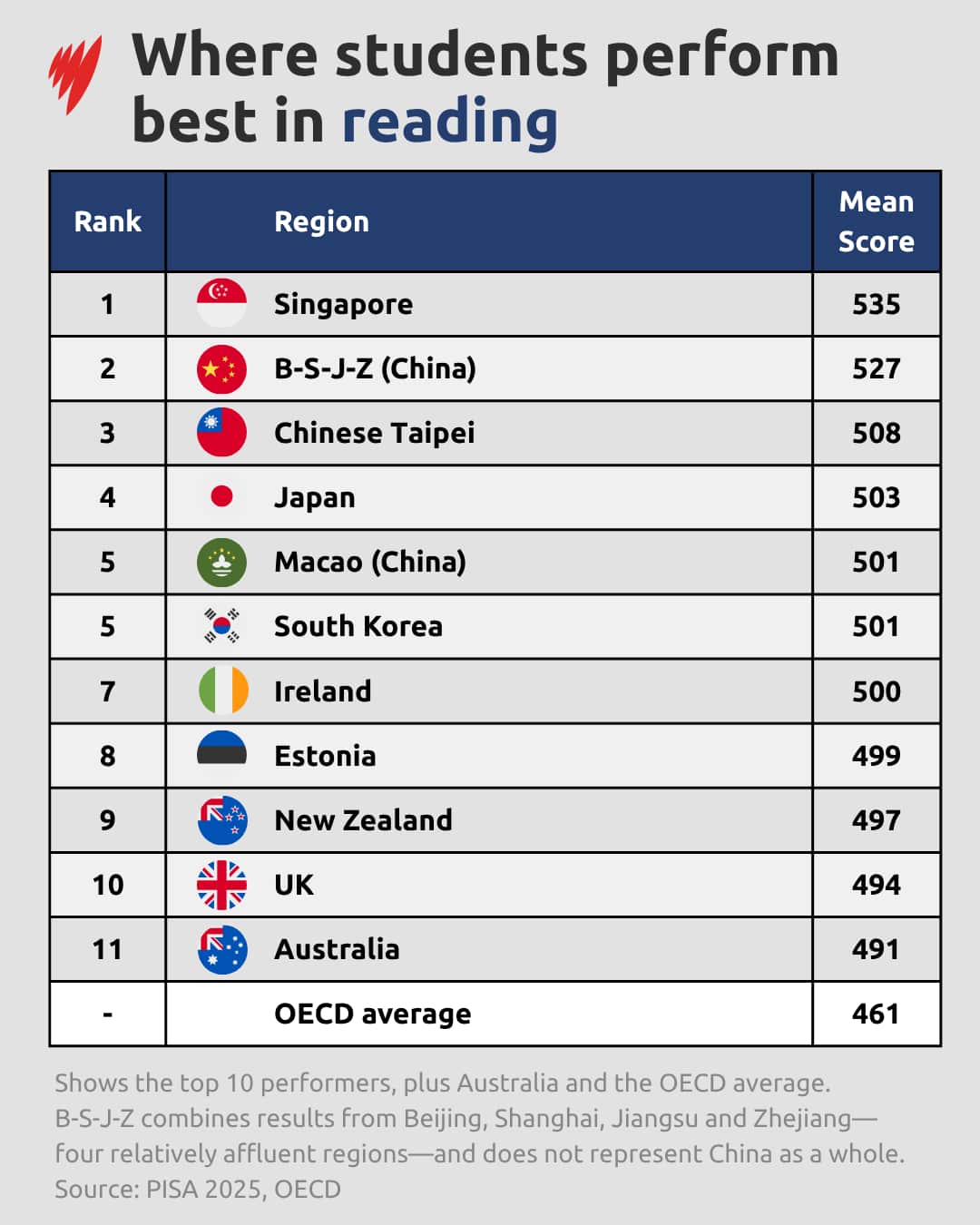
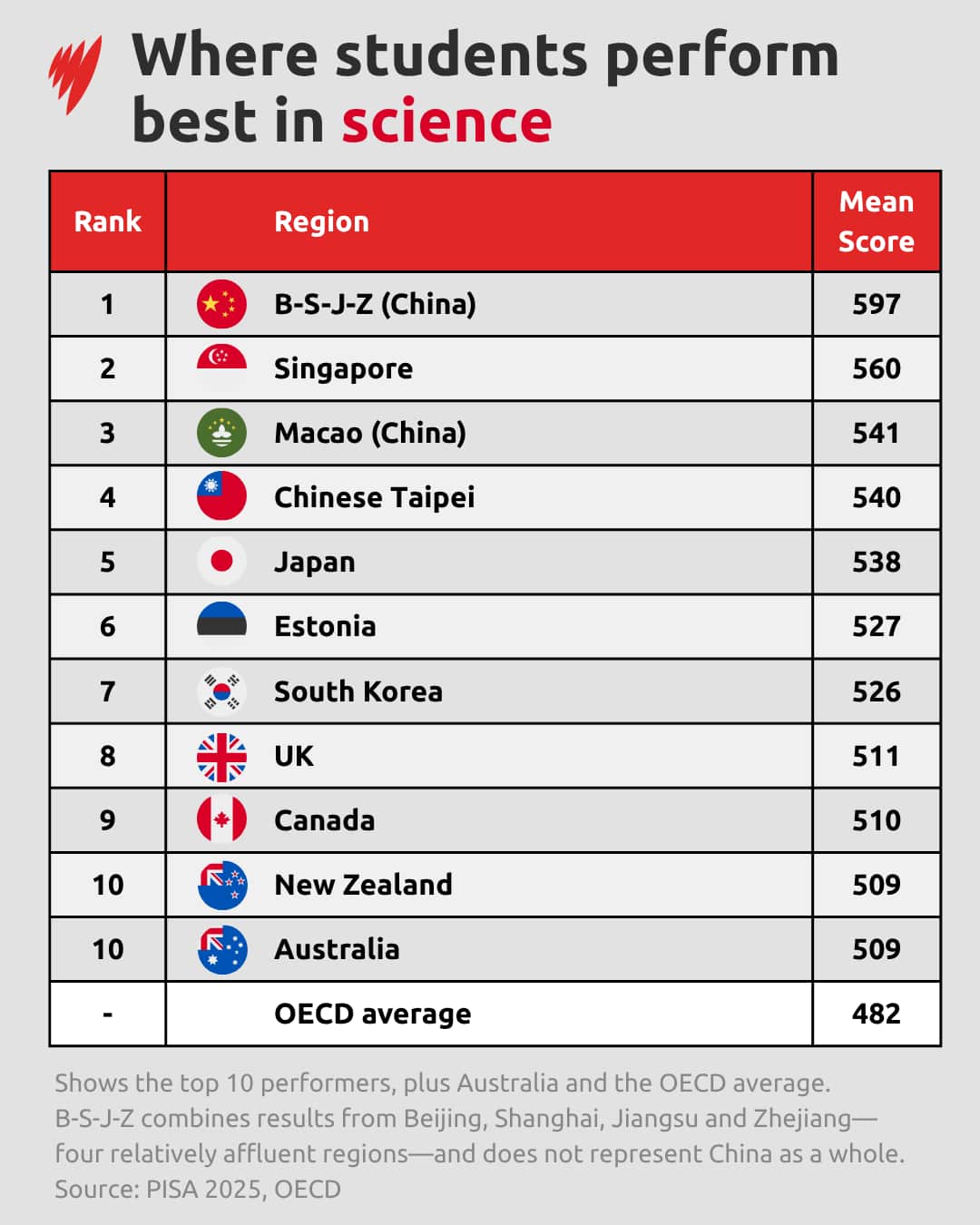
In the global ranking, Australia moved up one place in reading to 11th, maintained its 17th place in maths, and fell one place in science to 11th. In the computational problem solving category, introduced in 2025, Australia ranked 8th globally. Australia's scores were well above the OECD average in all four key tests.
On Wednesday, in light of the results, federal Education Minister Jason Clare announced new reforms in reading, mathematics and science. He pointed to England's success — the country jumped three places in reading to reach the top 10, four places in maths to 10th place and seven places in science to rank at 8th in the 2025 PISA report — to illustrate a need for various reforms. This includes a focus on phonics, which is a method of teaching reading and writing that uses the sounds of spoken language, changes to the maths curriculum, and reforms to screen time.
"The UK results are impressive. It’s also hard-earned. It’s something almost 20 years in the making," Clare said in a statement.
He said that Australian schools that have been following English methods for a while are showing improvements but he wants a broader roll-out.
'We are all in this miserable situation together'
But Sahlberg said Clare's reforms were the wrong response.
"We need to look beyond these rankings, because this data is also showing us a very alarming situation in Australia and many other countries when it comes to how young people experience learning in school."
Sahlberg said the issues affecting children's learning also occurred outside the classroom: parents are reading less and have less interest or engagement with their children's schooling.
The PISA report, which showed that 75 per cent of students in Australia reported that their parents or guardians asked them, at least once per week, what they did at school, down from 81 per cent in 2022.
"England, Canada, USA, all the others, we are all in this miserable situation together," when it comes to a decline in a positive culture around reading, he said.
What are countries with the highest scores doing that Australia isn't?
In the Asia-Pacific region, several Chinese regions, Singapore, Taiwan, Macao and Japan took the top five PISA spots across mathematics, reading, science and computational problem-solving.
While Singapore and Japan's scores decreased slightly from the previous PISA ranking, Taiwan, China and Macao all saw slight increases in their scores, outliers across most participating OECD countries.
For Therese Keane, digital learning expert and professor in STEM Education in the School of Education at La Trobe University, the secret to Singapore's success was in its handling of technology in the classroom.
"Singapore is a great example of combining high technology with clear learning guidance, with subject-specific digital learning guidance in schools," she told SBS News.
Keane said that technology was ushered into Australian classrooms hastily during former prime minister Kevin Rudd's digital education revolution program. She said the quick move left the technology ubiquitous, without proper guidelines for use.
"Technology is important in the classroom, but it needs to be used with intention and guidelines," Keane said.
"I think we've got to be very careful that we don't throw the baby out with the bath water in terms of technology and AI because when you look at countries like Singapore, Estonia, the regions of China, PISA shows that the technologies do not automatically undermine the learning."
She said the difference is that technology is embedded within a strong system of teaching, curriculum, expectations and classroom management.
"These high performing countries that we're seeing, they're not anti-technology. And I want the message to be that they're much more willing to draw a hard line between, say, learning technology and personal technology."
But there are big cultural and structural differences at play, too. Sahlberg, who has worked in schools across Singapore, Japan and China, said that high PISA scores seen in those countries come at a "huge" social cost.
"In these countries, about 80 to 100 per cent of kids go to school after daily school."
"They have their private lessons every evening, and then they go to school on Saturdays and often Sundays as well — this comes with a huge human cost, and social cost."
Sahlberg said that if Australia wanted to do something similar to those high-performing countries, then a question to ask would be, "how many parents would like to do that to their own children?"
But, he said, the solution to Australia's problem was clear.
"We don't need to go to Singapore or England or Shanghai to see what they do; we have the solution in this country.
"Our politicians and system leaders should redesign the school architecture: We have 24 jurisdictions, and they don't share their best practices; they don't tell others what works in their systems because they are competing.
The countries and economies topping the PISA rankings all have a more centralised learning curriculum, but in Australia, there are vast differences between our state, Catholic and independent schools. Salhberg says supporting the current "highly competitive, fragmented, siloed education system that is incapable of learning from itself" was a waste of learning opportunities.
"How can we release this potential and good practice that we have in this country?" he asked.
"This is the lesson we should take from PISA."
For the latest from SBS News, download our app and subscribe to our newsletter.







