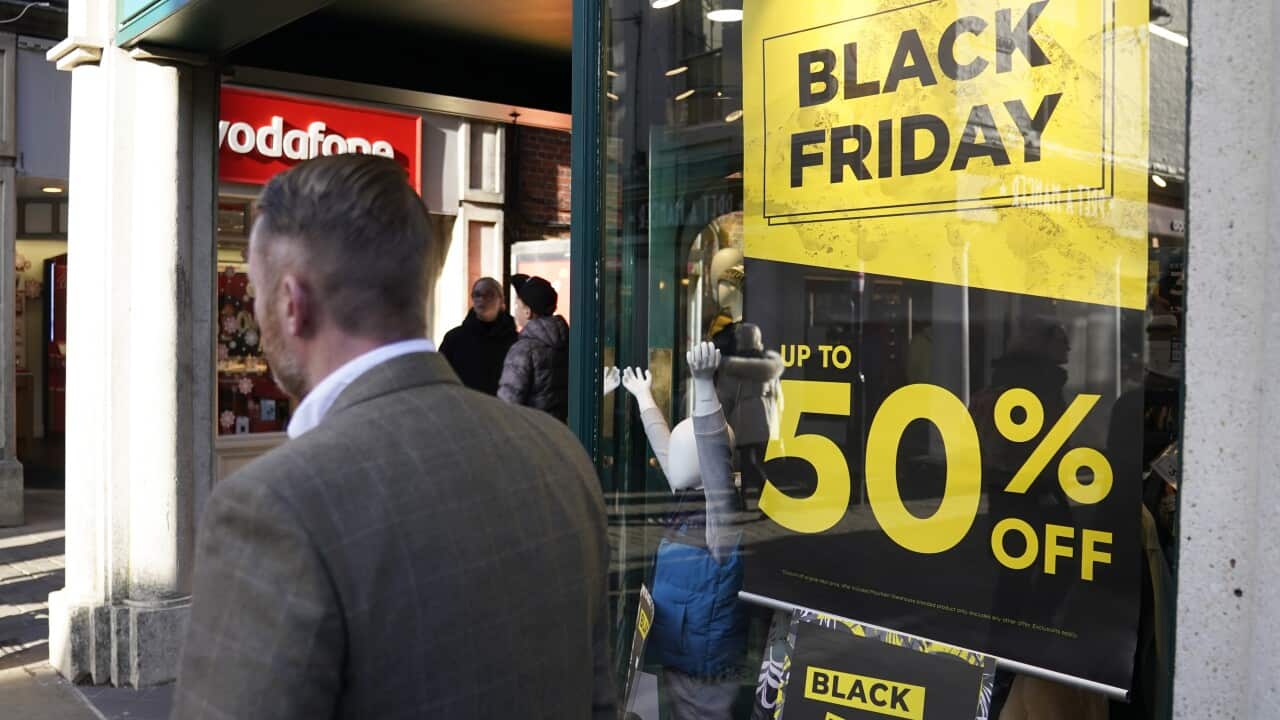
Every November, Black Friday arrives with big claims of massive savings and "one-day-only" deals. We are bombarded with offers that seem too good to pass up. But beneath all this lies something far more strategic.
Black Friday is not simply about a day (now more than a fortnight) of discounts. It’s also a psychological event, carefully designed to take advantage of how our brains make decisions.
Understanding some of the science behind this process can help us recognise when we are being pushed to spend more than we intended.
Quick, quick, spend up big
When we decide between options, such as whether to buy a new TV, our brains weigh up bits of evidence for and against each choice. We compare prices, features, reviews and what we can afford. Once we feel we have enough information, we decide.
News that makes sense
Your trusted source for staying up-to-date with the world around you. Get free daily news updates and analysis, straight to your inbox.
Normally this process takes time. The more important the decision, the more evidence we like to gather.
But when we are put under pressure, that changes. The brain lowers the threshold for how much information it needs before deciding. In other words, time pressure makes us decide faster and with less evidence.
This can be useful when acting quickly matters. If a spider lands on your arm, you do not calmly evaluate the pros and cons before flicking it off.
But during Black Friday sales, that same quick-decision process can lead us to spend impulsively.
OMG, they’re almost sold out
As well as tapping into "urgency", Black Friday sales tap into "scarcity". We know the sale lasts only a short time, and many people are shopping at once. This creates a strong feeling of competition: if we do not act quickly, we will miss out.
While we’re browsing for a TV, the website says there are "only 8 left in stock", and "12 people have this item in their carts". Suddenly, it feels like a race. Even if you were not planning to buy right away, you might feel more compelled to "add to cart" before it’s too late.
That sense of scarcity changes how our brain processes information. When we believe something is in limited supply, we assign it more value, telling us the item must be good simply because others have it in their basket too.
What was I thinking?
When we make decisions quickly, we rely on less evidence and are more likely to make mistakes, a long-known psychological phenomenon called the speed-accuracy trade-off.
Under time pressure, our brain tries to find shortcuts to help evaluate options, such as how many people are viewing an item. But this may be less useful information than details such as warranty, product quality or long-term value.
Signalling that something is scarce can also discourage us from looking for more information. If it seems like a product might sell out, taking the time to compare prices or read reviews feels risky. The product could disappear while we’re still thinking.
Our brains prefer predictable outcomes and try to avoid unnecessary risk, so instead of getting more information, we act quickly.
Fast decisions are not always a bad thing. Acting quickly can save time or prevent harm when we do not have complete information. This could include evacuating when the fire alarm goes off, even if you are not sure if there is an actual fire.
But during Black Friday, retailers create artificial urgency. Timers, "limited stock" alerts and "today only" banners are designed to mimic real scarcity, pushing our brains into decision-making overdrive.
Once that sense of urgency kicks in, rational thinking can take a back seat. We stop asking "Do I really need this?" and start thinking "What if I miss out?"
It's the type of thinking that sees you buy a new TV that is only slightly better than the one you have.
Black Friday feels like a celebration of savings, but it is also a masterclass in behavioural and brain science. Every timer, pop-up and "only 3 left" alert is carefully crafted to grab your attention, and shorten your decision time.
Knowing how these tactics work can help you stay in control.
4 tips to stay in control:
- Plan before the pressure hits — research what you really need and obtain more information before the sales season. This will help when the brain has to make decisions under time pressure.
- Set a budget and keep it visible — decide how much you are willing to spend and remind yourself while shopping. This helps counteract the "scarcity effect", reminding your brain that other limits also exist.
- Pause before you purchase — when you feel the pressure, take a minute. A break lets your brain catch up with the excitement.
- Ask yourself "Would I want this at full price?" This helps your brain focus on the actual value of the item.
There is nothing wrong with enjoying a good deal. But when you find yourself in the middle of all the excitement, it is worth remembering what is happening inside your brain, and who truly benefits.

Tijl Grootswagers receives funding from the Australian Research Council.
Daniel Feuerriegel receives funding from the Australian Research Council.







