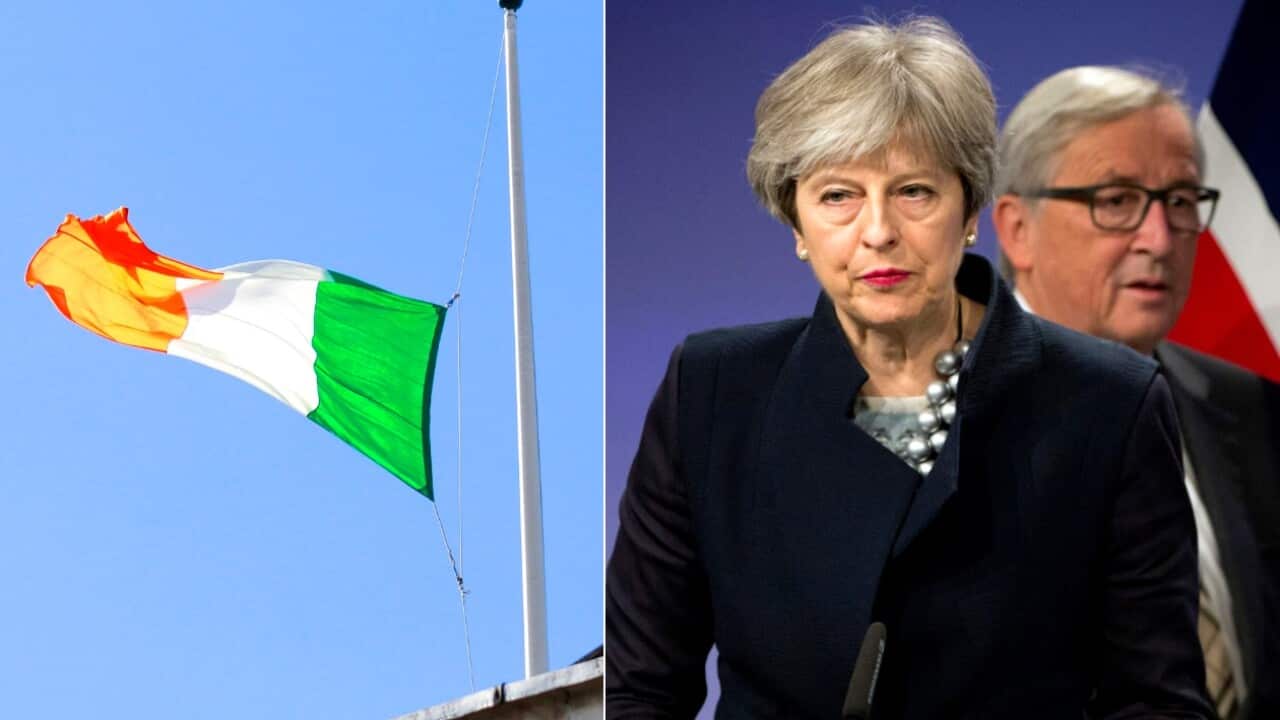
The main sticking point in Brexit negotiations is how to keep Britain's land border with the Republic of Ireland open after it leaves the European Union.
London believes frontier checks can be avoided through a new trade agreement with Brussels, but accepts the need for a fallback plan to address the issue until that deal is agreed.
However, the two sides have so far been unable to agree the terms of this so-called backstop.
News that makes sense
Your trusted source for staying up-to-date with the world around you. Get free daily news updates and analysis, straight to your inbox.
Why is this an issue?
After Britain leaves the European Union, the land border between the British province of Northern Ireland and the Republic of Ireland will become an external EU frontier.
Britain says it wants to leave the bloc's customs union and single market, meaning checks would be required on people and products crossing from one territory to the other.
But both London and Brussels have pledged to avoid any physical infrastructure, or "hard border", worried that it could upset the delicate peace process that ended decades of violence between Protestant supporters of British rule over the province, and Irish Catholics nationalists, who believe in a united Ireland.
Residents and businesses on both sides of the now largely invisible 500km frontier also emphasise the importance of maintaining the free flow of trade and passenger traffic.
At least 30,000 people cross the border every day for work, with many residents of border regions living on one side and working on the other.
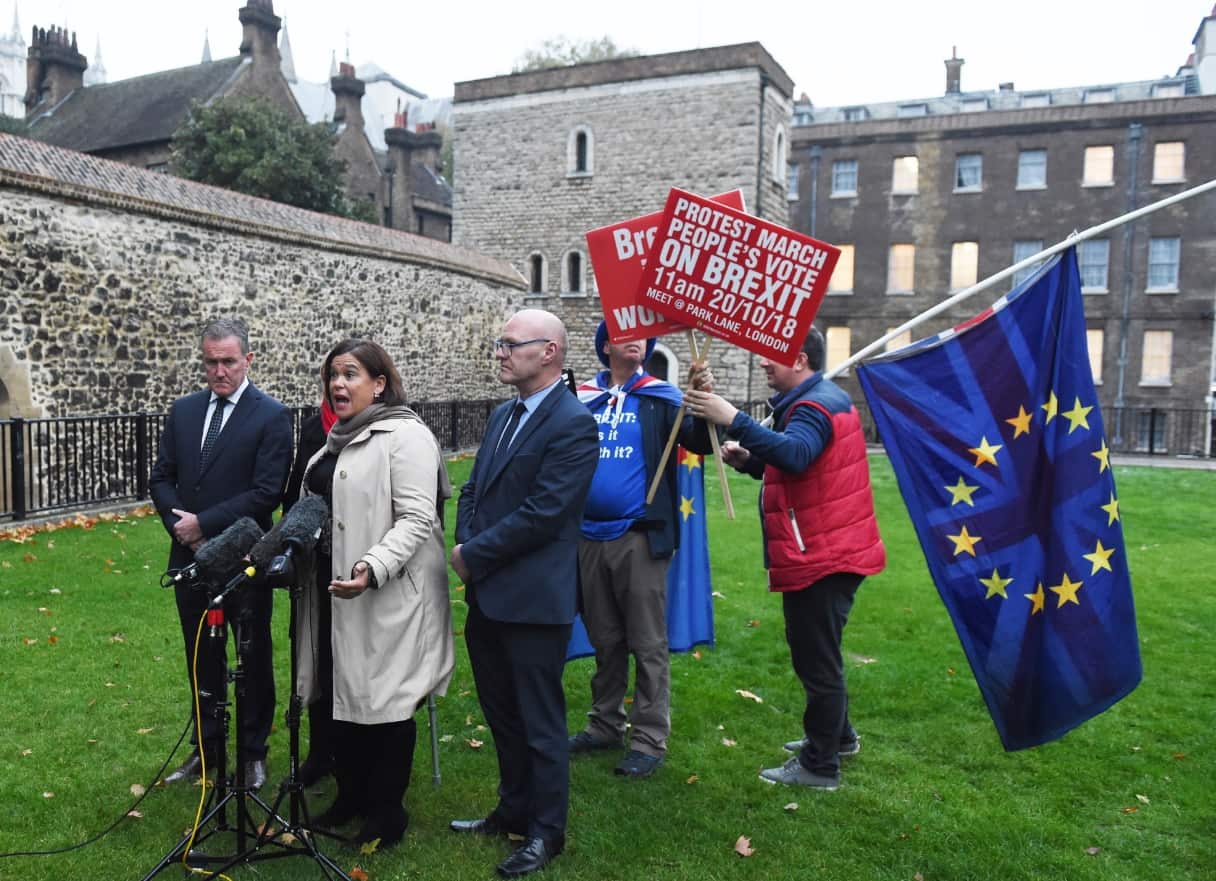
Is there a security risk?
British and Irish army checkpoints along the border were removed after the 1998 Good Friday peace accords, which largely ended three decades of conflict in Northern Ireland in which around 3,500 people were killed.
During "The Troubles" the border was a flashpoint for attacks and a lucrative smuggling route that helped fund paramilitaries.
Police have warned that any new infrastructure along the border could become a target for paramilitary activity by dissident militants who have not signed up to the peace deal.
What is the EU proposing?
The EU's backstop proposal would see Northern Ireland stay in elements of the bloc's single market and customs union, meaning it would have to accept EU rules on quality standards and apply EU tariffs.
British Prime Minister Theresa May says this is unacceptable, arguing it would effectively carve off Northern Ireland from the rest of the country and create a border in the Irish Sea.
The British mainland accounts for 58 percent of Northern Ireland's sales outside the province -- nearly four times the value of exports to Ireland in 2016.
The issue is particularly sensitive as May's government is propped up by Northern Ireland's Democratic Unionist Party (DUP), which rejects any attempt to change the province's status.
What does Britain want?
May's backstop proposal centres around a plan to create a temporary customs arrangement between the EU and the whole of Britain, including Northern Ireland.
But she suggests it should only be in place until the end of December 2021 -- something Brussels has rejected, saying any fallback plan cannot be time-limited.
As part of this proposal, officials have indicated the government might be open to regulatory checks between Great Britain and Northern Ireland, noting that some already exist, for example on agricultural products.
Areas of compromise?
May said the bloc has "responded positively" to Britain's backstop proposal, but has insisted it have an end date -- something her ministers and the DUP have rejected.
She said the EU also wanted its own plan involving only Northern Ireland to remain on the table as the ultimate insurance policy -- a "backstop to the backstop".
EU negotiator Michel Barnier has suggested that "most checks can take place away from the border, at the company premises or in the market", but the checks in ports and airports would remain.
The DUP has warned it will not accept either a customs or regulatory border between Northern Ireland and the rest of Britain.







