The Australian coal industry is feeling the pinch with more than 8,000 job losses in the past six months. But many in the industry are confident that demand from India will help reverse the recent downturn in exports.
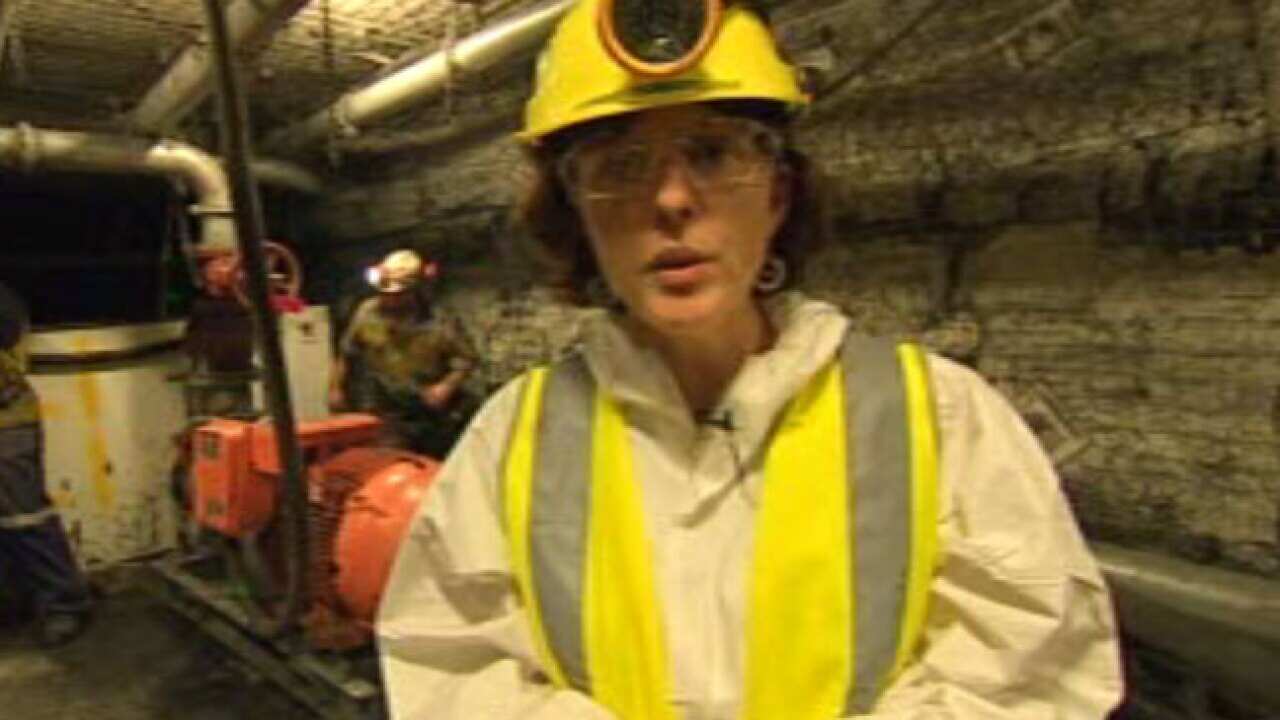
Deep beneath Wollongong is a subterranean city, a place where the work is dark, dangerous and dirty. But the conditions have never bothered Greg Smith, undermanager at the NRE No. 1 Colliery, who has spent more than 30 years in the industry. He comes from a long line of English miners, attracted to this underground world by the money and the mateship.
“My grandfather worked in this mine after the First World War, from about 1918 through until 1924,” he says.
News that makes sense
Your trusted source for staying up-to-date with the world around you. Get free daily news updates and analysis, straight to your inbox.
DIRTY BUSINESS - 'HOW MINING MADE AUSTRALIA' will air Sunday January 6th, 13th and 20th at 8.30pm on SBS ONE.
Smith is well aware the industry is tightening its belt and that coal miners in other parts of New South Wales and Queensland have lost their jobs, but he's confident there won't be any cuts at the NRE No. 1 Colliery. That's because what they produce here is all destined for coal-hungry India. The mine's owner, Arun Jagatramka, who's from India, has assured his workers that the premium coking coal they dig up will always be snapped up on the subcontinent.
Smith's optimism is reinforced by a report from the International Energy Agency that predicts coal will catch up with oil as the world's leading energy source by 2022, fuelled by growth in India and China.
But the Australian Coal Association isn't as positive about the country's prospects, pointing to falling commodity prices and stiff competition. The Coal Association says Mozambique, Colombia, Indonesia and the United States are now providing coal to Australia's traditional customers at a lower cost.
“Australia is at a terrible junction where not only has the international market come off in terms of prices but our costs and productivity have gone to a terrible place,” says Nikki Williams, CEO of the Australian Coal Association.
Ms Williams says until recently Australia was the cheapest place in the world to produce coal. “And in just five years, we're now the highest cost producer in the world at $176 a tonne compared to the rest of the world at $106.”
Queensland has been hardest hit by the latest job losses with 5,500 cuts in the past six months. The state's coal woes can be traced to a number of factors, including the floods of two years ago. Australia's pain created an opportunity for the United States, which is now exporting a million tonnes of coal to Asia every month.
“Many millions of tonnes of coal were locked up and unable to be exported so the Americans were able to take advantage of that immediately,” said Ms Williams.
Despite the job losses in Queensland, there's still confidence the world will continue to buy Australian coal. The Gladstone Ports Corporation in Central Queensland is currently building another big coal terminal and has its eye on the subcontinent.
“For Central Queensland and the coal industry, we certainly see India and not China as the major driver going forward,” says Leo Zussino, Chief Executive Officer of the Gladstone Ports Corporation.
Mr Zussino says coal exports out of the city are predicted to double within 15 years, a prospect that horrifies green groups. “By doubling coal exports, we are no different to somebody selling weapons,” says Jan Arens of the Gladstone Conservation Council. “We're no different to a drug dealer who supplies drugs to people in the community in that we're not taking responsibility, we're not concerned with the downstream consequences of the trade.”
The Climate Institute says coal for power has only a future in the short to medium term, while Ian Lowe of the Australian Conservation Foundation argues that coal exports need to be phased out in the medium term.
But the Australian Coal Association says such talk is unrealistic and is instead focused on “clean coal” technology. It points to the opening of the country's first carbon capture plant in mid-December at Biloela, about 120 kilometres west of Gladstone.
The $200 million Callide Oxyfuel Project traps greenhouse gas generated by an old power station, instead of releasing it into the atmosphere.
Backed by the Japanese government, it's designed to test the viability of "clean coal" technology under Australian conditions.
For critics “clean coal” is an oxymoron, akin to healthy cigarettes. But for miners like Greg Smith in Wollongong, it's a real possibility for the future. “Coal's had a bit of bad press,” he acknowledges, but he believes that will change.
He's also confident the mine that employed his grandfather will offer opportunities to his grandson's generation. “It took a hundred years to mine out the seams above us and I just believe that this mine will still be going when my grandson retires and he's just 16 years of age.”







