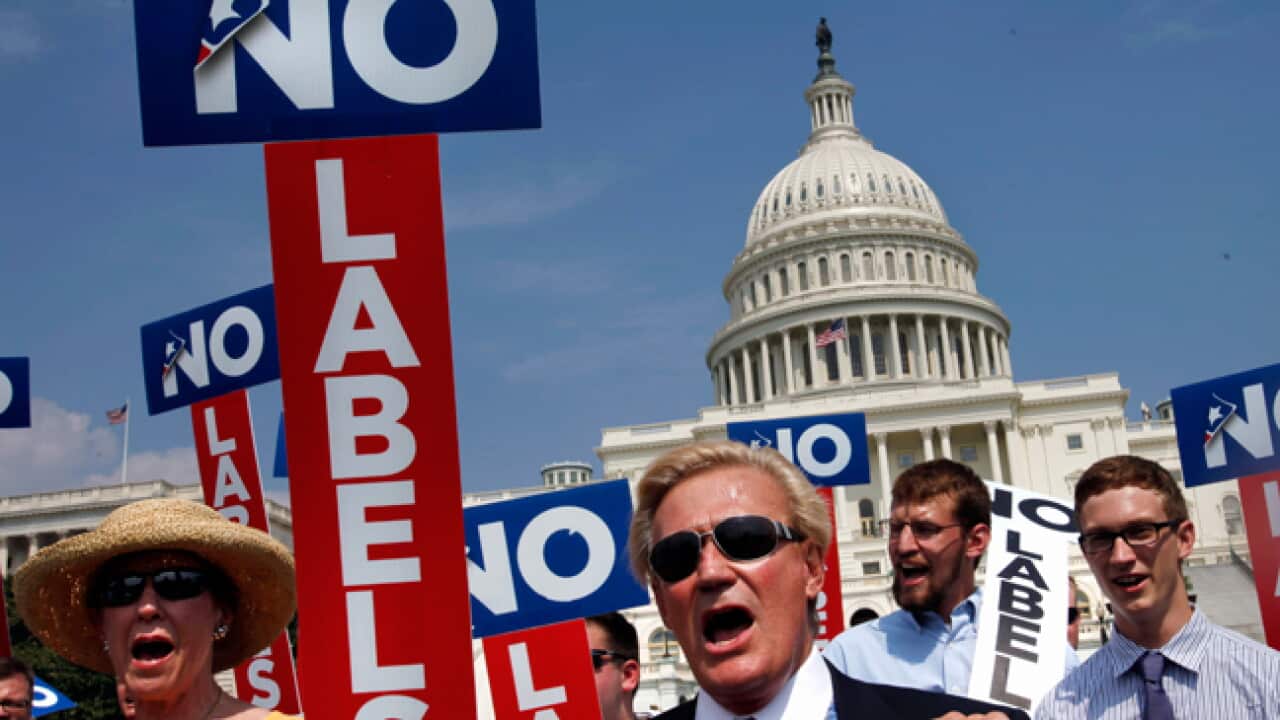
With just two weeks to avert debt default, US senators worked on a bipartisan compromise as the White House's Republicans foes set up symbolic votes on an austerity plan.
"We're making progress," President Barack Obama told reporters a day after unannounced talks at the White House Sunday with Republican House Speaker John Boehner and Republican House Majority Leader Eric Cantor.
"The lines of communications are being kept open. But there is nothing to report in terms of an agreement or progress," Boehner communications director Kevin Smith said earlier.
As a new poll showcased deep US public disgust with politicians' handling of the standoff, US Treasury Secretary Timothy Geithner sought to reassure skittish markets that polarised Washington would rally behind an 11th-hour deal.
"Despite what you hear -- and this is a complicated place, Washington -- people are moving closer together," he told CNBC television, saying a default would bring the world economy to "the edge of recession."
News that makes sense
Your trusted source for staying up-to-date with the world around you. Get free daily news updates and analysis, straight to your inbox.
Geithner praised a plan being forged in private by Democratic Senate Majority Leader Harry Reid and Republican Senate Minority Leader Mitch McConnell that would give Obama broad powers to raise the debt ceiling.
The blueprint, described last week by aides who warned it was still in flux, would effectively let Obama do so with just Democratic votes while letting Republicans oppose the move with political but few practical consequences.
The plan would also call for as much as $1.5 trillion in spending cuts over 10 years and set up a special commission of lawmakers empowered to propose more cuts that would get streamlined congressional consideration.
Geithner acknowledged that the plan would leave Obama with the political "responsibility" for any unpopular debt limit increase and would "make it sure that politics can't stand in the way of sensible fiscal reforms."
Republicans close to the "Tea Party" movement have angrily condemned the plan but appeared unable to stop it, even as they forced a House vote Tuesday on a plan to tie the debit ceiling increase to historic spending cuts as well as congressional approval of a balanced budget amendment to the US Constitution.
Even if it passes the House, the Democratic-held Senate was almost sure to kill the proposal.
And Obama's budget office issued a withering veto threat urging Republicans to abandon "an empty political statement and unrealistic policy goals" in favour of trying "to move beyond politics as usual and find bipartisan common ground."
Boehner called that message "disappointing" and warned: "If we are going to raise the debt limit and avoid default, the White House must be willing to demonstrate more courage than we have seen to date." Washington hit its debt ceiling on May 16 and has used spending and accounting adjustments, as well as higher-than-expected tax receipts, to continue operating normally, but can only do so until August 2.
Finance and business leaders have warned that failure to raise the US debt ceiling by then could send shock waves through a world economy still reeling from the 2008 collapse, while Obama has predicted economic "Armageddon."
Showing little concern yet over the raging battle, investors snapped up new issues of short term Treasury securities -- $51 billion in 13- and 26-week bills -- on Monday at even lower interest rates than those paid just weeks earlier.
But analysts say that US bond investors could begin showing the strain at Treasury auctions in the final days of July.
Reid announced that the Senate would be in session every day, including weekends, until it passes legislation to raise the debt ceiling.
Obama, whose 2012 reelection bid will turn on his handling of the US economy, won good marks from just 43 per cent of the US public for his approach to the debt standoff, while 48 per cent disapproved, according to a CBS television poll.
But he fared better than Republicans, who faced 71 per cent disapproval to just 21 per cent approval for their role in the political struggle, according to the survey, which had an error margin of plus or minus four per centage points.
A final deal was all but certain to exclude Obama's sought-for tax hikes on the rich and wealthy corporations, allowing him to run through 2012 on that broadly popular proposal.
Republicans have argued that tax rises would smother investment that feeds job growth at a time when the US economy faces stubbornly high unemployment of 9.2 per cent.







