What are the member countries of the Commonwealth?
Almost all are former British colonies.
But, as Nikki Canning reports, there are exceptions to the rule.
News that makes sense
Your trusted source for staying up-to-date with the world around you. Get free daily news updates and analysis, straight to your inbox.
Almost all members of the Commonwealth are former British colonies.
A total of 19 are in Africa; 12 are in the Caribbean; eight are in Asia; three are in Europe, and two in South America.
Australia is regarded by the organisation as one of the 10 South Pacific members.
The Commonwealth includes five countries which are members of the G-20 group of significant economies - Australia, Britain, Canada, India, and South Africa.
With some exceptions like New Zealand and Singapore, many of the others are widely regarded as developing countries.
Some of these - like Pakistan, Nigeria and Bangladesh - have relatively large populations.
But others in the developing country category have relatively small populations, ranging down to tiny Tuvalu with a population of around 10-thousand people
The Secretary-General of the Commonwealth, Kamalesh Sharma says the Commonwealth is particularly useful for the voices of small countries to be heard.
"We have helped the small states and the vulnerable states of the world. More than 30 of our states have a population of less than a million and a half. This is one organisation where they have a voice, where they are listened to, where programs are developed in a variety of fields like climate change, like trade, and capacity building, which assists them and there is no organisation in the world which works for equitable international relations."
One of the small island members of the Commonwealth is the Seychelles, off the east coast of Africa.
Its President James Michel agrees Commonwealth membership helps to ensure that the interests of countries like his are not left off the global agenda.
"We are living in a globalised world and that all countries, all societies, all peoples are inteconnected, whether you are a small country or a big country, there are so many similarities that it is important we remain focused and see how we can face the challenges that are today affecting the world. We have for example the economic challenges, we have the financial crisis, we have climate change, which is very important especially affecting the small island states."
Membership of the predecessor organisation known as the British Commonwealth was confined to countries which had the British monarch as head-of-state.
But since 1949, when the "modern Commonwealth" was formed, members have only been required to acknowledge the British monarch as the symbolic head of the Commonwealth.
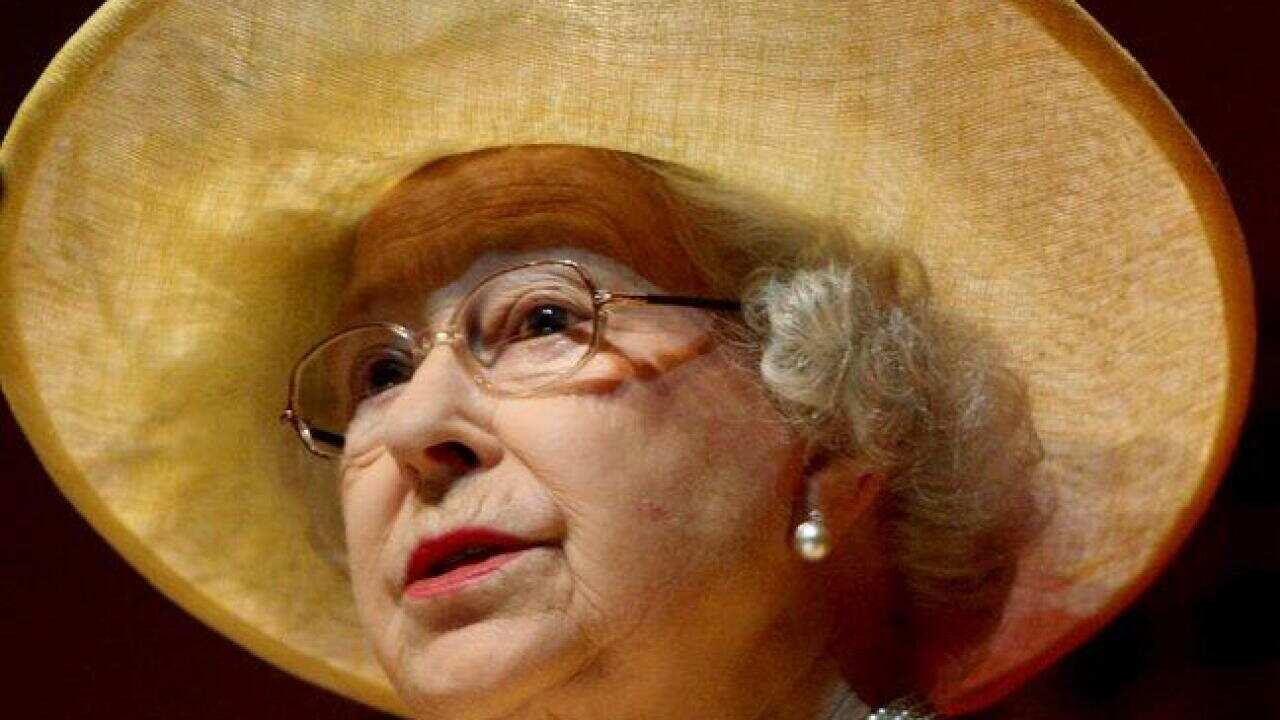
In fact, Queen Elizabeth is the Head of State in only 16 of the current 54 member countries, including Australia.
The other 38 members are all republics.
At the previous Heads of Government in Trinidad and Tobago in 2009, Rwanda was accepted as the 54th member
Opening that meeting, Queen Elizabeth acknowledged the importance of such a diverse membership.
"Every region of the world is represented, every size of nation at all stages of development and all the world's great religions are here. It is our very diversity which makes the Commonwealth strong. I also believe that it is this diversity which makes the Commonwealth so increasingly relevant in our 21st century world."
No applications for new membership are expected at the Perth heads of government meeting - though one could come soon from South Sudan.
A representative of the South Sudan government in Australia Mariano Ngor says he'd like his country to be the 55th Commonwealth member.
"I think it will be a good thing because our neighbours Uganda, Kenya, are members of theCommonwealth and it would just make us more comparible in many ways and at least the trade with those countries is very ?? and we wanted compatibility with that."
But the Commonwealth Secretary General Kamalesh Sharma says South Sudan is not yet ready to apply for membership.
He points out that South Sudan only became independent in July - a year after the move was approved in a referendum.
"The referendum has been very new and very fresh. The state is coming into existence. It will develop the attributes of a state formally by and by and I have seen news items whereby the elements that are expected to constitute the political leadership has expressed an interest in joining the Commonwealth but I think it will be some time before they are in a position to formalise it and make a formal application."
The language of the colonising power in most Commonwealth members, English, remains the only language used by the organisation in communications and meetings.
But it is not even an official language in nine countries - and is not widely spoken in some.







