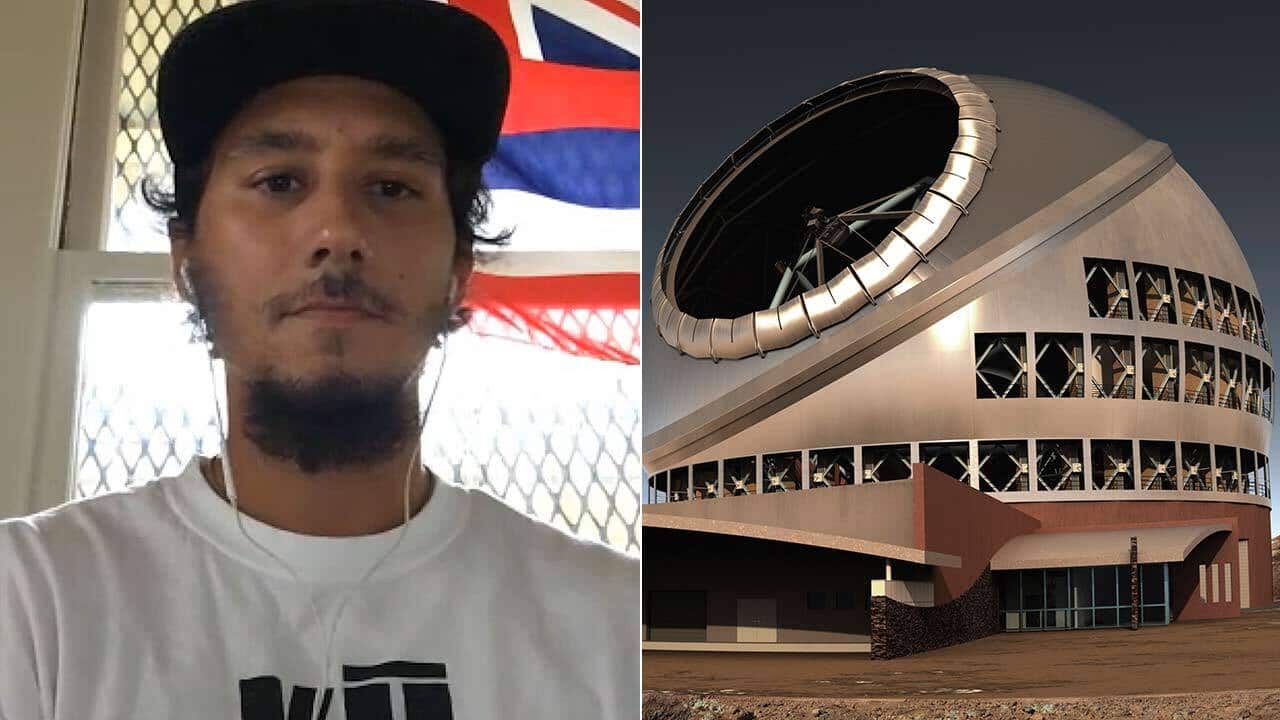
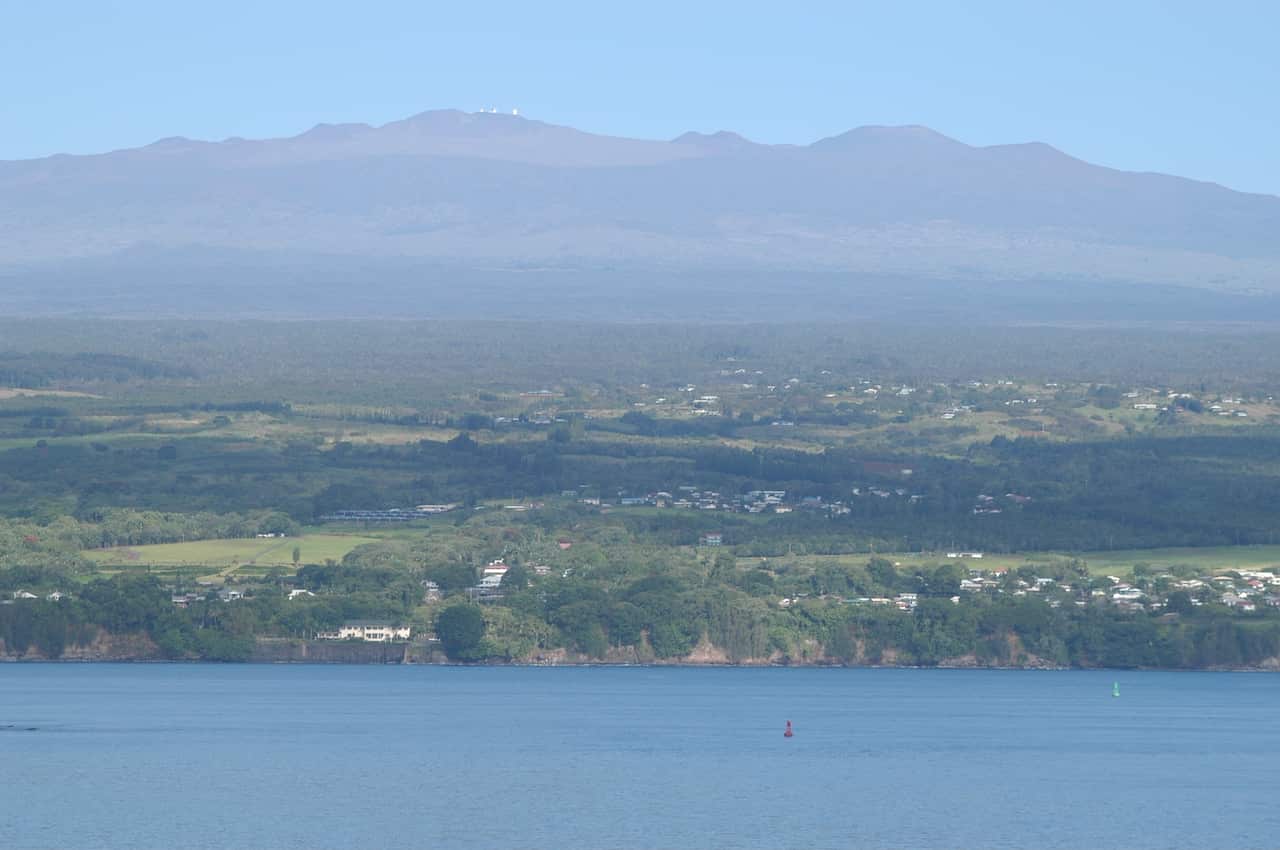
Among the peaks that form the picturesque backdrop of the Hawaiian islands stands the formidable dormant volcano Mauna Kea.
The summit of the tallest sea mountain in the world bears a special connection to the Kanaka Maoli, the native Hawaiian people, but the peak also attracts scientists and astronomers wanting to take advantage of the unique vantage point to gaze at the faintest galaxies.
Construction for a giant Thirty Metre Telescope (TMT) was controversially granted the go-ahead by the Supreme Court on Tuesday, despite years of legal battles and petitions to curb any further development on Mauna Kea.
The decision was hard to swallow for Kahookahi Kanuha, a member of the Hawaii Unity and Liberation Institute (HULI), who believes the state is failing to recognise Hawaiian culture.
“When I look at another decision by the state of Hawaii, it [says] that Hawaiians; your language, your history, your culture, your beliefs, your values, your customs, your traditions, your identity is not as real as ours," he told SBS News.
News that makes sense
Your trusted source for staying up-to-date with the world around you. Get free daily news updates and analysis, straight to your inbox.
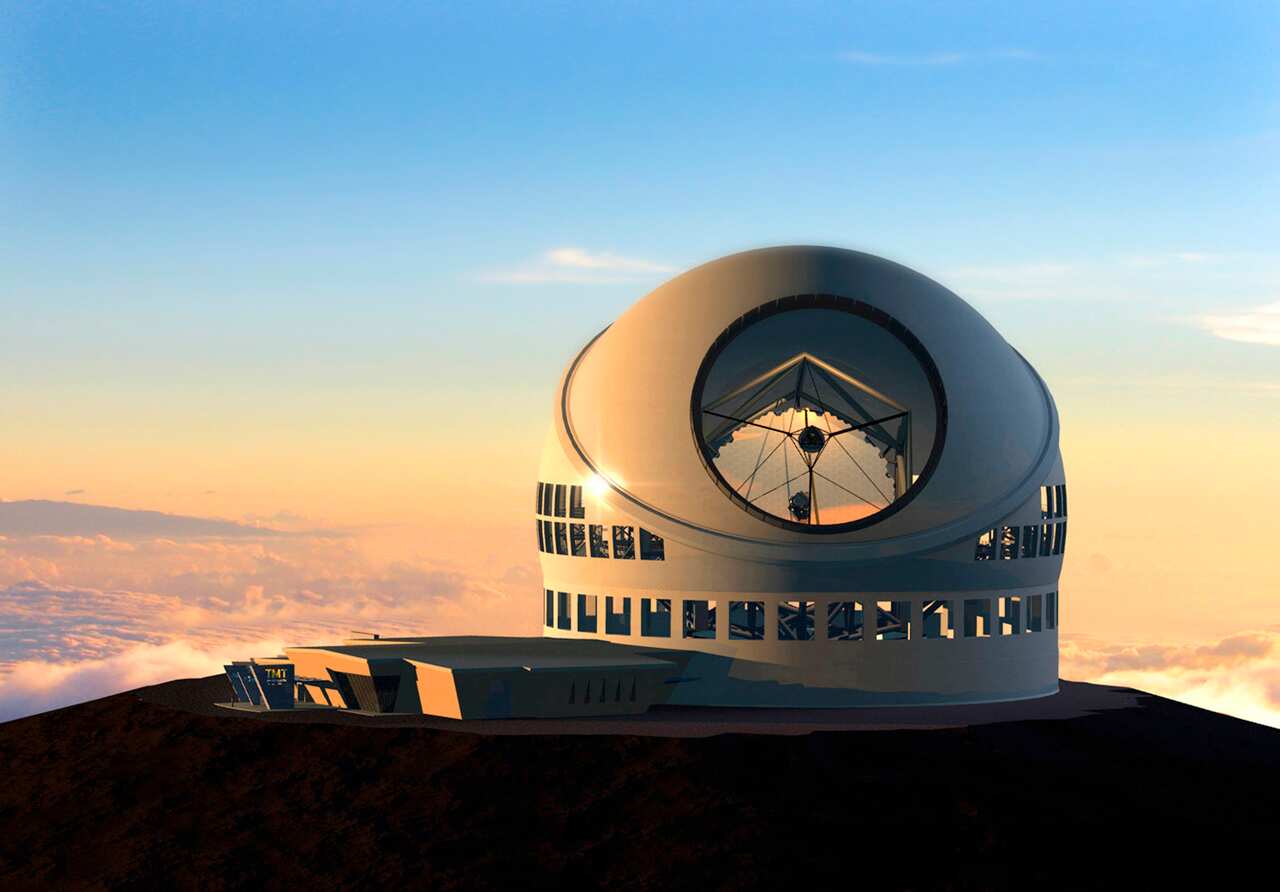
This struggle between culture and science for the land at the summit has divided the Hawaiian people for years.
Native beliefs vs modern science
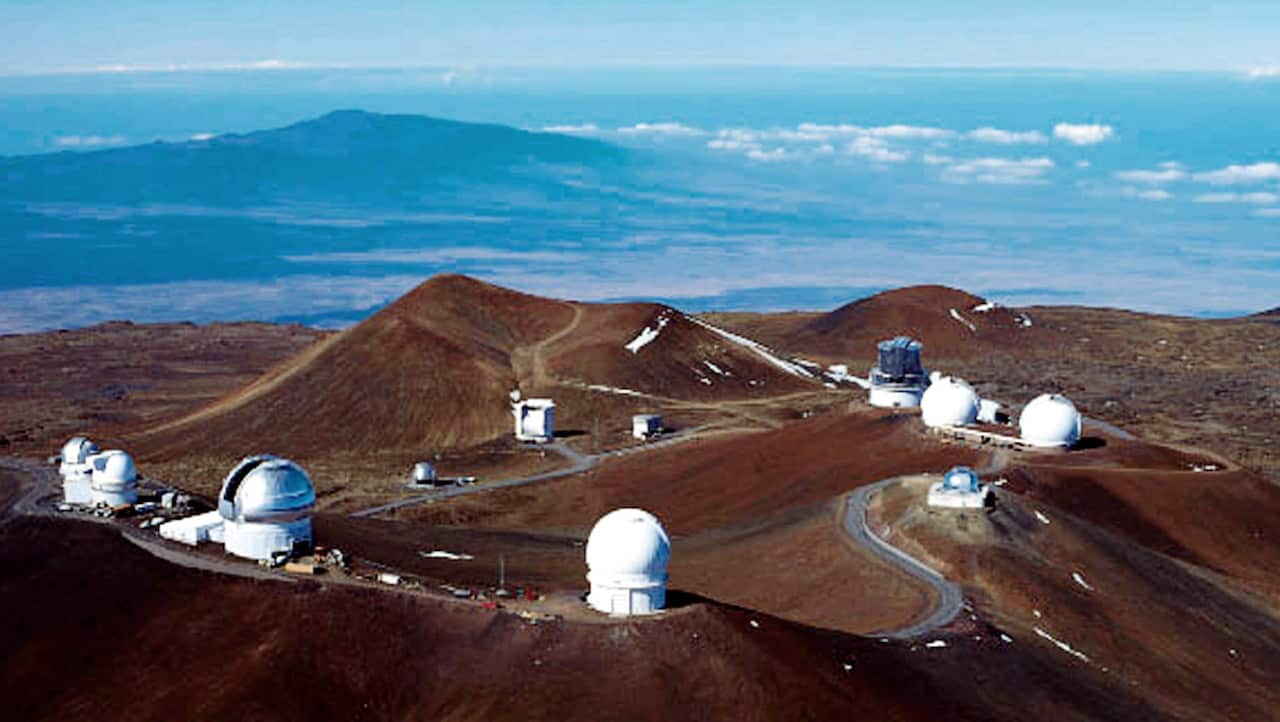
The Mauna Kea peak is the highest point in the Hawaiian islands. The dormant volcano is more than 4,000 metres above sea level.
The Kanaka Maoli people consider the summit one of the most sacred spots in the Hawaiian archipelago.
Mr Kanuha, who is also a professor of Hawaiian Studies, said the site has enormous value to his people.
"We have a saying: "the land is born, the chief was born and then the people were born", or "the land is the chief" so people are merely its servants. So we have these proverbs passed down from generation to generation. We see this in our stories, we come from āina, it's our ancestor," Mr Kanuha said.
For astronomers, the "light pollution" makes Mauna Kea one of the best places on the planet for an observatory and the construction of the giant TMT will enable scientists to study the faintest galaxies.
Construction on Mauna Kea started 40 years ago and up to 13 telescopes have been built since, but the TMT project beginning in 2009 will be one of the largest in the world.
"The Board of the Thirty Meter Telescope selected Mauna Kea in July 2009 after a rigorous five-year campaign spanning the entire globe that measured virtually every atmospheric feature that might affect the performance of the telescope," the TMT site reads.
The land is managed by the University of Hawaii and there are currently no legal limits for construction.
Project partners include the University of California, and organisations in India, China and Japan.
From astronomer Tom Kerr's perspective, which he wrote about in 2011, the argument for science on Mauna Kea was about: "returning to the stone age versus understanding our universe and it'll be interesting to see who wins in the end".
Protests
Activists claim the construction on Mauna Kea already desecrates land they consider sacred.
Despite opposition, the Hawaii Board of Land and Natural Resources officially approved the site for TMT in 2013.
But in October 2014, non-violent protesters showed up and blocked the access road at the site's groundbreaking ceremony.
In 2015, when construction was set to begin demonstrators blocked the road again.
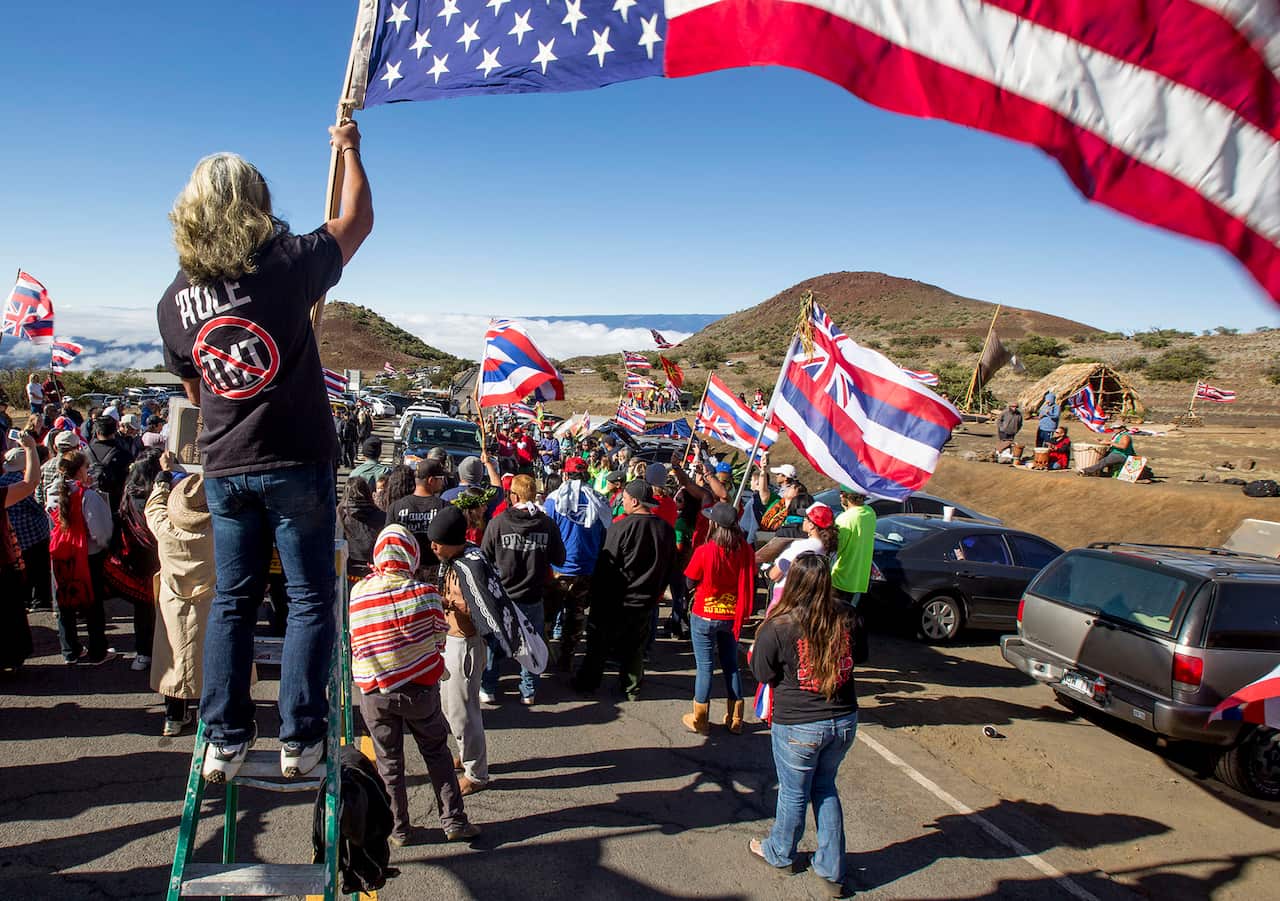
In April that year, thousands protested across the Hawaiian islands, which resulted in 30 people getting arrested at the Mauna Kea summit.
In 2016, Hawaii's Board of Land and Natural Resources approved a new permit for the construction.
Celebrities such as Game of Thrones actor Jason Momoa, who is of Hawaiian descent, also joined the protest on social media to stop construction on Mauna Kea.
However, not all Hawaiians oppose the telescope. Back in 2015, UH astronomer Paul Coleman said that their Polynesian ancestors used the stars for navigation and the TMT was a step forward in astronomy.
The construction of the enormous telescope would also provide hundreds of new jobs and would bring scientists from all around the world, boosting the local economy and human knowledge.
'Stewards on the mountain'
Despite further legal battles, last month's Supreme Court ruling upheld the HBLNR's decision, meaning construction on the land can legally proceed.
"Despite the Board’s misapprehension as to what may constitute an appropriate mitigation action, substantial evidence was introduced that true mitigation measures will be undertaken that are sufficient to offset the harm from the project on public trust purposes," Associate Justice Richard Pollack wrote.
Following the decision, TMT Chair Henry Yang thanked the community for their views and said TMT, "remain committed to being good stewards on the mountain and inclusive of the Hawaiian community".
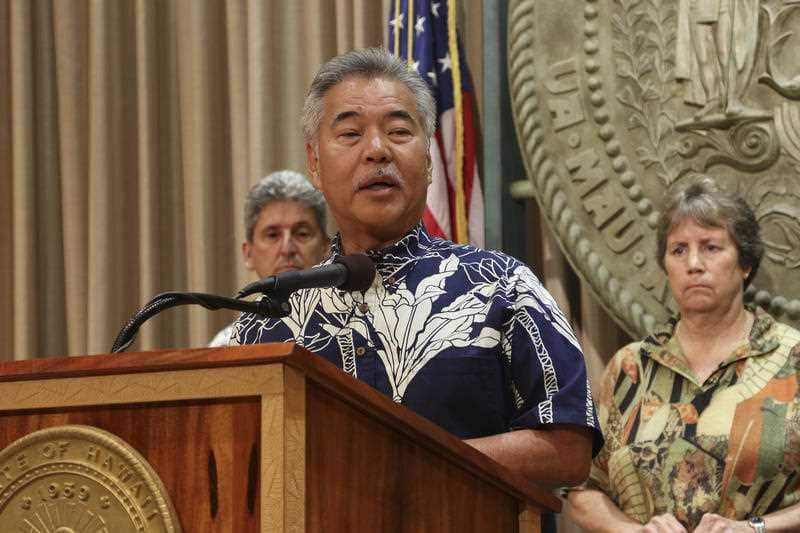
Governor David Ige also said he believed the decision was "fair and right and will continue to keep Hawaii at the forefront of astronomy".
Mr Kanuha said the decision shows that Hawaiians have fewer rights to protect their land than other cultures. He referenced the international organisations that have a partnership with TMT for construction.
“When we talk about this ability to protect Mauna Kea…we know mountains around the world are held sacred to many cultures," he told SBS News.
"Look at Mount Fuji, last I checked there are zero telescopes on Mount Fuji, but Japan has interest and so-called “rights” of putting a telescope on our sacred mountain. An idea they would never, ever entertain, but to them, it’s right for them to do it on our island. Because in the eyes of these people...we are less human than they are."
What's next?
The opponents of the TMT have few legal avenues left.
Construction won't start immediately since the company must now submit plans to the Office of Conservation and Coastal Lands for review and approval.
But Mr Kanuha said the battle isn't over and construction will be met with more peaceful, nonviolent protests.
"The next step, on my end, I know that as soon as TMT makes an attempt to go up that mountain they will be met with resistance. This I know for a fact.”
'What side of history will they be on?'
The fight against the TMT construction runs deep. Hawaiians have long been fighting the displacement of its people from traditional land by outside western influence.
Hawaiian land annexed by the US in 1893 is often referred to as "ceded lands" and was recognised as "illegal" by the US Congress in 1993.
But Hawaiians continue to passionately fight to regain their sacred land. Mr Kanuha sees the fight to help preserve Mauna Kea as no different.
"I know I have permission to feel this way and to do this because my ancestors did the same thing. Whether we win this or not, it's important that when my grandchildren tell the story of their grandparents or great-grandparents that they are not forced to jump back to 1893 to find a story of resistance," he said.
"We look back at history and we will feel very comfortable in 100 or 200 years from now, when history is written, we will be on the right side of history," Mr Kanuha added.
"The question that I pose to our people and the governor of Hawaii, David Igor, to the TMT and to the state is what side of history will they be on?"







