
in brief
- Vladimir Putin has made a historic first visit to the Russian-claimed Kuril Islands, referred to by Japan as its Northern Territories.
- The islands have been occupied by Russia since the end of World War Two and remain a source of contention.
Russian President Vladimir Putin has caused a major international stir after a historic first visit to islands claimed by the Soviet Union from Japan at the end of the Second World War.
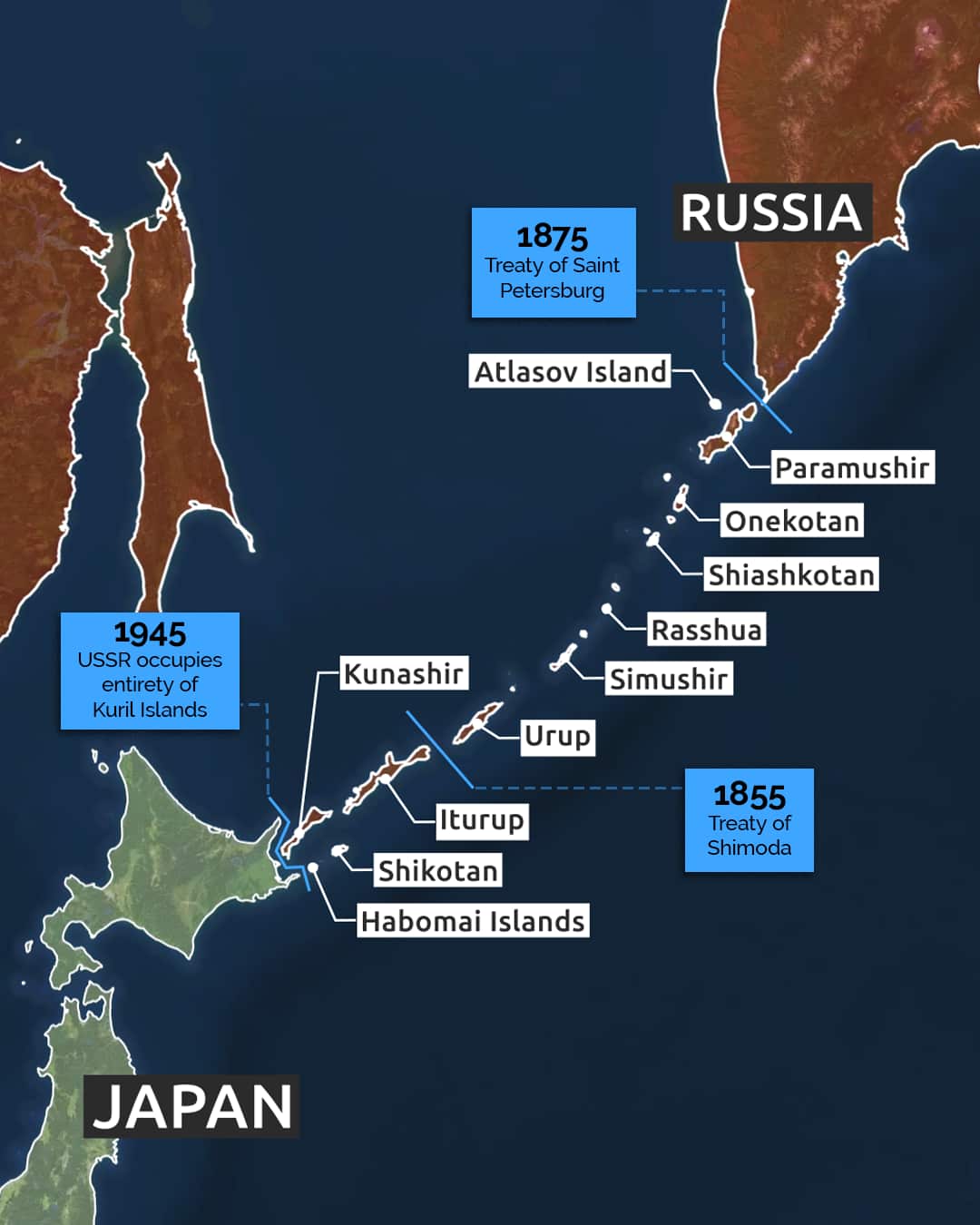
Ownership over the Kuril Islands — a 56-island chain stretching between Japan and Russia — has coloured relations between the two nations for over 80 years.
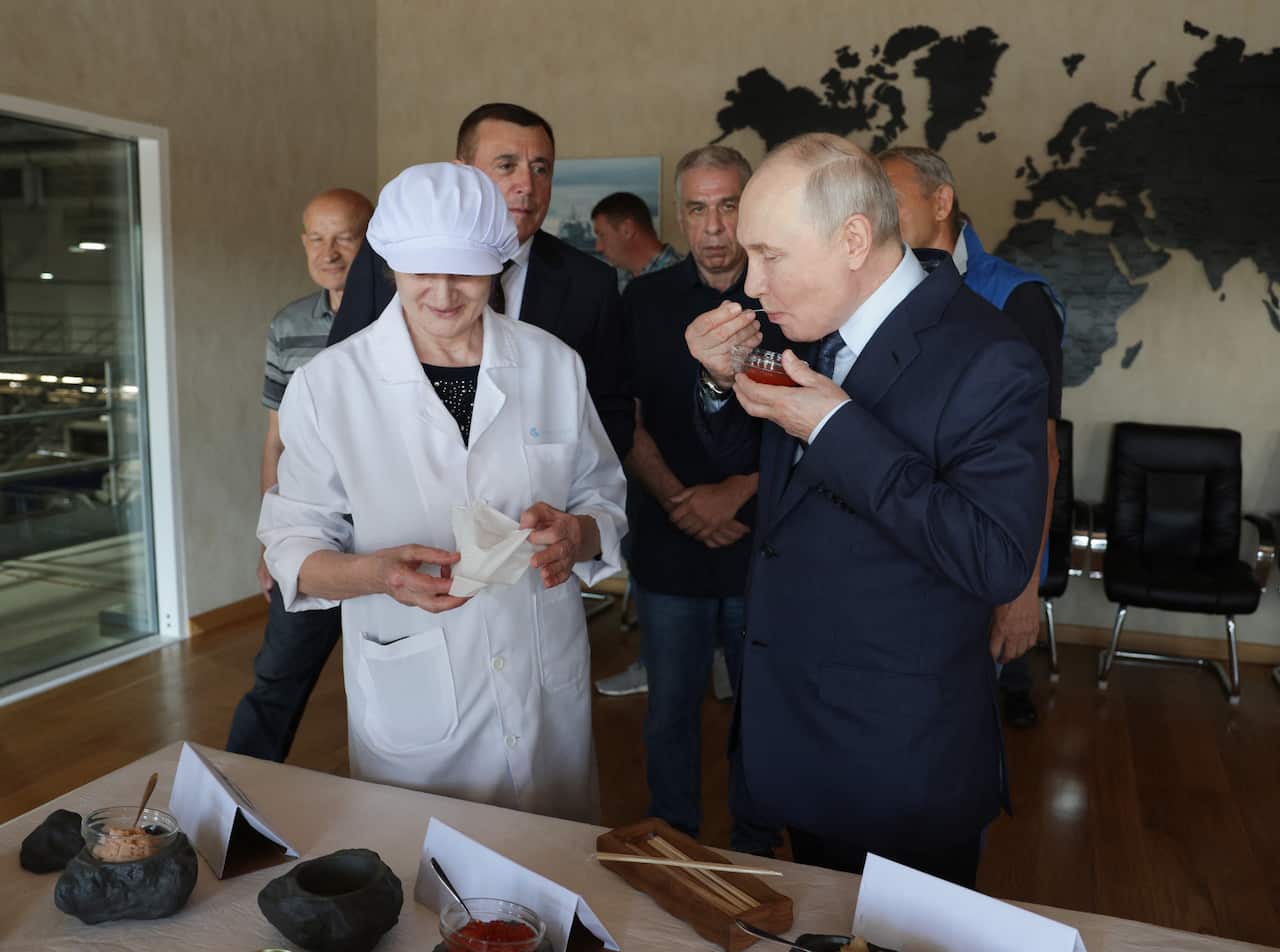
On Wednesday, Russia circulated a video of Putin on the island of Iturup — known in Japan as Etorofu — sampling the local caviar as he visited a fish-processing plant during the first visit by a Russian president since 2010.
Japan summoned Russian ambassador Nikolay Nozdrev to "strongly protest" the move. Prime Minister Sanae Takaichi said the visit "offends the sentiments of the Japanese people and is absolutely unacceptable".
"We hope that the Russian side will take the seriousness of this matter fully to heart," she added.
News that makes sense
Your trusted source for staying up-to-date with the world around you. Get free daily news updates and analysis, straight to your inbox.
Within hours, Russian foreign ministry spokeswoman Maria Zakharova dismissed Japan's comments, saying they "cause extreme outrage and are absolutely unacceptable".
Japan has "gone so far as to brazenly dictate to Moscow which regions of a country its leader can or cannot visit," Zakharova said.
A contested history
Much of the Kuril Island chain has been contested throughout history. In 1855, the Treaty of Shimoda designated the four islands closest to Japan as under Japanese control.
These four — known as Iturup (Etorofu), Kunashir (Kunashiri), Shikotan, and the Habomai islets — are referred to by Japan as its Northern Territories.
Encouraged by the United Kingdom and the United States, Russian forces seized the islands in the days after Japan's surrender in World War Two. Around 17,000 Japanese residents were expelled during the four-year takeover.
Roughly 20,000 Russian citizens now live on the islands, which maintain a harsh climate but rich fishing grounds and mineral deposits.
"Legally, like all the Kurils, [Iturup is] an integral part of our country," Zakharova said.
Putin's visit comes just two days before the 81st anniversary of the Japanese surrender on 15 August 1945. Tokyo has maintained its claim to them and tied their return to a formal peace treaty — without which the two countries are still technically at war.
The islands are of strategic importance to Russia and have provided air and sea bases during Cold War confrontations between the Soviet Union, the United States, and Japan.
"The Kurils have been fortified with Bastion coastal defence missile systems and SU-35 fighter aircraft," Yee Kuang Heng, a professor at the Graduate School of Public Policy at the University of Tokyo, told the Agence-France Presse news agency.
"These provide Russia with instruments of control over sea lanes in the region, as well as leverage against Japan's claim to the islands.
"Putin's visit may be a reminder of the cards he holds and also his displeasure with Japan's continuing sanctions on Russia."
Restraint urged
A spokeswoman for the United Nations secretary-general António Guterres, Shirin Yaseen, said the issue over the islands is a bilateral one between member states.
"We encourage all concerned to exercise restraint, to act responsibly, and to avoid any actions that may escalate tensions further," she said.
Relations between Japan and Russia have worsened since the start of the full-scale conflict in Ukraine in 2022. Japan joined G7 nations in sanctioning Russia and giving money and non-lethal defence aid to Ukraine.
On Thursday, Putin said Japan's sanctions were "unprovoked".
"Japan has identified Russia as a main source of threats. I would like to point out that we are not threatening Japan ... On the contrary it has territorial claims against our country," Putin said.
Russia and China have also been moving closer, conducting joint naval and air exercises near Japan, prompting frequent scrambles by Japanese jets.
North Korea, which this month termed Japan's military build-up a "transformation into a war state", has also sent troops and artillery shells to help Russia's war against Ukraine.
Japan's latest defence white paper issued this month again highlighted growing risks from all three countries.
— With additional reporting from the Agence France-Presse and Reuters news agencies.
For the latest from SBS News, download our app and subscribe to our newsletter.







