"You have a certain level of authority when you arrive in a police uniform," Simen Braeden Mortensen told the Oslo district court on the 11th day of the gunman's trial.
In charge of running checks on anyone wanting to go to Utoeya, where the ruling Labour Party's youth wing was hosting a summer camp, the young guard recalled how Breivik explained he had been sent as a routine precaution after Oslo's government district was hit by a bomb earlier the same day.
News that makes sense
Your trusted source for staying up-to-date with the world around you. Get free daily news updates and analysis, straight to your inbox.
In fact, Breivik himself had set off that bomb, killing eight people.
Braeden Mortensen acknowledged he had been surprised to see the fake officer get out of a grey Fiat van rather than a police vehicle, but had been reassured to see his forged identity card from Norway's PST intelligence agency, which the right-wing extremist was carrying around his neck.
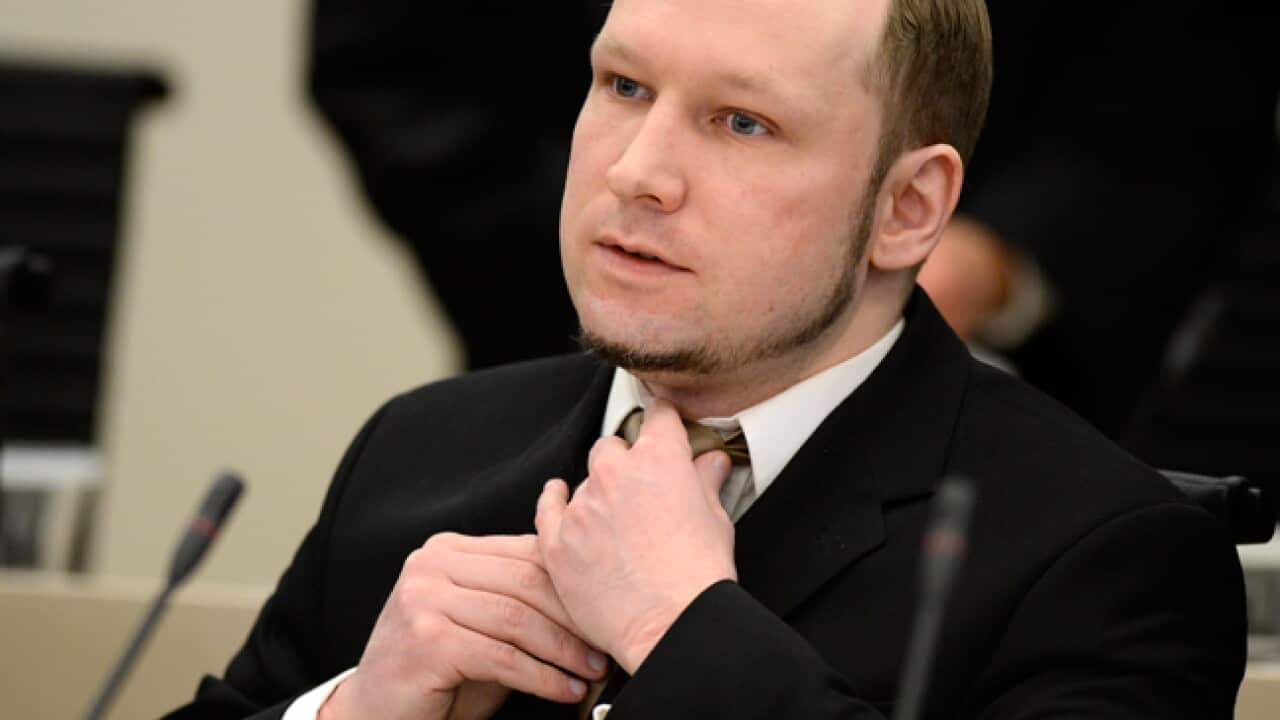
"I thought it was a legitimate police ID," the guard said, as the stony-faced confessed killer, 33, looked on.
After making it past the first control, Breivik was allowed to board the MS Thorbjoern ferry, which had been docked at Utoeya after the Oslo attack but had been sent especially to pick up the fake police officer.
Ferry captain Jon Olsen explained in his highly anticipated testimony that he had helped the killer carry a crate which turned out to be full of ammunition.
He also described how he fled with the ferry when Breivik fired his first shots, as his companion, who was the second person shot, lay dead on the ground and his daughter was still stuck on the island.
"I spend most of my time asking myself if I could have acted differently. Each time, I reach the conclusions that I did the right thing," Olsen said.
He explained that the gunman's disguise had fooled him.
"The uniform and all the rest made it look like everything was in order," he said.
But just after unloading the heavy crate that Breivik said was filled with explosive-detection equipment, Olsen saw him shoot and kill his first victim, the camp guard and off-duty police officer Trond Berntsen.
To this day, the ferry captain has trouble remembering if he, seconds later, saw Breivik turn his gun on his companion Monica Boesei, the camp administrator who was nicknamed "Mother Utoeya".
In panic, he fled on foot, but after a long detour managed to get back to the MS Thorbjoern and took off with several other people who had sought refuge onboard.
"I had to get the boat far from there," out of reach of Breivik's bullets, he explained.
"It was totally quiet. I thought that the sky would soon be filled with helicopters, that the fjord would be covered with boats and flashing lights, but no, nothing," he said.
Breivik spent more than an hour striding around the small island, executing most of his mainly teenaged victims with shots to the head, before he was finally arrested.
After receiving word that his daughter was alive, Olsen contributed to the rescue operation on the island, and helped shuttle injured and dead to the mainland.
Police found 189 spent cartridges on Utoeya, as well as 1,139 unused rounds, inspector Goeran Dyvesveen told the court Thursday.
Using pictures, he also showed the court the arsenal Breivik was carrying on him when he was arrested: a Ruger rifle equipped with a telescopic lens and a bayonet, a Glock pistol with a laser sight, a jacket filled with cartridge clips, plastic bands to use as handcuffs and military boots equipped with a spike that could flip out of the heel.
On them, Breivik had engraved or written names he had given his weapons which were all inspired by Norse mythology -- Mjolnir for his pistol and Gungnir for the rifle.
The characters used in the writing or engraving were from the runic alphabet.
While Breivik, who has been charged with committing "acts of terror," has confessed to carrying out the twin attacks, he refuses to plead guilty, insisting his attacks were "cruel but necessary" to stop the Labour Party's "multicultural experiment" and the "Muslim invasion" of Norway and Europe.
Although he is certain to be found guilty, his 10-week trial should determine the question of his sanity.
If the court finds him sane, Breivik will face Norway's maximum 21-year prison sentence, but that term can be extended for as long as he is considered a threat to society.
If he is found criminally insane however, he will be sent to a closed psychiatric care unit for treatment.
That is a fate the right-wing extremist, who is intent upon showing that his anti-Islam ideology is not the ravings of a lunatic, has described as "worse than death".
Five judges will decide whether he should be considered sane or not when they hand down their verdict in mid-July.







