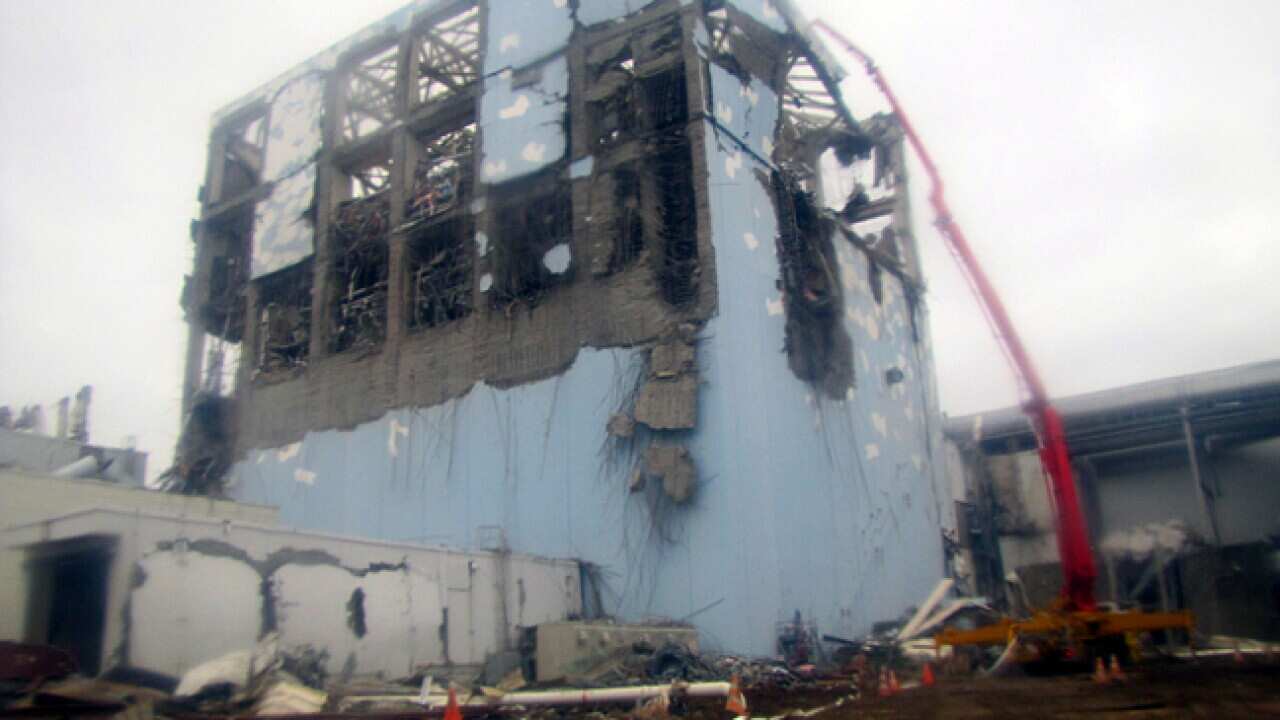
Workers at Japan's stricken nuclear plant on Thursday pumped nitrogen gas into a crippled reactor in a bid to contain the world's worst atomic accident for 25 years and prevent a possible explosion.
With the crisis at the Fukushima Daiichi plant approaching its fourth week, operator Tokyo Electric Power said it was concerned a build-up of hydrogen gas at the No. 1 reactor could cause another explosion at the site.
The fresh challenge underscored the fragility of the situation at the stricken plant, after rare progress was seen Wednesday when workers plugged a hole spewing highly radioactive water into the ocean.
News that makes sense
Your trusted source for staying up-to-date with the world around you. Get free daily news updates and analysis, straight to your inbox.
TEPCO officials say hydrogen building up in the housing around reactor No. 1 could mix with incoming oxygen, creating an explosion.
Experts say the risk of a detonation could rise as the nuclear fuel rods cool and as the steam inside the containment vessel condenses into water, reducing pressure inside the unit and drawing air in through cracks.
The move came as an assessment by the US Nuclear Regulatory Commission dated March 26 emerged, citing persistent and growing threats at the plant, including the risk of gas build up and explosions.
Workers began pumping in nitrogen, an inert gas abundant in the atmosphere, which they hope will displace the oxygen. The process to inject 6,000 cubic metres will take around six days, TEPCO said.
"Workers started injecting nitrogen gas at 1:31 am (1631 GMT Wednesday). Since the pressure level went up, they confirmed that the gas was successfully going into the container," said a spokesman with Japan's nuclear safety agency.
TEPCO said it was also planning to inject nitrogen gas into reactors number 2 and 3 as a protective measure.
In the days after the earthquake and tsunami crippled the plant, large explosions resulted from hydrogen accumulation near the reactors, damaging the outer buildings housing them.
A 20-kilometre (13-mile) exclusion zone around the plant has forced tens of thousands of people to evacuate.
The plant has emitted radioactive material into the air, contaminating drinking water and farm produce, with radioactive iodine above legal limits detected in vegetables, dairy products and mushrooms.
Nuclear concerns continue to distract from the March 11 disaster that has left more than 12,000 dead and over 15,000 missing.
TEPCO, whose shares have lost around 85 percent of their pre-quake value, has said it may need state help to meet claims some analysts say could reach 10 trillion yen ($118 billion).
On Wednesday, the government promised compensation for the fishing industry, a day after increasing unease about the contamination led it to impose a legal limit for radioactive iodine in seafood for the first time.
Levels of radioactive iodine-131 and caesium in seawater immediately outside the plant have spiked, stoking fears over marine life in a country whose diet depends heavily on seafood.
TEPCO has also continued a separate operation to release 11,500 tonnes of lower-level radioactive water into the sea to free up urgently needed storage space for water so toxic that it is hampering crucial repair work.
The water dumping has angered the fishing industry and on Wednesday Ikuhiro Hattori, the head of Japan Fisheries Cooperatives, visited the company's headquarters to protest.
The triple crisis has slashed the number of foreigners travelling to Japan's two main airports by two-thirds to a daily average of just over 5,000.
The wider economic impact from the quake, tsunami and nuclear emergency is likely to drive the country into recession in the coming months, many economists now say.
Britain downgrades Tokyo travel warning
Britain has downgraded its warning over travel to Tokyo but advised its citizens against visiting northeastern Japan following last month's earthquake and crisis at the Fukushima nuclear plant.
"We no longer advise against non-essential travel to Tokyo," a statement from the Foreign Office (FCO) said.
"However, we continue to advise against all non-essential travel to those areas north east of Tokyo," it added.
The decision was on the recommendation of John Beddington, the government's chief scientific advisor.
"The risks are gradually declining as the reactors cool and as facilities to stabilise them are established," explained the government statement.







