Taylor, 64, was found guilty on all counts including acts of terrorism, murder and rape committed by the Revolutionary United Front (RUF) rebels, who paid him for arms with diamonds mined by slave labour.
While Sierra Leoneans whose limbs were chopped off by the RUF during the brutal decade-long civil war greeted the verdict, Taylor's lawyer slammed the decision and accused the prosecution of "buying" evidence.
News that makes sense
Your trusted source for staying up-to-date with the world around you. Get free daily news updates and analysis, straight to your inbox.
In the first judgement against an ex-head of state by a world court since the World War II Nuremberg trials, Taylor was found guilty of 11 counts of war crimes and crimes against humanity by the Special Court for Sierra Leone.
"The trial chamber finds you guilty of aiding and abetting of all these crimes," presiding judge Richard Lussick told the UN-backed court, situated in the leafy suburb of Leidschendam just outside The Hague.
Dressed in a dark suit, white shirt and red tie, the former president, who once notoriously compared himself to Jesus, stood motionless as the verdict was read and showed no emotion afterwards.
He will be sentenced by the same court on May 30. If sent to jail as expected he will be held in a British prison. His lawyers and the prosecution will have two weeks to file an appeal after sentencing.
Although the court may not impose a death sentence or life in jail, it could impose a term long enough for Taylor to spend the rest of his life behind bars, should the judges deem his crimes severe enough.
"The trial chamber found that the accused was instrumental in procuring and transporting arms to RUF rebels, that he was paid in diamonds and kept some for himself," the Samoan judge Lussick said.
The hearings, which saw model Naomi Campbell testify she had received diamonds from Taylor, lasted nearly four years, wrapping up in March 2011.
Prosecutors alleged that the RUF paid Taylor with illegally mined so-called blood diamonds worth millions, stuffed into mayonnaise jars.
These diamonds would then be smuggled through a guest house used by the RUF in Monrovia in return for arms and ammunition provided by Taylor.
Lussick said the stones were gathered by the RUF in Sierra Leone, who used slave labour and enlisted child soldiers.
"Children under the age of 15 were abducted and conscripted. They had the letters 'RUF' carved into their foreheads and backs to prevent escape," the judge said.
Lussick however stressed that while Taylor had substantial influence over the RUF, including its feared leader Foday Sankoh -- who died in 2003 before he could be convicted by the SCSL -- "it fell short of command and control" of rebel forces.
Taylor, Liberia's president from 1997 to 2003, had dismissed the charges as "lies" and claimed to be the victim of a plot by "powerful countries."
During his own 81 hours of testimony, which began in July 2009, he called the trial a "sham" and denied allegations that he had eaten human flesh.
"These convictions were obtained with corrupt and tainted evidence effectively bought by the prosecution," his lawyer Courtenay Griffiths told a news conference Thursday.
Prosecutor Brenda Hollis however lauded the verdict as "another victory for the fight against impunity."
"Today is for the people of Sierra Leone who suffered horribly at the hands of Charles Taylor and his proxy forces," she told reporters.
UN leader Ban Ki-moon hailed the ruling, saying "it sends a strong signal to all leaders that they are and will be held accountable for their actions."
The United States said Taylor's conviction "delivers a strong message" to all war criminals, while British Foreign Secretary William Hague said it was proof that heads of state "cannot hide behind immunity".
In Brussels, EU foreign policy chief Catherine Ashton called it a "landmark" in the battle to hold accountable all perpetrators of atrocities.
UN High Commissioner for Human Rights Navi Pillay said the "historic moment in the development of international justice" meant tyrannical rulers could no longer retire on blood money.
Amnesty International and Human Rights Watch said the verdict sent a message to high-ranking officials responsible for crimes that they would eventually face justice.
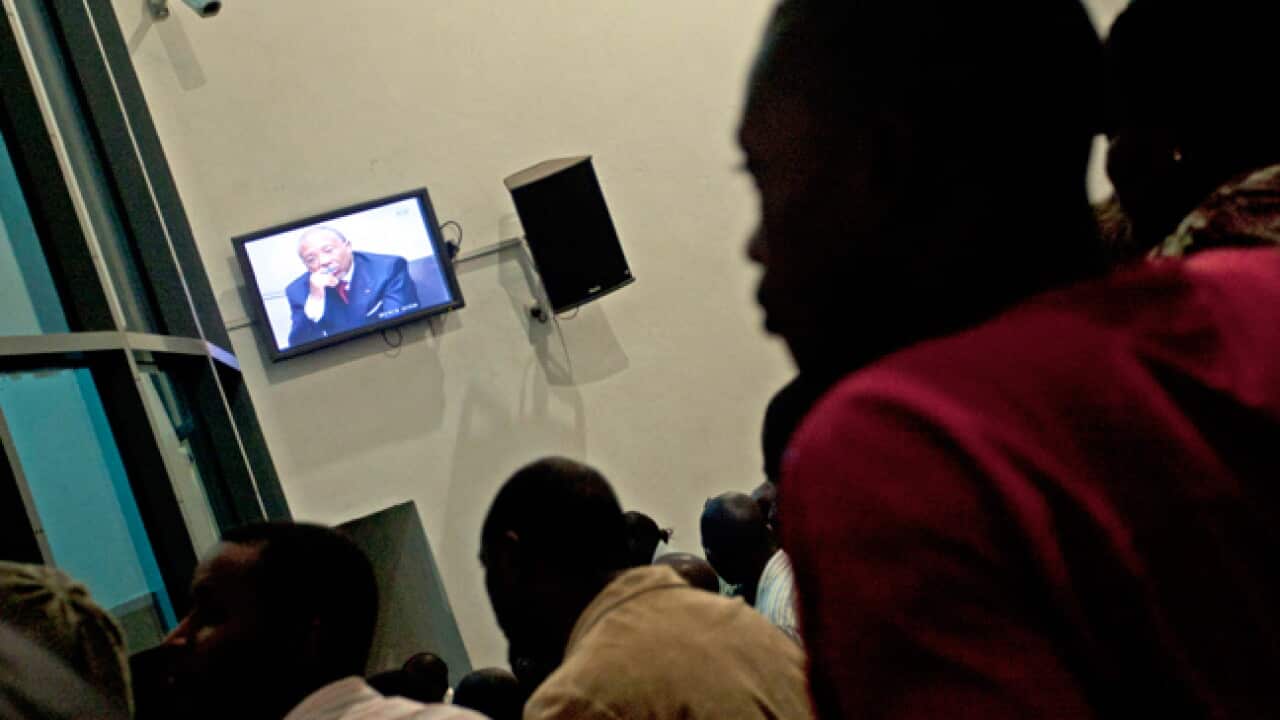
The proceedings were also relayed live by television to Sierra Leone where hundreds watched intently.
"We as victims expect that Taylor will be given 100 years or more in prison," said Al Hadji Jusu Jarka, a former chairman of the Amputees Association, his prosthetic arms folded in his lap.
Authorities in Nigeria arrested Taylor in March 2006 and he was transferred to The Hague in 2006 after security fears in the west African country.
During Taylor's trial which began on June 4, 2007, 94 witnesses took the stand for the prosecution and 21 for the defence.







