World powers will meet in a desperate bid to salvage international envoy Kofi Annan's peace plan for Syria to end 16 months of bloodshed and agree on a transition plan for the strife-hit country.
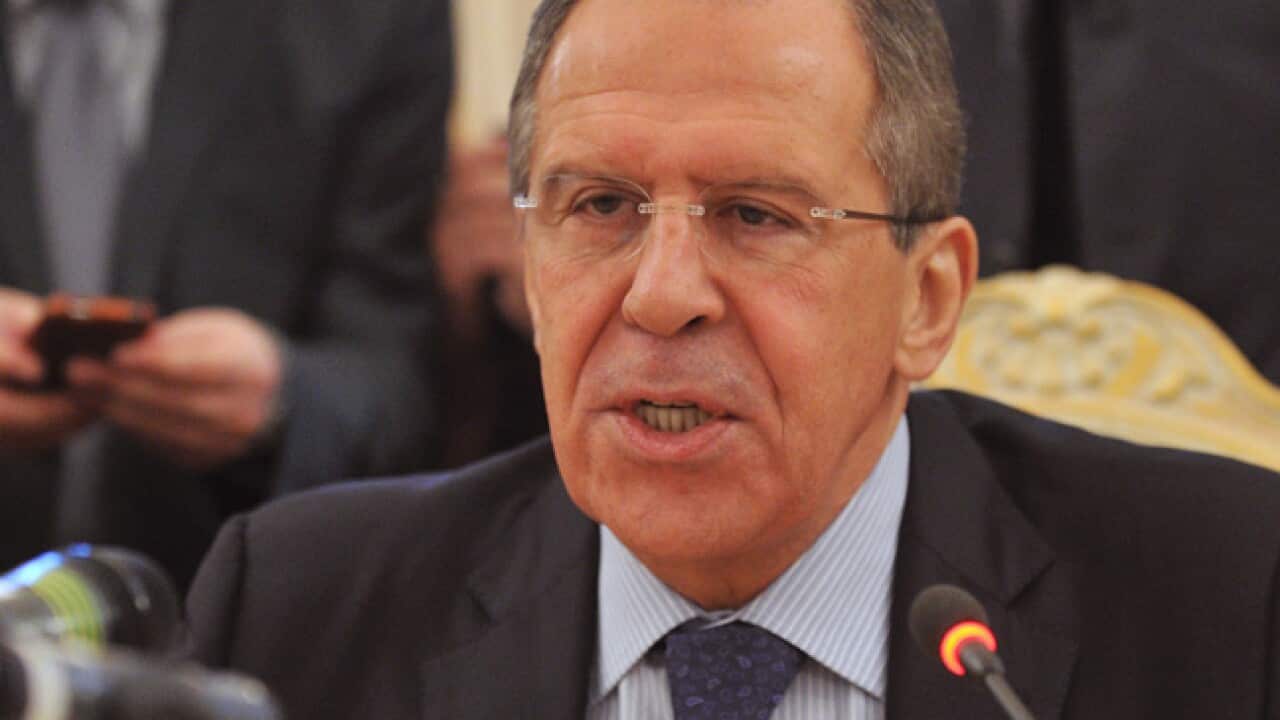
A crunch meeting hours ahead of the talks between US Secretary of State Hillary Clinton and Russian Foreign Minister Sergei Lavrov led Moscow to issue an upbeat outlook for the conference, saying a deal was likely.
But Washington took a more cautious line, warning of persistent differences between the US' and Russia's approach and dampening hopes of crucial progress needed to stop the crisis that according to rights monitors has left 15,800 dead since March last year.
News that makes sense
Your trusted source for staying up-to-date with the world around you. Get free daily news updates and analysis, straight to your inbox.
Annan had announced the meeting on Tuesday, inviting Clinton, Lavrov, and the foreign ministers of Britain, China, France, Iraq, Qatar, Turkey and Kuwait to the talks, and conspicuously leaving Iran and Saudi Arabia out.
He circulated a proposal on a "Syrian-led transition" that could help save his peace process that has been largely ignored by both the ruling regime and opposition since it came in force on April 12.
Fighting has only intensified in recent weeks and rights monitors said more than 230 people -- most of them civilians -- had been killed across the strategic Middle East country since Thursday.
But doubts grew over the fate of Saturday's meeting as it drew nearer, due to Russian opposition to Annan's proposal on the composition of an interim Syrian government.
Annan's draft, seen by AFP, sees power handed to an interim Syrian team without those "whose continued presence and participation would undermine the credibility of the transition and jeopardise stability and reconciliation."
The wording appears to imply -- without saying so directly -- that President Bashar al-Assad would have to relinquish his grip on the presidency for the idea to succeed.
Russia angrily rejected the suggestion, while Western powers warned there was no point meeting in Geneva if there was no prior agreement on the issue.
But after Friday evening's talks with Clinton, Lavrov said he "detected a shift" in Washington's approach to ending the bloodshed that no longer involved a specific demand for Assad to leave.
"There were no ultimatums. Not a word was said about the document now being discussed in Geneva being completely untouchable," Lavrov told reporters in reference to wording that suggest no future role for Assad.
"I can confidently say that we have a very good chance tomorrow in Geneva to find a common denominator and mark a path forward," Lavrov added.
"We agreed to find a consensus that rests on a clear understanding... that the Syrian sides must be stimulated toward dialogue, but that the decision to what the state looks like and who occupies which posts can only be decided by the Syrians themselves."
A conflicting message came from Lavrov's deputy, Gennady Gatilov, who tweeted early on Saturday that experts in Geneva had thus far failed to agree to the wording of a final document on Syria because "the Western partners want to determine the political process themselves."
The US account of the Lavrov-Clinton meeting was also more measured and appeared to suggest little agreement on the future of Assad.
A senior US State Department official noted some progress while conceding that "there were still areas of difficulty and difference" between the approaches of Russia and the United States.
"But out of respect to Kofi Annan, they agreed we should all go to Geneva tomorrow to try to produce a result," said the official.
Iran's UN ambassador Mohammed Khazaee meanwhile criticised the exclusion of Tehran from the meeting, hitting out at Western powers, "particularly the United States," for ignoring the "power and influence of Iran."
The United States and European nations opposed the presence of Iran, a long time ally of Assad. Diplomats said Russia opposed Saudi Arabia because of its support for the Syrian opposition.
SYRIA: DIPLOMATIC TIMELINE
The main diplomatic moves to try to end the conflict in Syria, which monitors say has left more than 15,800 people dead since a widespread revolt broke out in March 2011:
- August 18, 2011: US President Barack Obama and Western allies call for President Bashar al-Assad to step down.
- August 27: The Arab League, of which Syria is a member, holds an extraordinary summit on ending the violence.
Efforts by Western powers to obtain a United Nations Security Council resolution condemning Syria are stymied by Russia and China.
- November 2: The Arab League says it has the agreement of Assad on a plan that would involve an end to the violence and a pullback of belligerent forces, leading to a "conference of national dialogue".
Ten days later, however, the League votes to suspend Syria's membership of the pan-Arab organisation due to the continued repression. It later also calls on its members to enact sanctions against the regime.
- December 19: After tough negotiations, Syria agrees to receive a delegation of Arab League monitors.
- January 22, 2012: The Arab League agrees on a new plan under which Assad would hand over power to his deputy pending elections.
- January 28: The Arab League acknowledges its observer mission has failed to halt the violence.
- February 24: A group of mainly Western and Arab countries calling themselves the "Friends of Syria" hold a conference in Tunis. However Russia and China, who hold veto power on the UN Security Council, refuse to attend.
- March 21: The Security Council agrees on a plan drafted by its former secretary general, Kofi Annan. The plan calls for a ceasefire, return of troops to their barracks and the opening of talks between the government and opposition.
- April 1: Meeting in Istanbul, Friends of Syria countries extend formal recognition to the Syrian National Council, the main opposition umbrella group.
- April 12: The ceasefire called for under the Annan plan is supposed to come into force -- but violence continues unabated.
- April 14 and 21: The UN Security Council votes to send first 30 and then 300 observers to Syria.
- June 16: Amid continuing heavy violence, the UN suspends the work of its observer mission, although they remain in the country.
- June 18: Presidents Obama of the United States and Vladimir Putin of Russia meet at a G20 summit and call for "an immediate cessation of all violence."
- Saturday, June 30: The foreign ministers of the five permanent UN Security Council members -- Britain, China, France, Russia and the United States -- to meet in Geneva to discuss a transitional plan for Syria.







