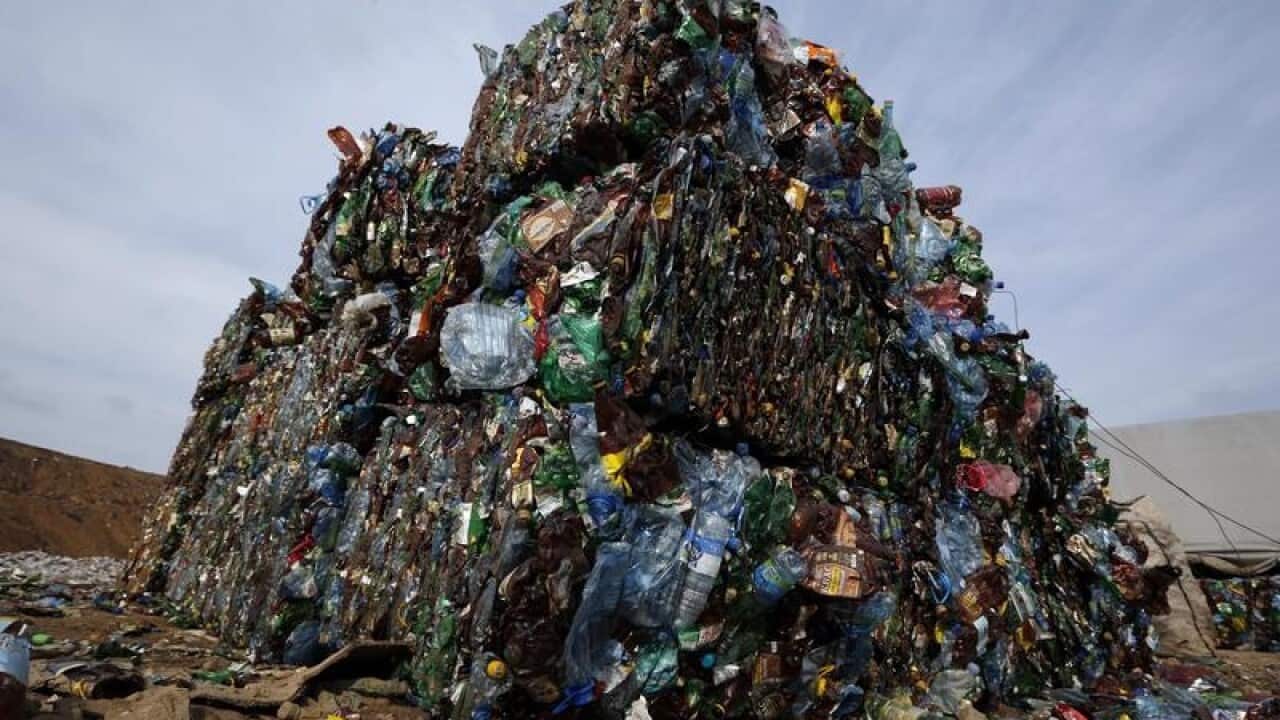
Industry has made more than 8.3 billion tonnes of plastic since 1950 and enough is left over to bury Manhattan under more than 3km of rubbish, according to a global study.
Plastics do not break down like other man-made materials so three-quarters of the stuff ends up as waste in landfills, littered on land and floating in oceans, lakes and rivers, according to the research reported in journal Science Advances.
"At the current rate, we are really heading toward a plastic planet," said study lead author Roland Geyer, an industrial ecologist at the University of California, Santa Barbara.
"It is something we need to pay attention to."
The plastics boom started after World War II and now plastics are everywhere.
News that makes sense
Your trusted source for staying up-to-date with the world around you. Get free daily news updates and analysis, straight to your inbox.
They are used in packaging such as bottles and consumer goods such as mobile phones and refrigerators, they are in pipes and other construction materials, and in cars and clothing, usually as polyester.
Study co-author Jenna Jambeck, of the University of Georgia, said the world needed to know how much plastic waste there was before it could tackle the problem.
The study calculated that of the 8.3 billion tonnes made, nearly 6.4 billion tonnes were no longer used.
Only nine per cent was recycled and another 12 per cent was burned, leaving the rest on land and in water.
Using the plastics industry own data, Geyer, Jambeck and Kara Lavender Law found the amount of plastics made and thrown out was accelerating.
In 2015, the world created 406 million tonnes of plastic - more than twice as much as made in 1998.
China makes the most plastic, followed by Europe and North America.
The plastics industry says it is working to increase recycling and reduce waste.
"Plastics are used because they are efficient, they are cost-effective and they do their jobs," said Steve Russell, vice-president of plastics for the American Chemistry Council.
"And if we didn't have them, the impact on the environment would be worse."
Using alternatives to plastics such as glass, paper or aluminium required more energy, Russell said.







