In brief
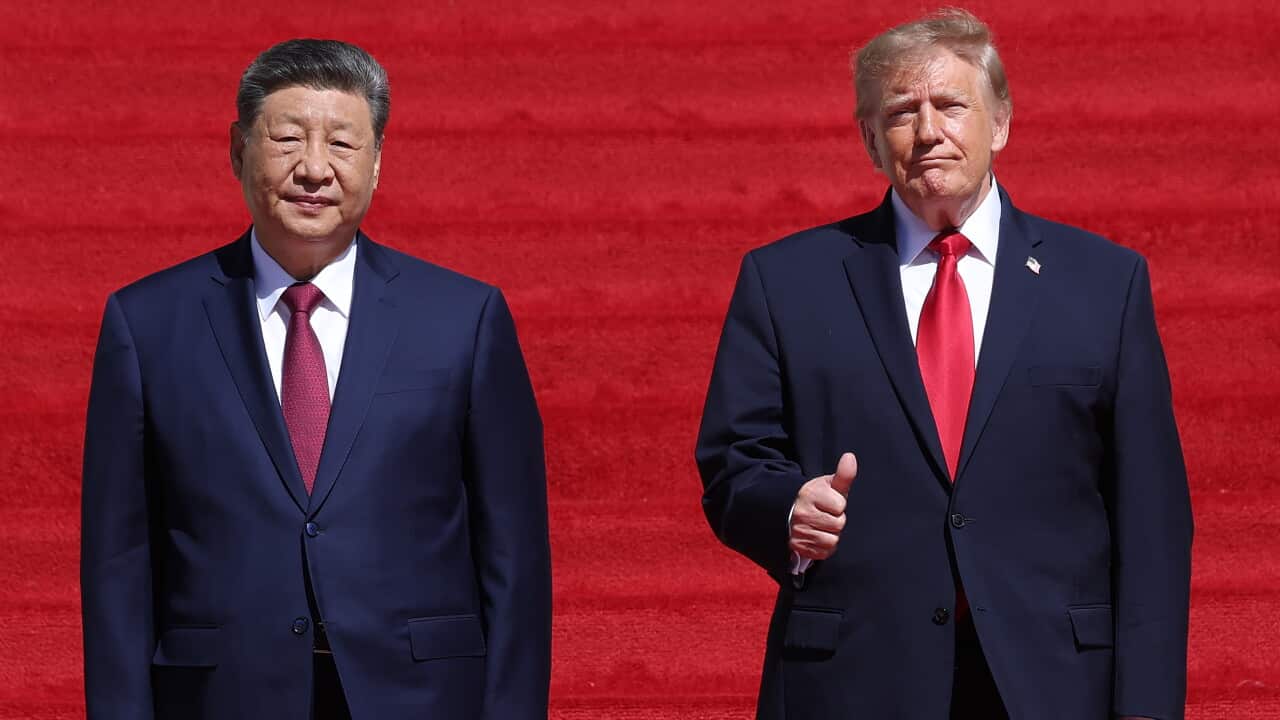
- Chinese President Xi Jinping has wrapped up a three-day visit to the US.
- US President Donald Trump praised the visit but no agreements were reached on major issues.
US President Donald Trump and Chinese President Xi Jinping drank tea at the White House and visited the National Archives on Friday local time, ending a three-day summit that showcased personal diplomacy rather than big public breakthroughs on a host of contentious issues.
Trump said "our farmers are going to be happy" as a result of the talks but did not provide details.
"America is very happy about this visit, and I'm sure China is very happy also," he said.
Xi said the US-China relationship had developed into a constructive one of "strategic stability on the basis of respect, fairness and reciprocity".
The summit between the world's two largest economies featured military flyovers, ceremonial tours and a state dinner, but left unresolved major differences over trade, artificial intelligence, Taiwan and China's ties to Iran. Details of the limited trade agreements reached during the visit will be released on Monday, US trade representative Jamieson Greer said.
News that makes sense
Your trusted source for staying up-to-date with the world around you. Get free daily news updates and analysis, straight to your inbox.
One tangible outcome of the visit was that the US and China agreed to extend by two months a trade truce that was due to expire on 10 November, allowing more time to work on a potentially bigger trade deal.
Greer told CNBC that the US has agreed with China to exempt some key goods from trade disputes, including exports to China of agricultural products and medical devices, and imports of consumer and non-sensitive goods.
Trump highlighted progress under a bilateral trade mechanism, citing increased market access for US farmers and ranchers, while both leaders identified AI as an area for dialogue.
"In some ways, the best thing that we accomplished in this visit is to continue the conversation," US ambassador to china David Perdue told Fox News on Friday, local time.
Trump announced in a social media post that he and Xi would meet twice more this year, in China in November for the Asia-Pacific Economic Cooperation forum and in Miami in December at a G20 summit.
"Much has been, and will be, accomplished," Trump said.
National archives tour
After tea in the White House Red Room, Trump and Xi rode in limousines to the National Archives, where they reviewed the US Declaration of Independence, the Constitution and the Bill of Rights.
Asked about Iran, Trump said he and Xi had discussed it and that "I think we're going to do great," without elaborating. China has denied US allegations of helping Iran's leaders in the conflict launched by Trump in February.
Perdue said in an interview with CNBC on Friday that Trump reiterated to Xi that direct or indirect support for Iran was "totally unacceptable" and received assurances that China would not do so.
Chinese state news agency Xinhua reported on Thursday that Xi had urged the US and Iran to return to negotiations to end the war, but Xi has not publicly commented on Chinese support for Iran.
China presses on Taiwan
A key issue for Xi was the status of Taiwan.
China claims democratically governed Taiwan as its own, and Xi has long sought to persuade Trump to state publicly that the US opposes Taiwan's independence, rather than merely saying it does not support independence, which has been the US's formulation for decades.
He also wants the US to halt arms sales to the island.
Xi pressed Trump on Taiwan on Thursday, saying he hoped the US would "handle the Taiwan question with prudence".
China's state news agency also reported that Xi "hopes the US side will adhere to the correct position of opposing 'Taiwan independence'".
While the US, like most countries, has no formal diplomatic relations with Taiwan, Washington is its most important international backer and is bound by US law to provide it with the means to defend itself.
The US's Asian allies were watching closely to see how Trump talked about Taiwan following Xi's visit. As of Friday afternoon, he had said nothing substantive.
After his May summit with Xi, Trump, whose administration in December approved a US$11 billion ($15.6 billion) arms sale package to Taiwan, said he was holding a second package, worth some $14 billion, in abeyance and described it as a "very good negotiating chip".
On Thursday, Democrats criticised Trump for failing to publicly address China's military pressure on Taiwan and called for the immediate delivery of approved military aid and arms sales to the island.
For the latest from SBS News, download our app and subscribe to our newsletter.







