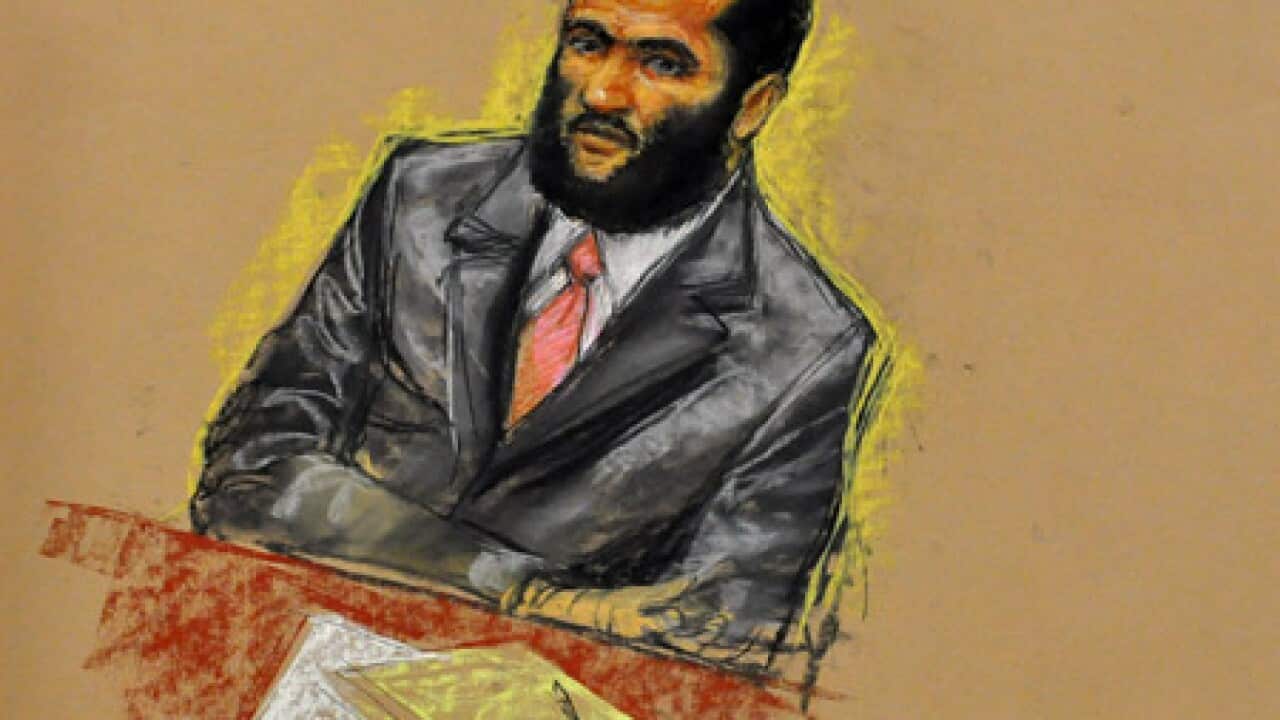
Jury selection for the trial of Guantanamo's youngest detainee continued Wednesday as Canadian Omar Khadr became the first person to face a military tribunal under President Barack Obama's tenure.
Khadr, who was captured by US troops in Afghanistan at the age of 15, faces life in prison for allegedly throwing a grenade that killed a US soldier during the siege of an Al-Qaeda compound in the eastern city of Khost in July 2002.
He denies throwing the grenade and his lawyers say the prosecution's case is founded on confessions extracted by torture during eight years of detention, initially at Bagram Air Base in Afghanistan and later at Guantanamo.
News that makes sense
Your trusted source for staying up-to-date with the world around you. Get free daily news updates and analysis, straight to your inbox.
Khadr appeared in the courtroom Tuesday dressed in Western clothing and a tie, as deliberations began in choosing a jury of military officers to hear the case of the 23-year-old who has spent more than a third of his life in US detention.
Speaking after the hearing, Khadr's Canadian civilian lawyer Denis Edney said his client had "glowed" when he glimpsed his reflection in a window. "It's the first time in eight years he's been able to feel human," Edney explained.
Khadr, the last remaining Westerner at Guantanamo, is alleged to have been trained by Al-Qaeda and joined a bomb-making network organized by Osama bin Laden.
Seriously wounded in Afghanistan, including losing vision in his left eye, Khadr has so far refused Washington's offer of 30 years in prison -- including 25 in Canada -- in exchange for a guilty plea.
His US military lawyer Jon Jackson and military prosecutors must select at least five officers for the jury in the trial, which is expected to last at least three weeks at the US naval base on the southeastern tip of Cuba.
On Monday, Jackson sought the withdrawal of statements that Khadr made at Bagram and at Guantanamo, insisting they were made under duress.
But military judge Patrick Parrish ruled in a pre-trial hearing that Khadr's alleged confessions can be heard, angering the defense team which labeled the decision "disgraceful."
At the start of Tuesday's court proceedings, an official read out five charges against Khadr, including murder, espionage and material support for terrorism.
The judge instructed the 15 officers being interviewed that as jury members they should reach their conclusions "beyond a reasonable doubt" but that they would not need to rely on "mathematical certainty."
Prosecutor Jeff Groharing then posed questions to the potential jurors, highlighting the legal controversies at the center of the Khadr case: "Does anyone consider it unfair to use statements the accused made?" he asked them.
"Does anyone find it inappropriate to try somebody eight years after the facts?" he went on. "Do you think it's inappropriate to try a juvenile for a serious crime?"
Khadr's attorney, a lieutenant colonel, stressed that he would "zealously" question officers during the trial and immediately sought to introduce doubt into the case against the defendant.
"Has anyone heard of an incident where somebody makes a statement to a law enforcement officer that turns out to be false?" Jackson asked. "It is a scientific fact that memory gets worse over time. Everybody agree with that?"
Khadr's case was one of two under way Tuesday. A hearing to determine sentencing for Ibrahim Ahmed Mahmoud al-Qosi, 50, a former Bin Laden bodyguard who pleaded guilty last month to conspiring to provide material support to terrorism, began later in the day in a separate courtroom.
Khadr's trial is the first to be heard since the tribunals, created by former president George W. Bush, were revamped last year by the Obama administration and Congress to give greater rights to defendants.
Radhika Coomaraswamy, UN Secretary General Ban Ki-moon's special representative for children and armed conflict, slammed the trial meanwhile, insisting that "children should not be tried before military tribunals."
Khadr's case "will set a precedent that may endanger the status of child soldiers all over the world," she said, urging Canada and the United States "to come to a mutually acceptable solution... that would prevent him from being convicted of a war crime that he allegedly committed when he was child."
Since 2001, four men have been convicted of terrorism-related charges in Guantanamo trials, two of whom pleaded guilty, while US federal courts have sentenced some 200 extremists over the same period.
There are now about 180 detainees left at Guantanamo, but the administration has yet to lay out a definitive timetable for closing the controversial facility.







