(Transcript from World News Australia Radio)
China, the world's largest developing nation, has already met a number of the global targets -- well ahead of their scheduled 2015 deadline, among them the central goal: that of halving extreme poverty.
Overall, the region is on track to reach many of the goals, first agreed upon by UN member states in 2000.
News that makes sense
Your trusted source for staying up-to-date with the world around you. Get free daily news updates and analysis, straight to your inbox.
But the UN says there's concern about discrepancies in development outcomes between the countries, and also within them.
It's just one of the areas of interest to young people from the region.
In its most recent progress report on the MDGs, the United Nations describes development achievements in the Asia-Pacific since 2000 as impressive, highlighting the impact of the region's economic growth.
It says countries are making progress in areas of gender equality, education, and health, with some of the most noteworthy accomplishments being made in east and south-east Asia.
China leads the way, having eradicated extreme poverty and hunger, and seen success in lifting education participation, and reducing child mortality.
But the UN says the region has a long way to go in other areas, such as the reduction of HIV/AIDS, and improvements in maternal health, gender equality and environmental protection.
Eva Li is a student from Taiwan who founded a youth environmental organisation on the island.
She feels Taiwan has failed to adopt a long-term approach to development.
"I would say that Taiwan is not doing its mandate in keeping up with the global development pace because the notion of sustainable development in Taiwan is actually still very weak. We have a very good idea of climate change, and some of the environmental isues, but then sustainable development is so much more. It includes social development and economic sustainability, so a low carbon economy as well as so many issues that fall under this category. I would say that our government lacks a strategic approach to sustainable development."
In Indonesia, the UN says is on track to achieve some of the Millennium Development Goals.
It says education participation rates in the world's fourth most populous nation are high, and describes efforts in preventing deforestation and degradation as pioneering.
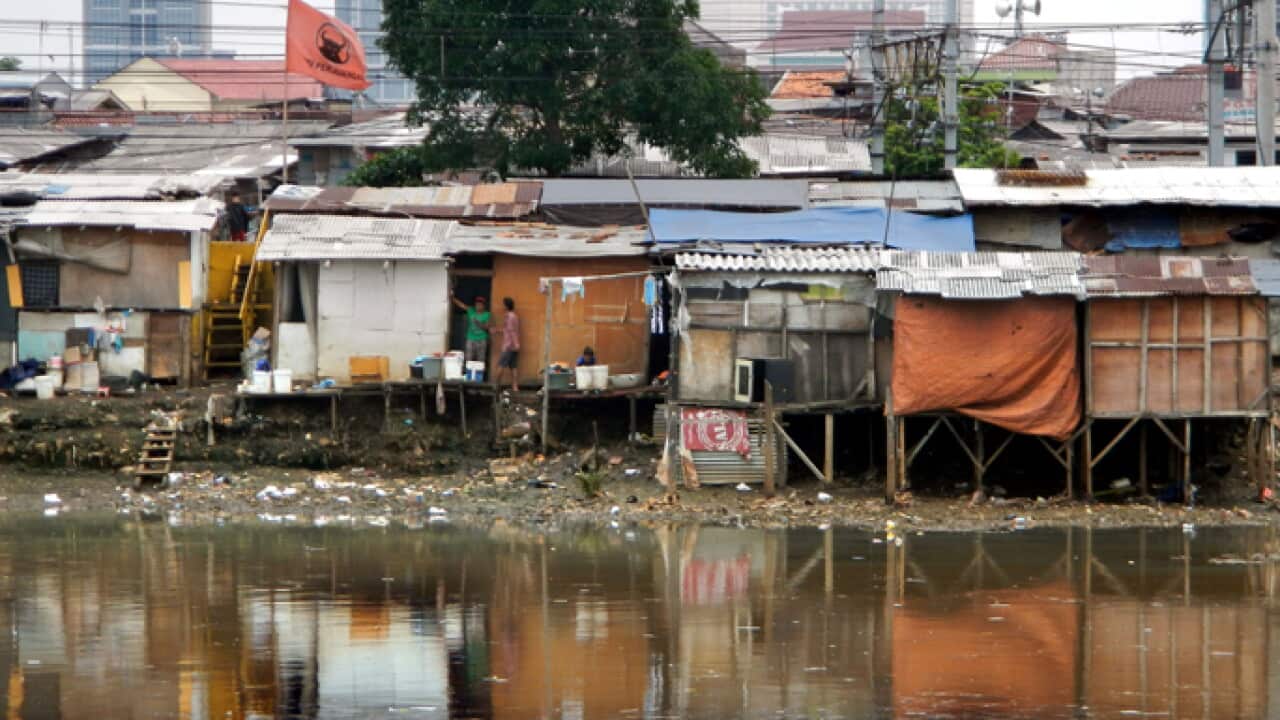
But poverty remains a goal on which the country is falling behind, much like access to clean water and sanitation, and curbing the spread of HIV/AIDS -- which is on the rise in Indonesia.
Hana Hanifa Bastaman from the University of Indonesia recently attended an international youth UN gathering in Australia which focused on the MDGs.
She says, 13 years on from the goals' creation, the gaps in outcomes between urban and rural areas are too pronounced - especially in the east of the country.
Ms Hanifa says she believes Indonesia's government is committed to the MDGs, but the problem lies in how development funds are being managed.
"The problem is not that they're not capable of being a government. They have this really good education background, but the thing is I think it's in the problem of morality because there are still many governments that are [involved] in corruption, especially in Indonesia. So, the implementation of this program, which needs lots of money, of course, for building infrastructure, is still problematic because the funding is still not being used properly and correctly."
Hana Hanifa says one goal where a lack of infrastructure has affected outcomes relates to maternal deaths, with Indonesia's numbers still rating among the highest in south-east Asia.
"In maternal health you need adequate hospitals and also doctors to deal with maternal health. Some of the areas in Indonesia, especially rural areas because Indonesia has so many islands and so many areas, it's just so big, so that the infrastructure building and the availability of adequate doctors and human resources is not that fair. So the problem is infrastructure."
In 2012, UN Secretary General Ban Ki-moon appointed a high level panel to consider the course of global development after 2015.
The 27-member panel includes representatives from civil society, the private sector and governments, and is co-chaired by the leaders of Indonesia, Liberia and Britain.
Together with a UN appointed intergovernmental working group focusing on sustainability, it will present a report to member states in May this year.
The report will look at lessons learned over the past 15 years, and consider new development challenges confronting the international community.
The recent youth conference in Melbourne featured a committee on the MDGs, charged with preparing a report to send to the UN for consideration.
Bonny Chiu from Hong Kong was a delegate on the committee.
She believes countries like China need to be given a greater say in the next period of global development.
"Coming from Hong Kong, which is part of China, in these [13] years since the Millennium Delcaration, I really see how China has progressed. And even though China is a developing country, it is going to play such an important role in the post 2015 framework. So, instead of just talking about developed and developing countries, I think we need to recognise more then changing roles of different players and how we can let these developing countries be the leaders of their own development agenda, instead of having developing countries telling them what to do."
Bonnie Chiu says more needs to be done to engage the people of Asia in the post-2015 phase of international development.
"Two thirds of all the poor people worldwide are still in Asia, so Asia is really the heart of many problems that development has to tackle. And this is why, for example in Hong Kong, we really need to take into consideration the development of different countries next to us, so governments do have to take into consideration the voices of developing countries. But obviously there is an information gap. People in developing countries do not have access to as much internet or newspapers and all that information. So, their access to the information gap needs to be overcome if we really want to give greater consideration to their voices."
Hana Hanifa from Indonesia agrees that meaningful involvement of civil society, and young people in particular, is essential to decide the direction of international development after 2015.
"Youth and also civil society need also to be addressed and be listened to by the governments in the world. Because I think that these people are close to the society and close to the real life and what has been going on in society, what's the problem at the grassroots level. And the government needs to listen more to them. Not just saying, "Yes, yes.. I am listening to you," and then not doing anything about what they have been saying, so I think youth and civil society need to be more engaged."







