
Less than two weeks out from the start of the World Cup in North America, another grassroots tournament has taken place. Migrant and refugee teams have competed on the urban practice fields of Greece's capital in a competition known as the Kypseli Mundial. With new stricter EU migration and asylum rules set to take effect in June, the timing of the competition adds extra significance.
Listen to Australian and world news, and follow trending topics with SBS News Podcasts.
TRANSCRIPT:
Less than two weeks before the World Cup in North America begins.
A match between the Democratic Republic of Congo and Mali, played not at the mega-stadiums of Mexico, Canada and the United States, but on urban practice fields in Athens.
The Kypseli Mundial tournament brings migrant and refugee and Greek players together to compete on the city's fields.
While Albania, Afghanistan, Cameroon, Guinea, Mali, Nigeria and Sudan didn't qualify for the World Cup, amateur players with ties to these countries and many more have competed in the grassroots competition.
There are no luxury suites or grand arenas in this tournament— but there are hand painted banners, adoring spectators waving national flags, and fierce competition on the field.
As well as pitch-side dancing and music.
The tournament was founded three years ago by Ivorian man Moussa Sangare, who says he wanted to use football to combat fear and mistrust toward migrants in Greece.
“The goal of this festival is to promote inclusion through sport. So we are trying to bring different communities around the world that live in Greece to give visibility for our players and also to show that community are here in Greece and we are together and want to promote diversity and culture."
Situated between the Middle East and Europe, Greece has long served as a passage for refugees and asylum seekers looking to enter the European Union.
United Nation records show as of mid-2025, there were more than 160,000 refugees, asylum seekers and stateless people living in the Mediterranean nation.
Humanitarian organisations point to issues of protracted displacement, limited access to services, anti-migrant sentiment and discrimination as significant barriers refugees in Greece face, making integration difficult.
Captain of the women’s Femmes Dynamiques team, Amelie Nguedia says for her and others, playing in the Kypseli Mundial tournament provides an important sense of inclusion and positivity.
“For us, coming to play here is a real pleasure. We are not professionals, but we like to participate in everything that Greece offers us as an opportunity: to play."
The unifying power of the game, and the resilience of migrant and refugee communities worldwide are being celebrated in a related UN initiative.
Ahead of the FIFA 2026 World Cup, UNHCR, the UN Refugee Agency, has announced a symbolic team of global professional football players with a refugee or displacement background.
The 'Gamechanging Team' aims to spotlight what's possible when young people displaced by war and persecution find safety and opportunity.
Many of the team's stars will be playing in the upcoming World Cup on pitches in Canada, Mexico and the United States.
Back in Athens, Mr Sangare says those playing in the Kypseli Mundial will be eagerly watching their favourite teams and players in the official competition when it kicks off in June.
“This is very nice because we see ourselves like we started the World Cup earlier so we will give the coup d'envoi (kick-off) in French and we are very excited to see who will win this tournament and we will see who win the real one in the USA.”
The timing of this year's competition adds extra significance.
A day after the official World Cup starts, new EU migration and asylum rules are set to take effect, including tougher border controls and faster deportations.
Despite these encroaching changes, a celebratory atmosphere has been palpable on the playing fields in Athens.
At one venue near Plato’s Academy, where ancient Athenian philosophers once debated politics and the meaning of citizenship, supporters waved Congolese and Ivory Coast flags while volunteers led outdoor drumming lessons nearby.
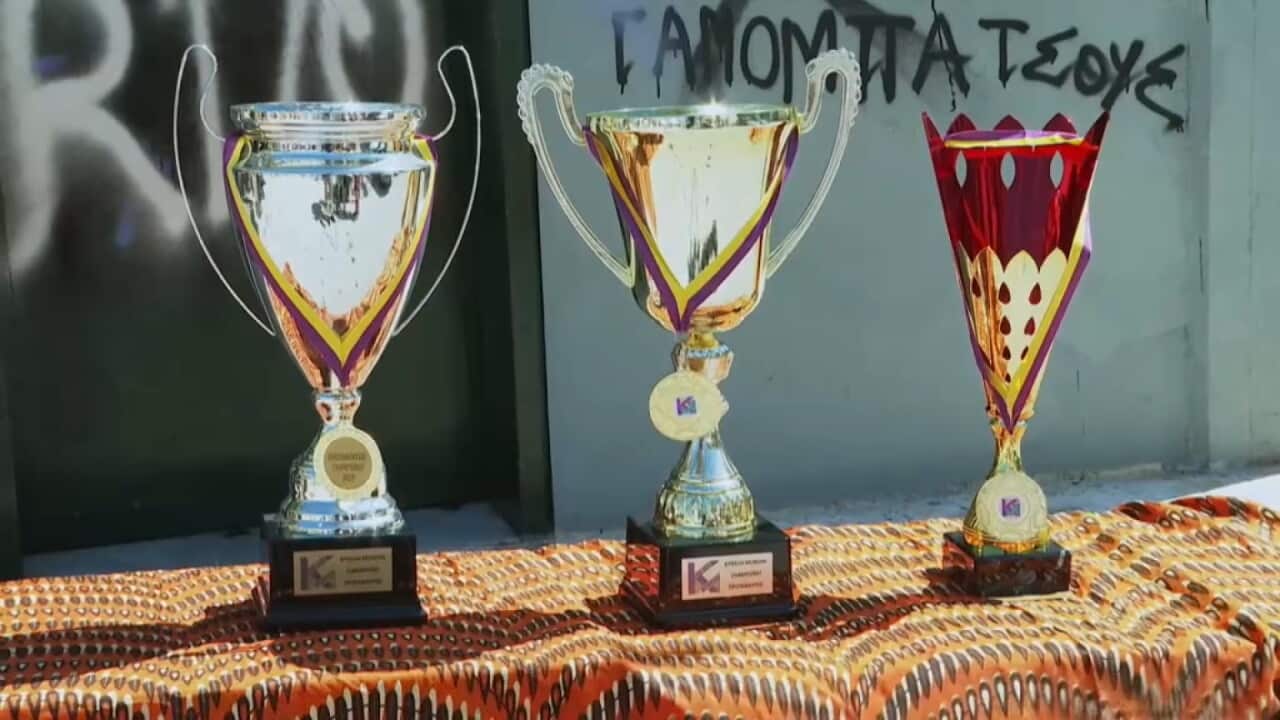
After 21 teams participated, Nigeria's team has taken home the trophy for men’s competition, while Greek neighborhood club Fostiras claimed the women’s title.
Head referee, Chara Vogiatzidaki says for those playing and spectators alike, it's clear the tournament’s significance extends well beyond results on the field.
“What's important is that all the teams have somewhat of a mindset of children who really enjoy it. That’s very beautiful, because everyone here — there is joy, there is happiness, and I think that’s what a specific event aims to offer.”