
As millions of Muslims wake to messages of “Eid Mubarak” this morning, more than one-and-a-half million pilgrims are completing the rituals of Hajj in Saudi Arabia. For those who make it, the pilgrimage is often described as the journey of a lifetime, a moment of forgiveness, surrender and renewal. But for many Australian Muslims, the fifth pillar of Islam is becoming harder to reach, because the cost has become overwhelming.
Listen to Australian and world news, and follow trending topics with SBS News Podcasts.
TRANSCRIPT:
"We are here at Your service, O Allah, we are here at Your service. We are here at Your service, none is worthy of worship besides You, we are here at Your service. Indeed all praise and all blessings are all Yours, along with the Kingdom. None is worthy of worship besides You."
At Mount Arafat in Saudi Arabia, pilgrims have stood in white, hands raised, faces wet with tears.
For Muslims, this is the spiritual peak of Hajj.
More than 1.5 million pilgrims have gathered there this year, their prayers asking for forgiveness, mercy, and a safe return home.
Travel agent Mudar Al-Hilu is in Mecca with Australian pilgrims, and says fewer locals are making the journey compared with previous years.
“There is a big difference between 2021, for example, 2025-2026. It’s a big difference, the numbers are almost half.”
Hajj is one of the five pillars of Islam, required at least once in a lifetime for Muslims who are physically and financially able to perform it.
But in Sydney, for food delivery driver Latif Al-Haraz, it's a journey he cannot take.
“Unfortunately, I would have loved to go on Hajj, which is a very important act of worship and a wish for every Muslim, but I will not be able to go this year, and I hope that I will be able to go next year.”
“I work from 8:30 AM to 10:00 PM, seven days a week, yet I feel extremely exhausted. The house and electricity bills, in particular, put a lot of mental and physical stress on me.”
For many Muslims, Hajj is not a holiday.
It is when they hope to stand before God stripped of status, wealth and worldly distraction.
Many put savings aside quietly - but Mr Al-Haraz says the cost has now become unreachable for many families.
"It has become an astronomical sum for many, making it impossible to perform this act of worship, which is an urgent necessity.”
In 2022, Saudi Arabia introduced the Nusuk online platform to manage applications, flights, accommodation, transport and visas for pilgrims from places including Australia.
Saudi officials say it was designed to streamline one of the world’s largest annual religious gatherings.
But some Australian applicants say the process has added another layer of stress.
Mr Al-Haraz says even when people try to book, they can lose money through rejected applications and currency transfers.
“You pay the office in advance for this transfer. Sometimes you might encounter, for example, a request being rejected. The money transfer process from Australian dollars to US dollars and then to Saudi riyals. When you try to get a refund, sometimes you lose $1000 in the transfer process.”
Travel agents say conflict and instability across the Middle East have added pressure to the cost of travel.
Saudi Arabia has been attacked with hundreds of drones and missiles in the course of the three-month war in Iran.
Air defences intercepted most of them, but there were also some casualties and damage to energy infrastructure and residential areas.
The conflict means airlines have also been forced onto longer flight routes, adding to fuel costs and rises in airfares.
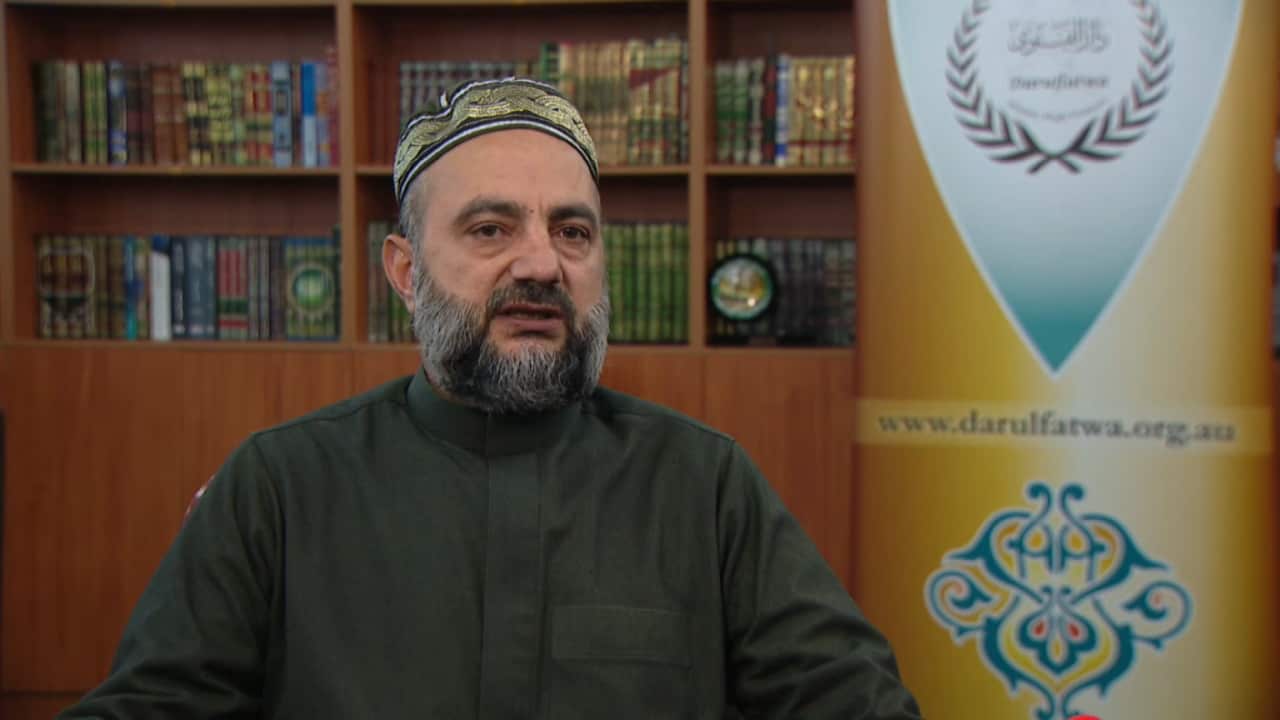
Dr Sheikh Ibrahim El Shafie is the deputy chairman of Dar-ul-fatwa.
“In the past, the matters were more easier than now.”
He says even the more affordable Hajj packages are now beyond the reach of many ordinary families.
“You’re talking about 14,000. That’s an affordable package now that is considered. But if one were to go to the high-end package, it will be very expensive. Let us say to pay 20,000 or 30,000 for instance, or even more.”
For those who could come this year, they have arrived against the backdrop of a tenuous ceasefire in the Iran war and related uncertainty in the region.
Two years ago, more than 1300 people also lost their lives in the extreme heat.
This year, as the Hajj unfolds, Saudi authorities have urged pilgrims to use umbrellas and avoid direct sun, with temperatures in Mecca pushing into the mid-to-high 40s.
"We are here at Your service, O Allah, we are here at Your service. We are here at Your service, none is worthy of worship besides You, we are here at Your service. Indeed all praise and all blessings are all Yours, along with the Kingdom. None is worthy of worship besides You."