
British Prime Minister Keir Starmer has apologised to women forced to give up their babies or separated from their mothers at birth under a system of forced adoptions that targeted unmarried women for decades after World War II. An estimated 185,000 children were separated from their mothers in Britain.
Listen to Australian and world news, and follow trending topics with SBS News Podcasts.
TRANSCRIPT:
"It was awful here. It really was awful. And it's lived with me all my life."
That's Lyn Rodden, speaking to the BBC last year.
She had gone back to the St Agnes home for unmarried mothers in the UK where she had been forced - decades ago - as a young mother to give up her baby.
An estimated 185,000 children were separated from their mothers in Britain under the widely implemented policy of forced adoptions, implemented by the UK government largely between 1949 and 1976 with help from Christian churches.
Finally, earlier this year, Archbishop of Canterbury Sarah Mullaly apologised for the Church's role.
"We are profoundly sorry for the pain, trauma and stigma experienced and still carried today by many people today as a result of historical adoption practices, in homes linked to the Church of England."
Four years ago, Britain's human rights committee concluded that the government was "ultimately responsible" for the lack of protection for unmarried mothers and their babies.
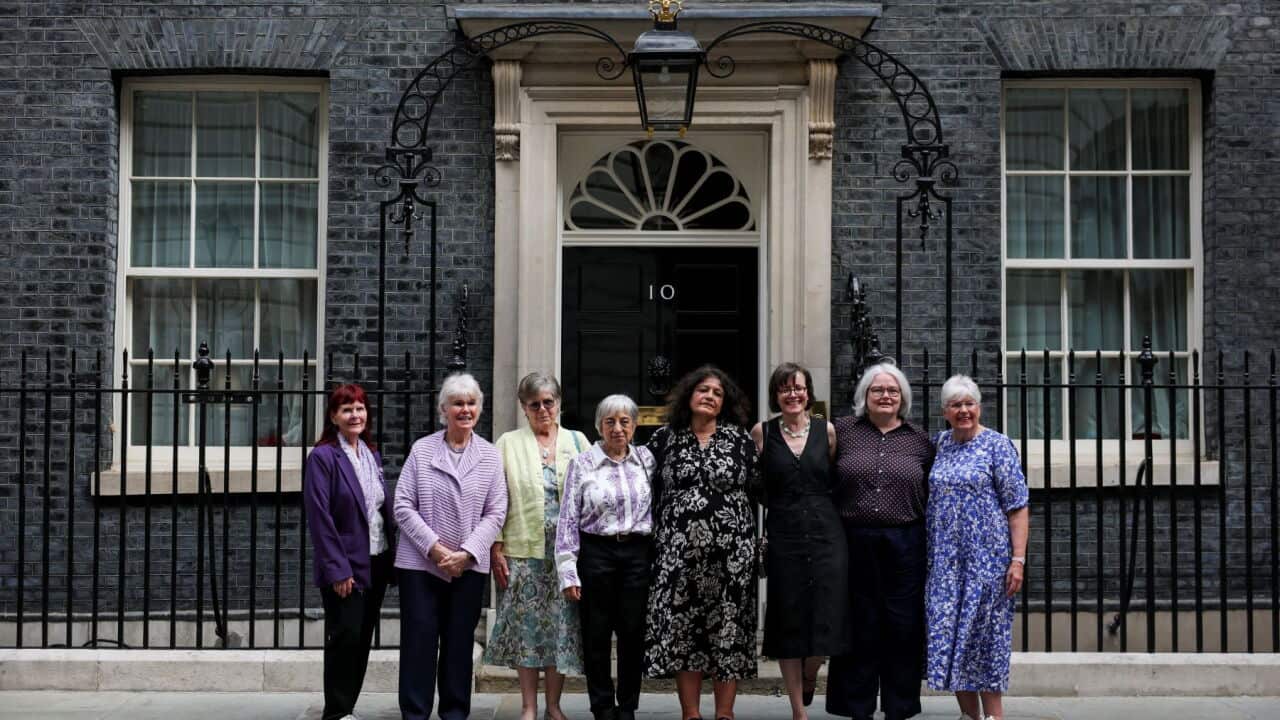
British Prime Minister Keir Starmer met this week with some of the mothers and children caught up in the policy.
Later in the day, he offered a formal apology of his own on behalf of the government.
"The shame is not yours. The shame was never yours. The shame is ours. And I say that on behalf of the whole country. I say it to every single person impacted. We are deeply and profoundly sorry."
Alongside the apology, Mr Starmer has announced support for affected mothers and children, including better access to adoption records and mental health support.
He says these resources are necessary as the impacts of the forced adoptions continue to resonate in so many families.
"Those who grew up believing that they were unwanted, some of whom were even told directly that they were second class. To those who've carried a burden of loss, confusion and stigma, or who experienced neglect and abuse without the protection or oversight that should have been their right. To those who've experienced lifelong uncertainty, loss or questions about identity and belonging, or whose mental and physical health, relationships and sense of self across their lives has been affected. To the fathers who are denied a voice, excluded from decisions, or separated from their children, to the siblings, grandparents, partners and extended family and future generations, who've lived with the consequences of these practices. To those who experienced harm from these practices, even while being brought up in loving homes by their adoptive parents. To those who are adopted across borders or cultures, who lost connections to their heritage, racial and personal identity, and to those from ethnic minority backgrounds who experienced racism or were treated differently within these systems."
Britain is one of several countries reckoning with the legacy of social norms, religious practices and government policies that heaped shame on unwed mothers, hid them away in institutions while pregnant and took their children to be adopted by married couples.
Australian and Irish authorities have also offered apologies for their own similar policies.
And in the Netherlands, the Dutch cabinet has also delivered an apology just this week for their own forced separation and adoption practices in the 1950s to the 1980s.
Back in the UK, this mother has told Sky News the government’s apology a milestone moment.
"I'm so proud of today. We have waited for this day for so long. It means the world to us."